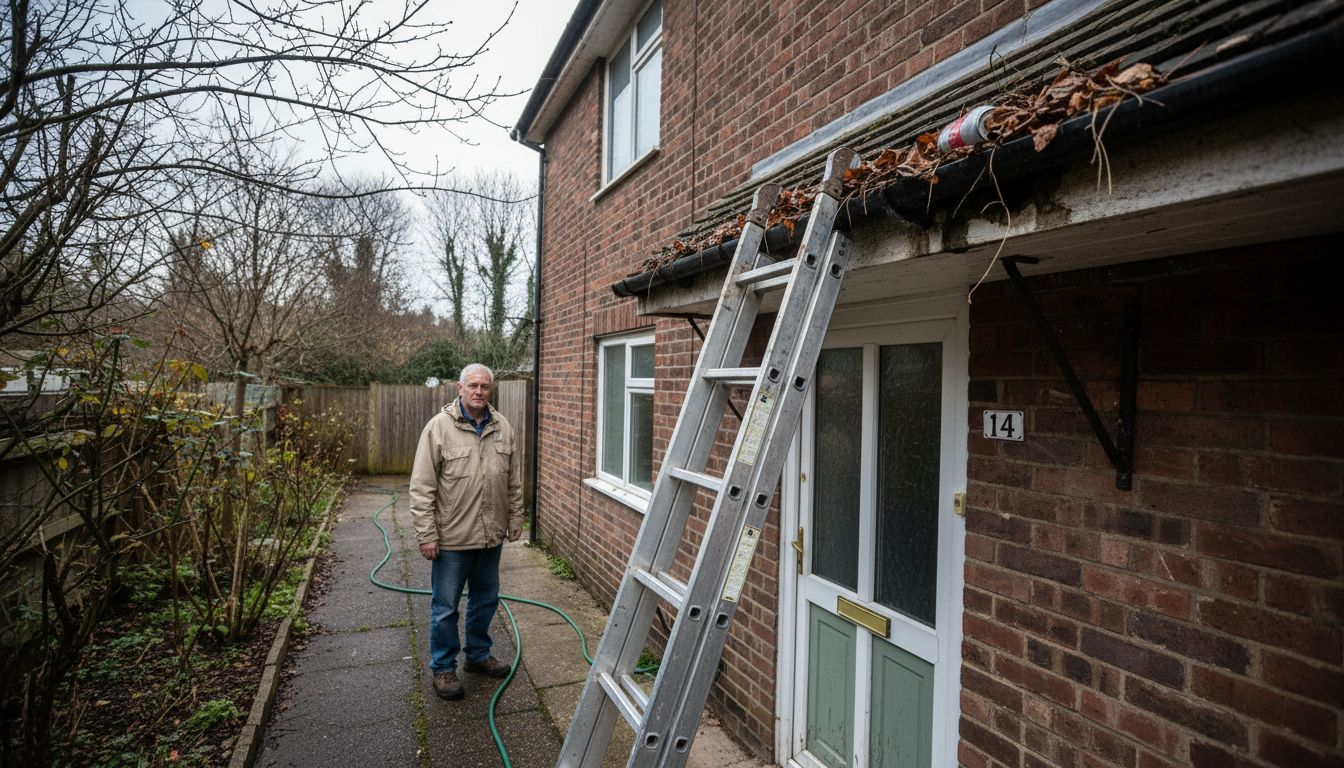
Neglected gutters cause nearly 60 percent of damp problems in British homes each year, putting property value and structural integrity at risk. Your gutter system works quietly but tirelessly, protecting against costly water damage and the headaches of persistent damp. Understanding gutter maintenance gives British homeowners a powerful tool to prevent major issues, keep walls dry, and maintain a healthy, valuable property for years to come.
Table of Contents
- Defining Gutter Maintenance And Its Role
- Types Of Gutters And Common Issues
- Proper Cleaning And Routine Inspection Steps
- Safety Considerations For Homeowners
- Risks Of Neglected Gutters And Cost Implications
- Choosing Professionals Versus Diy Solutions
Key Takeaways
| Point | Details |
|---|---|
| Importance of Gutter Maintenance | Regular gutter maintenance is essential to prevent water damage and structural issues in properties. Conduct inspections at least twice a year to catch potential problems early. |
| Material Selection Matters | Choosing the right gutter material is crucial for durability and safety, especially in fire-prone areas. Metal gutters often provide superior resistance and longevity compared to vinyl options. |
| Professional vs DIY Maintenance | Engaging professional services for gutter maintenance can save homeowners from costly repairs due to improper techniques. Professionals have the expertise and tools for comprehensive inspections and effective solutions. |
| Consequences of Neglect | Neglected gutters can lead to severe and expensive damages, including foundation issues and water contamination. Regular maintenance is a financially prudent approach to protect property value. |
Defining Gutter Maintenance And Its Role
Gutter maintenance represents a critical aspect of property preservation, specifically focused on managing water flow around residential and commercial buildings. Rain gutters serve as essential architectural components designed to channel rainwater systematically away from structural foundations, preventing potentially catastrophic water damage.
The primary function of a gutter system involves collecting and redirecting rainfall from rooftops through horizontal channels and downspouts, ensuring water is safely diverted from critical building areas. Home inspectors routinely check gutter systems for potential structural vulnerabilities like rust, cracks, and ineffective water diversion that could compromise building integrity.
Effective gutter maintenance encompasses several key activities: regular cleaning to remove debris, checking for proper slope and alignment, inspecting downspout functionality, and addressing any signs of damage or blockage. Professional assessments help homeowners identify potential issues before they escalate into expensive repair scenarios, protecting against problems like foundation erosion, wall dampness, and structural deterioration.
Top tip: Conduct a comprehensive gutter inspection at least twice annually, ideally during spring and autumn, to catch potential issues before they become costly structural problems.
Types Of Gutters And Common Issues
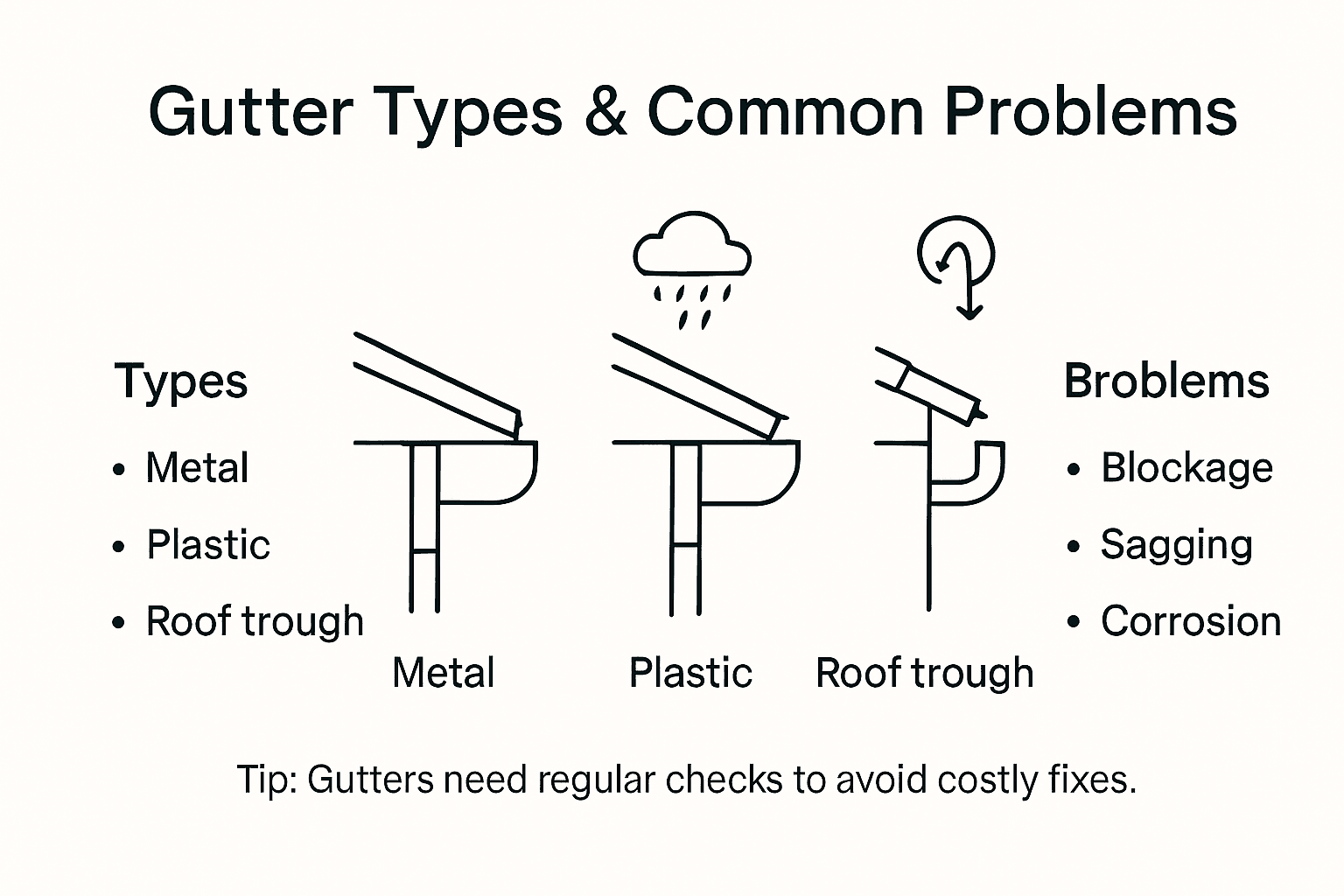
Homeowners have multiple options when selecting gutter systems, with materials ranging from traditional metals to modern synthetic materials. Gutters can be constructed from cast iron, galvanized steel, aluminium, copper, and uPVC, each offering unique advantages and potential challenges for property maintenance.
The structural design of gutters varies significantly, including integral roof troughs, suspended metal troughs, and masonry gutters. Different materials present distinct performance characteristics. Metal gutters like copper and stainless steel are particularly recommended for their durability and resistance to environmental challenges. In fire-prone regions, metal gutters provide superior protection against potential ember spread, making material selection crucial for home safety.
Here is a summary comparing common gutter materials and their characteristics:
| Material | Durability | Fire Resistance | Weather Tolerance |
|---|---|---|---|
| Cast iron | Extremely durable | High (non-combustible) | Excellent in harsh climates |
| Galvanised steel | Durable with coating | Moderate | Good but can rust if damaged |
| Aluminium | Lightweight, durable | Moderate | Performs well, can dent |
| Copper | Very durable | High | Excellent, resists corrosion |
| uPVC (vinyl) | Least durable | Low (combustible) | Prone to damage by storms |
Common gutter issues encompass a range of structural and functional problems. These include persistent challenges such as leaks, blockages, corrosion, and design shortcomings like improper slope or undersizing. Debris accumulation represents a significant risk, potentially causing water flow disruption and increasing the likelihood of structural damage. Vinyl gutters, for instance, can be particularly vulnerable during extreme weather conditions, potentially detaching and compromising overall drainage effectiveness.
Top tip: Consider installing gutter guards to minimise debris build-up and reduce the frequency of manual cleaning, thereby protecting your property’s drainage system.
Proper Cleaning And Routine Inspection Steps
Proper gutter maintenance requires systematic cleaning and thorough routine inspections to prevent potential structural damage. Home inspectors recommend checking gutters and downspouts comprehensively for signs of wear, including rust, cracks, and potential leaks, ensuring they function effectively throughout the year.
A comprehensive gutter inspection involves multiple critical steps. Homeowners should verify that gutters maintain the correct slope towards downspouts, allowing water to flow smoothly without pooling or stagnating. Inspection of soldered seams, flashing, and attachment points is crucial for identifying potential structural weaknesses, particularly in regions experiencing harsh weather conditions. The goal is to detect and address minor issues before they escalate into significant repair requirements.
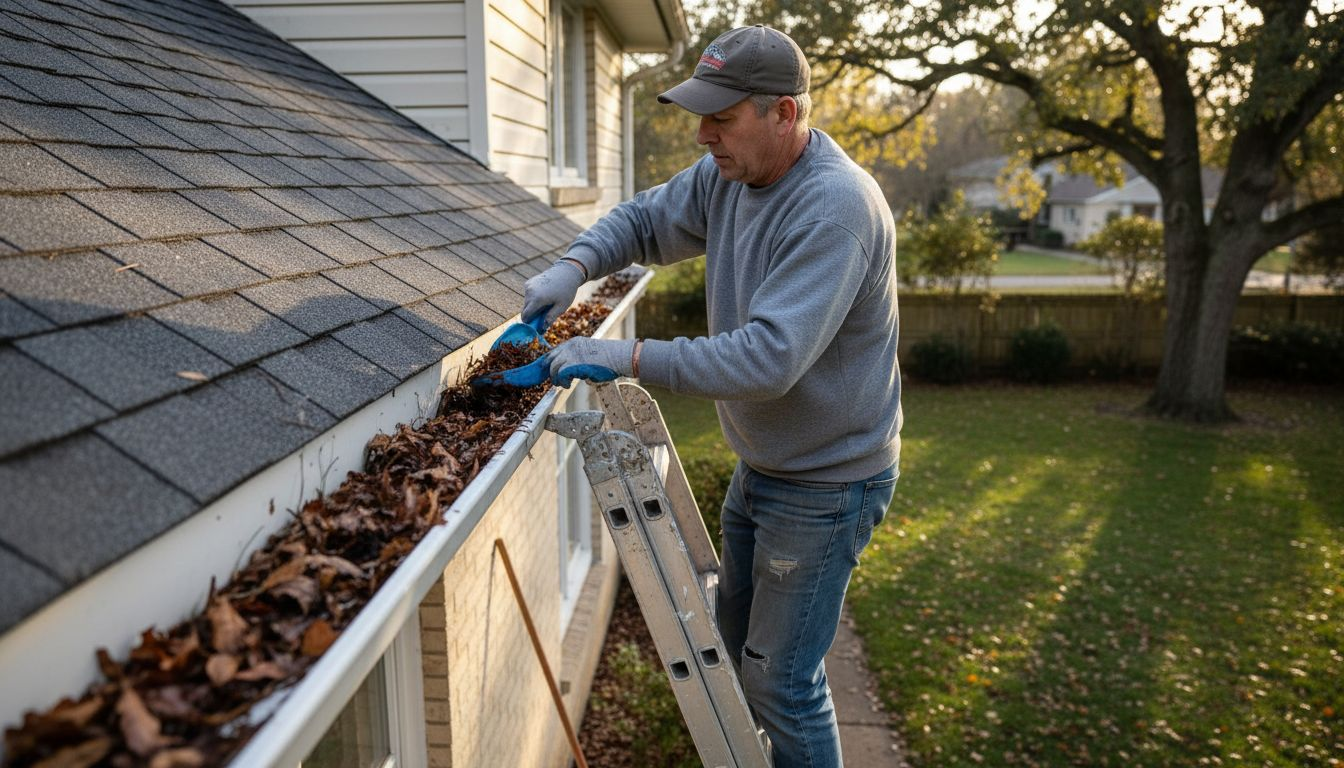
Cleaning procedures should focus on systematic debris removal and thorough examination. This includes clearing leaves, twigs, and accumulated organic matter that can obstruct water flow and potentially cause overflow. Professionals recommend directing downspouts to discharge water at least 4 to 6 feet away from the property’s foundation, preventing potential water damage and soil erosion. Special attention should be given to gutters in areas with high vegetation or those exposed to frequent storm conditions.

Top tip: Schedule professional gutter inspections twice annually, ideally during spring and autumn, to catch potential issues before they become costly structural problems.
Safety Considerations For Homeowners
Personal safety must be the primary concern when conducting gutter maintenance, with numerous potential hazards requiring careful attention. Home inspectors emphasise the critical importance of proper ladder safety and secure gutter attachments to prevent accidental falls and structural damage, recognising that DIY maintenance carries inherent risks.
Fire prevention represents another crucial aspect of gutter safety, particularly for homes in areas prone to environmental challenges. Metal gutters are recommended over vinyl alternatives to reduce fire spread risks, with homeowners advised to keep gutters clear of combustible debris and maintain rigorous cleaning standards. Installing metal flashing at roof edges provides an additional layer of protective infrastructure, mitigating potential vulnerabilities.
Professional assessment becomes essential when homeowners encounter complex maintenance scenarios. Certain situations demand expert intervention, such as working at significant heights, managing extensive debris accumulation, or addressing structural gutter damage. Understanding personal limitations and recognising when professional support is necessary can prevent potentially dangerous self-maintenance attempts that might compromise both personal safety and property integrity.
Top tip: Invest in a robust, well-stabilised ladder with non-slip feet and always ensure a second person is present to provide ground support during gutter maintenance tasks.
Risks Of Neglected Gutters And Cost Implications
Neglecting gutter maintenance can lead to catastrophic and expensive property damage that extends far beyond simple repair costs. Clogged gutters create significant risks, including water saturation near foundations, potential structural deterioration, and extensive restoration expenses, with homeowners potentially facing thousands of pounds in unexpected repair work.
Structural vulnerability emerges as a primary consequence of persistent gutter neglect. Water overflow damages landscaping, weakens building foundations through continuous seepage, and accelerates wood rot in connected structural elements. Environmental consequences compound these risks, with potential soil erosion and water pollution resulting from improper drainage systems, creating long-term complications that extend beyond immediate property boundaries.
Financial implications of gutter maintenance negligence can be substantial. Unaddressed issues might necessitate comprehensive restoration work, including foundation stabilisation, roof replacement, and interior water damage remediation. These potential expenses far outweigh the modest investment required for routine gutter maintenance, making proactive care a financially prudent strategy for homeowners seeking to protect their property’s structural integrity and market value.
Top tip: Allocate an annual budget for professional gutter maintenance to prevent exponentially more expensive structural repairs in the future.
Choosing Professionals Versus DIY Solutions
Deciding between professional gutter maintenance and DIY approaches requires careful consideration of skills, safety, and technical complexity. Home inspectors emphasise that comprehensive gutter assessment involves nuanced understanding of structural requirements and potential damage indicators, which often exceed typical homeowner expertise.
Professional services offer significant advantages beyond basic cleaning. Experts follow rigorous industry standards for gutter installation, sizing, and corrosion resistance, ensuring compliance with technical specifications outlined in professional manuals. These specialists possess specialised equipment, safety training, and in-depth knowledge of potential structural vulnerabilities that might remain undetected during amateur maintenance attempts.
The financial calculus of professional versus DIY maintenance extends beyond immediate costs. While self-maintenance might seem economical, improper techniques can lead to expensive structural damage, potentially invalidating property insurance claims and creating long-term repair requirements. Professionals bring systematic approach, detailed diagnostics, and preventative insights that can ultimately save homeowners substantial money by identifying and addressing issues before they escalate into major structural problems.
The table below compares professional gutter service with DIY maintenance to help you decide:
| Aspect | Professional Service | DIY Maintenance |
|---|---|---|
| Safety | Professionally trained staff | Dependent on homeowner expertise |
| Problem Detection | Detailed structural checks | Often limited to visible issues |
| Equipment | Specialist tools and gear | Basic household tools |
| Cost Over Time | Higher upfront, saves future costs | Lower now, may risk expensive repairs |
| Insurance Impact | Maintains cover if done correctly | DIY errors can void insurance |
Top tip: Request detailed quotes from multiple professional gutter maintenance services, comparing their scope of work, qualifications, and insurance coverage before making a final decision.
Ensure Your Gutters Protect Your Home with Expert Maintenance
Maintaining gutters is vital to safeguarding your property’s foundation and preventing costly damage caused by blockages, leaks, or improper water flow. If you want to avoid the risks of damp, structural issues, or emergency repairs highlighted in the article “Gutter Maintenance Best Practices – Protecting UK Homes” then reliable, professional help is essential. At Local Gutter Cleaner, we understand the challenges homeowners and property managers face with effective gutter upkeep, ensuring your system is clean, well-aligned and fully functional throughout the year.
Don’t wait until clogged gutters cause irreversible damage to your home. Take action today by contacting our experienced team for comprehensive gutter cleaning and maintenance services. Discover how our expertise can provide peace of mind and protect your investment by visiting Local Gutter Cleaner or requesting a quote now. Safe, thorough, and timely maintenance is just a click away.
Frequently Asked Questions
What are the key practices for effective gutter maintenance?
Effective gutter maintenance includes regular cleaning to remove debris, checking for proper slope and alignment, inspecting downspout functionality, and addressing any signs of damage or blockage.
How often should I inspect my gutters?
It’s recommended to conduct a comprehensive gutter inspection at least twice a year, ideally during spring and autumn, to identify potential issues before they escalate into costly repairs.
What are the common problems associated with neglected gutters?
Common problems associated with neglected gutters include leaks, blockages, corrosion, and structural vulnerabilities that can lead to foundation erosion, wall dampness, and extensive repair costs.
Why is it important to choose the right gutter material?
Choosing the right gutter material is crucial as different materials offer unique advantages regarding durability, fire resistance, and weather tolerance, which can significantly affect the long-term maintenance and safety of your property.




Leave A Comment