
Blocked gutters contribute to over 60 percent of damp problems in British homes every year, risking costly repairs and reduced property value. For many British homeowners and property managers, neglecting routine gutter care allows water damage to creep in unnoticed. This guide offers clear solutions on choosing equipment, spotting early warning signs, and tackling debris removal with confidence, helping you safeguard your home and extend its lifespan.
Table of Contents
- Step 1: Gather Essential Gutter Cleaning Equipment
- Step 2: Inspect Gutters For Signs Of Debris And Damage
- Step 3: Remove Leaves, Moss, And Blockages Safely
- Step 4: Flush Gutter System To Verify Clear Water Flow
- Step 5: Check For Leaks And Secure Loose Fixings
Quick Summary
| Key Point | Explanation |
|---|---|
| 1. Assemble essential cleaning equipment | Use a sturdy ladder, gloves, and specialised tools to ensure safe and effective gutter cleaning. Prioritise safety in your toolkit selection. |
| 2. Conduct a thorough inspection | Examine gutters for signs of damage or debris from ground level and from a ladder to prevent costly repairs and ensure proper function. |
| 3. Remove blockages methodically | Clear accumulated leaves and moss using protective gear and techniques that prevent gutter damage. Flush gutters with water to ensure flow. |
| 4. Flush gutters after cleaning | Test water flow using a garden hose to reveal hidden blockages and confirm that gutters are functioning properly and directing water away. |
| 5. Check for leaks and secure fittings | Inspect brackets and connections for tightness and corrosion, sealing any leaks with appropriate compounds to maintain gutter integrity. |
Step 1: Gather essential gutter cleaning equipment
Preparing for a comprehensive gutter maintenance session requires carefully selecting the right tools. The goal is to ensure safe access and efficient debris removal while protecting your property from potential water damage. Professionals recommend assembling a specific set of equipment that will make your gutter cleaning process smooth and effective.
Your essential toolkit should include sturdy extension ladders for reaching high gutters, protective work gloves to shield your hands from sharp edges and grime, and specialised gutter cleaning tools for water flow management. Key items include garden hoses for flushing, plastic gutter scoops for removing debris, and a stable ladder stabiliser to ensure safety. Consider adding a bucket for collecting removed materials, safety glasses to protect your eyes, and non slip footwear with good traction.
While gathering your equipment, prioritise safety and functionality. Check your ladder’s weight capacity, inspect all tools for damage, and ensure you have someone nearby who can assist in case of emergencies. Remember that proper preparation minimises risks and makes the entire gutter maintenance process more efficient.
Expert Recommendation: Always test and inspect your equipment before climbing onto any ladder to prevent potential accidents during gutter cleaning.
Step 2: Inspect gutters for signs of debris and damage
With your cleaning equipment ready, the next crucial step is thoroughly examining your gutters for potential problems that could compromise your property’s structural integrity. A comprehensive inspection helps identify issues before they escalate into expensive repairs, protecting your home from water damage and structural deterioration.

Begin by carefully examining the gutter system from ground level and then from a stable ladder, looking for key indicators of potential gutter damage and blockages. Watch for signs such as sagging sections, rust spots, visible cracks, or areas where water might be pooling instead of flowing smoothly. Pay special attention to the joints and connections, checking for loose hangers or sections that appear misaligned. Look for vegetation growth, accumulated leaves, or debris that might obstruct water flow, and inspect downspouts to ensure they are directing water away from your property’s foundation.
Remember that early detection of minor issues can prevent significant structural damage. Take photographs of any areas of concern to track changes over time and assist in future maintenance decisions. If you notice extensive damage or are unsure about the severity of a problem, consider consulting a professional gutter maintenance specialist who can provide a detailed assessment.
Here is a quick reference comparing common gutter issues and their possible causes:
| Gutter Issue | Likely Cause | Potential Impact |
|---|---|---|
| Sagging gutter | Overloaded with debris | Water pooling, leaks |
| Rust patches | Age or water exposure | Compromised gutter strength |
| Vegetation in gutter | Accumulated organic material | Blockages, insect nests |
| Water stains on wall | Leaks or poorly sealed joints | Wall damage, mould growth |
| Overflowing downspout | Clogged or misaligned connection | Water damage near foundation |
Expert Recommendation: Use binoculars for initial inspection to safely identify potential problem areas before climbing a ladder.
Step 3: Remove leaves, moss, and blockages safely
Clear gutter passages are essential for preventing water damage and maintaining your property’s structural integrity. This stage requires careful technique and methodical approach to ensure thorough debris removal without damaging your gutter system.
Start by using protective gloves and a sturdy ladder to access your gutters safely. Mechanical removal techniques for moss and debris involve using stiff brushes or plastic scrapers to dislodge accumulated leaves, moss, and organic materials. Work systematically along the gutter length, gently scraping without applying excessive pressure that might damage the gutter surface. For stubborn moss growth, consider using a diluted bleach solution carefully applied with a soft brush, ensuring you protect surrounding vegetation by covering plants and avoiding direct chemical contact.
After mechanical removal, use a garden hose to flush the gutters thoroughly, checking that water flows smoothly through downspouts. This helps verify you have completely cleared blockages and identifies any potential drainage issues. Pay special attention to corners and joints where debris tends to accumulate, and remove any remaining materials by hand. If you encounter extensive moss or challenging blockages, consider professional assistance to prevent potential gutter damage.
Expert Recommendation: Wear safety glasses and a dust mask during debris removal to protect yourself from falling particles and potential allergens.
Step 4: Flush gutter system to verify clear water flow
After thoroughly cleaning your gutters, verifying proper water drainage is a critical final step in maintaining your property’s water management system. This process helps confirm that all debris has been successfully removed and your gutters are functioning optimally.
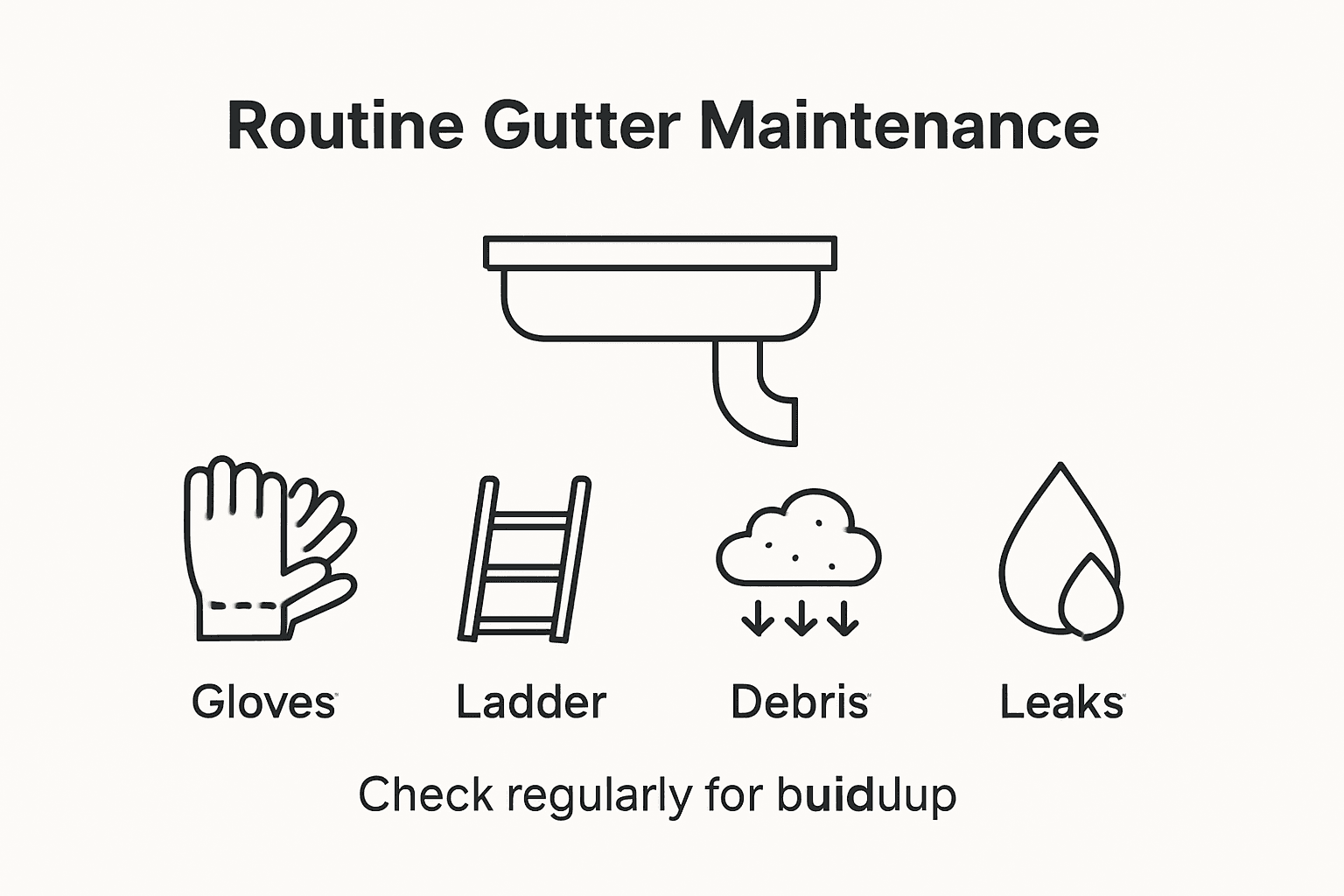
Begin by positioning your garden hose at the end of the gutter opposite the downspout, allowing water to flow naturally through the system. Systematic water flow testing reveals hidden blockages and drainage issues that might not be visible during initial cleaning. Observe the water carefully as it moves through the gutter, checking for smooth, uninterrupted flow and watching how quickly it exits through the downspout. Pay close attention to any areas where water pools or drains slowly, as these could indicate potential slope problems or remaining obstructions that require further attention.
If you notice any irregularities during the flushing process, such as water overflowing, backing up, or draining unevenly, you may need to revisit those sections and perform additional cleaning or potentially consider professional gutter repair. Take notes or photographs of any problematic areas to help diagnose potential long term maintenance needs and track the condition of your gutter system over time.
Expert Recommendation: Use a bright coloured marker to indicate areas of concern during water flow testing for easier follow up and future reference.
Step 5: Check for leaks and secure loose fixings
After cleaning and flushing your gutters, a comprehensive inspection of their structural integrity is crucial to prevent potential water damage and maintain long-term property health. This stage involves carefully examining every component of your gutter system for potential vulnerabilities.
Systematic inspection of gutter fixings and potential leak points requires methodical attention to detail. Begin by visually examining each gutter bracket and connection point, checking for signs of rust, corrosion, or mechanical stress. Gently test the tightness of mounting brackets, ensuring they are securely fastened to the fascia board without any wobbling or movement. Look for telltale signs of water damage such as water stains on walls, peeling paintwork, or small patches of mould that might indicate hidden leaks. Pay particular attention to joint areas where different gutter sections connect, as these are often the most vulnerable points for potential water seepage.
Should you discover any loose fixings, use appropriate screws or brackets to reattach the gutter sections firmly. For minor gaps or potential leak points, consider using specialised gutter sealing compounds that can provide a watertight seal. If you encounter significant damage or multiple areas of concern, it might be prudent to consult a professional gutter maintenance specialist who can provide a comprehensive repair assessment.
The following table summarises professional vs. DIY approaches to gutter cleaning:
| Aspect | DIY Cleaning | Professional Cleaning |
|---|---|---|
| Cost | Lower initial outlay | Higher but comprehensive |
| Safety | Depends on user’s skill | Trained for height safety |
| Equipment used | Basic home tools | Specialist commercial tools |
| Problem diagnosis | Visual inspection only | Advanced damage detection |
Expert Recommendation: Use a small spirit level to check the precise alignment of gutter sections during your inspection to ensure optimal water drainage.
Ensure Lasting Property Health with Expert Gutter Care
The challenge of maintaining clear, secure gutters is crucial for preventing costly water damage and structural problems. This article highlights common issues such as blocked downspouts, sagging sections, and hidden leaks that can undermine your property’s integrity. If you are concerned about the safety risks of ladder work or the complexity of flushing and repairing gutters, you are not alone. Many homeowners and property managers face these obstacles while trying to protect their investment.
Take control today with professional support from a local expert. At Local Gutter Cleaner, we specialise in comprehensive gutter cleaning services tailored to both residential and commercial properties. Our team uses safe, effective methods to remove debris, inspect for damage, and ensure water flows freely through your system. Avoid the risks of DIY and enjoy the peace of mind that comes with knowing your gutters are maintained correctly.
Don’t wait until a small gutter problem turns into a costly repair. Visit Local Gutter Cleaner now to request a free quote and schedule your routine gutter cleaning. Protect your property with expert care that keeps water flowing and damage at bay. Learn more about our professional services and start safeguarding your home or business today.
Frequently Asked Questions
What tools do I need for routine gutter care?
To effectively care for your gutters, assemble sturdy extension ladders, protective gloves, plastic gutter scoops, and a garden hose. Start by ensuring your tools are in good condition and checking that your ladder is safe before climbing.
How often should I inspect and clean my gutters?
It is recommended to inspect and clean your gutters at least twice a year, ideally in spring and autumn. Schedule these cleanings ideally every 6 months to prevent buildup and potential damage to your property.
What should I look for during a gutter inspection?
During your gutter inspection, look for sagging sections, rust, cracks, and any signs of water pooling. Identify vegetation growth or debris, especially at joints and downspouts, and document any issues for future reference.
How can I safely remove debris from my gutters?
To safely remove debris, use protective gloves and a sturdy ladder, employing plastic scoops for mechanical removal. Work methodically along the length of the gutter, taking care not to apply excessive pressure that could damage the gutter surface.
How can I test my gutter system for flow issues?
Test your gutter system by positioning a garden hose at the highest end of the gutter and observing the water flow as it moves toward the downspout. Ensure there’s smooth and uninterrupted flow; address any pooling or slow drainage to maintain optimal function.
What should I do if I find leaks or loose fixings?
If you discover leaks or loose fixings in your gutters, tighten any loose brackets and apply a specialised sealing compound to gaps. If you notice significant damage, consider consulting a professional for a comprehensive repair assessment.
Recommended
- Role of Gutter Maintenance – Protecting Property Health
- How to Clean Gutters Safely for Better Water Flow
- Commercial Gutter Cleaning – Why Property Health Depends On It
- Gutter Cleaning Greenhithe – Houses – Blocks of flats – Industrial
- Flat Roof Replacement Houston TX | Residential & Commercial Roofing






Leave A Comment