
Managing large building portfolios across cities means juggling countless maintenance tasks, and gutter cleaning terms often cause confusion during contractor discussions. Clear knowledge of this specialised vocabulary empowers property managers to communicate confidently and avoid missteps that could risk costly repairs or tenant dissatisfaction. By demystifying key gutter components and blockage types, managers unlock more effective planning, saving time while keeping building exteriors functional and tenants happy.
Table of Contents
- Core Gutter Cleaning Terms Explained
- Types Of Gutters And Blockages Defined
- Cleaning Methods And Equipment Terms
- Safety Standards And Legal Obligations
- Risks And Common Misunderstandings
Key Takeaways
| Point | Details |
|---|---|
| Understanding Gutter Terminology | Familiarity with gutter components and terminology aids effective communication and maintenance management for property managers. |
| Importance of Gutter Types | Recognising different gutter types and their vulnerabilities helps in implementing tailored maintenance strategies and reducing blockage risks. |
| Proactive Maintenance | Regular professional inspections and comprehensive documentation are crucial for compliance and minimizing potential risks associated with gutter systems. |
| Addressing Misconceptions | Acknowledging the importance of functionality over aesthetics in gutters can prevent significant structural issues and unexpected repair costs. |
Core Gutter Cleaning Terms Explained
Gutter cleaning terminology can seem complex, but understanding key technical terms helps property managers effectively maintain building exteriors. These specialised terms describe the various components and processes involved in professional gutter maintenance. From identifying different gutter styles to comprehending drainage mechanisms, knowing the correct vocabulary enables more precise communication with maintenance professionals.
The most fundamental gutter components include the main gutter channel, which collects rainwater, and downspouts that direct water away from building foundations. Specialised gutter system classifications reveal different gutter profiles like K-style and U-style gutters, each designed for specific architectural requirements. Professional cleaning teams also reference critical terms such as gutter brackets that support the entire system, end caps which seal gutter extremities, and apron flashing that prevents water penetration at connection points.
Understanding additional technical terminology helps property managers evaluate gutter health more effectively. Terms like gutter slope indicate the critical angle necessary for proper water drainage, typically requiring a minimum gradient to prevent water stagnation. Expansion joints allow for material contraction and expansion, reducing potential structural damage. Drainage-related terminology such as water discharge points and downspout positioning become crucial when assessing potential foundation protection strategies.
Pro tip: Always request a detailed technical assessment that uses precise gutter terminology to ensure comprehensive maintenance and early problem detection.
Types Of Gutters And Blockages Defined
Property managers must understand various gutter types and potential blockage mechanisms to maintain effective drainage systems. Different architectural designs and material compositions significantly impact gutter performance and maintenance requirements. Architectural gutter classifications reveal multiple styles designed to address specific building needs and environmental challenges.
Gutter types range from box gutters integrated directly into roof structures to hung gutters attached externally. Metal gutters, particularly those made from copper or aluminium, offer durability and minimal maintenance. K-style gutters are most common in residential and commercial buildings, characterised by their decorative front profile that resembles crown moulding. U-style gutters, alternatively, provide a more traditional rounded appearance and can handle substantial water volumes. Each style presents unique blockage vulnerabilities, with box gutters prone to debris accumulation and hung gutters experiencing faster sediment build-up.

Blocking mechanisms in gutter systems typically involve organic matter such as leaves, twigs, moss, and sediment. Architectural design influences blockage potential, with copper gutter systems demonstrating more resistance to microbial growth. Factors like roof pitch, surrounding vegetation, and local weather conditions dramatically affect debris accumulation rates. Complex gutter configurations with multiple angles and tight corners create additional opportunities for blockages, requiring more frequent professional cleaning and maintenance.
Here’s a comparative overview of common gutter types and their maintenance considerations:
| Gutter Type | Typical Material | Primary Vulnerability | Maintenance Frequency |
|---|---|---|---|
| Box Gutter | Galvanised steel | Debris accumulation | High |
| Hung Gutter | Aluminium or PVC | Sediment build-up | Moderate |
| K-Style Gutter | Aluminium or copper | Leaf and twig blockages | Moderate |
| U-Style Gutter | Steel or copper | Moss and heavy rainfall | Low to moderate |
Pro tip: Implement a biannual inspection schedule that maps your building’s specific gutter configuration to predict and prevent potential blockage zones.
Cleaning Methods And Equipment Terms
Professional gutter cleaning involves a range of specialised techniques and equipment designed to address complex maintenance challenges in various building environments. Understanding the terminology associated with these methods helps property managers communicate effectively and ensure comprehensive system care. Stormwater management strategies highlight the critical importance of selecting appropriate cleaning approaches for different gutter configurations.
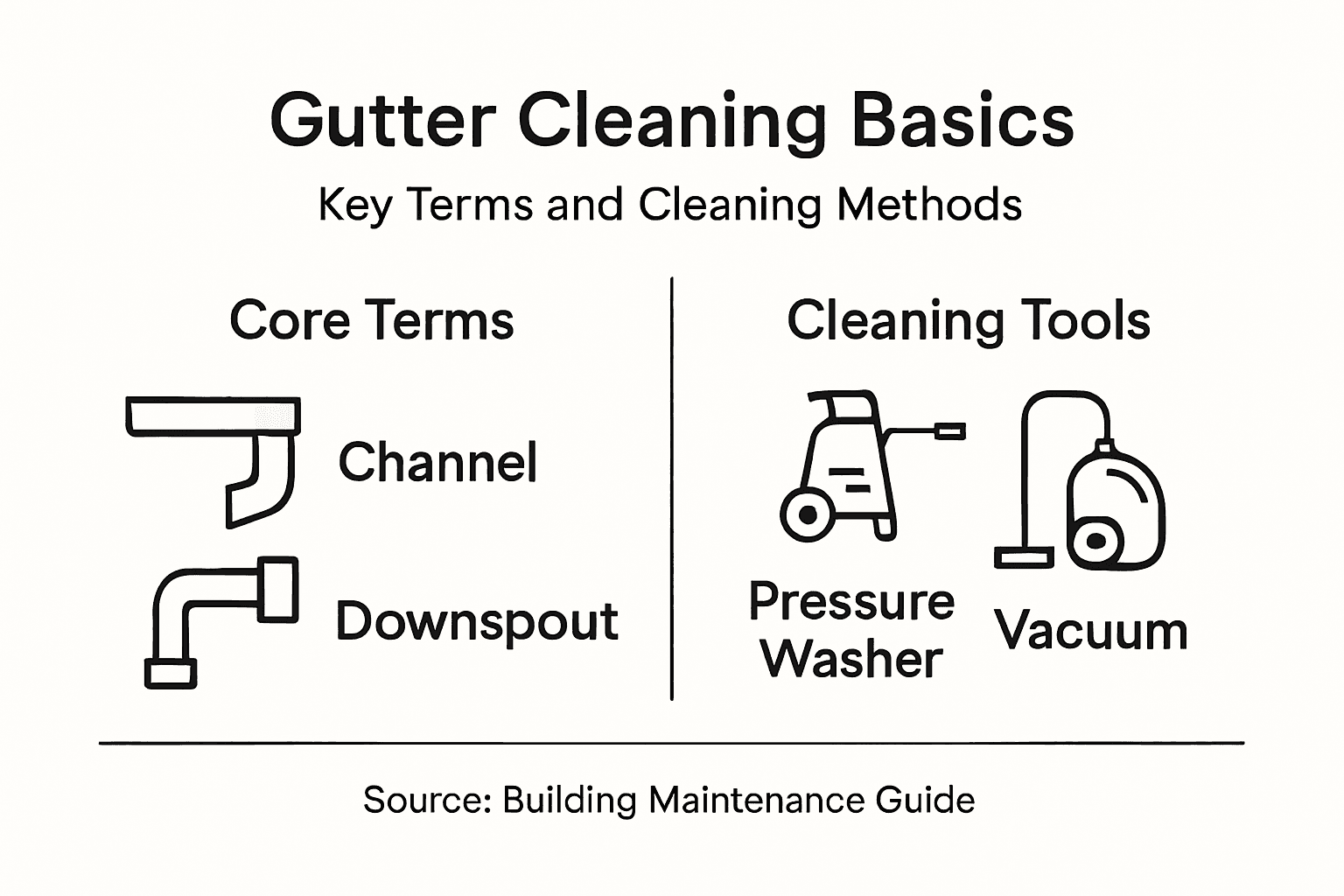
Key cleaning equipment includes pressure washers, which remove stubborn debris and sediment, and gutter vacuums that can extract compacted organic matter without manual climbing. Specialized tools like extendable gutter cleaning wands enable technicians to reach difficult areas, while camera inspection systems provide detailed visual assessments of internal gutter conditions. Professional cleaning methods typically involve manual debris removal, high-pressure cleaning, and chemical treatment to prevent microbial growth and corrosion. Some advanced approaches incorporate robotic cleaning systems that can navigate complex gutter geometries with minimal human intervention.
Professional inspection techniques reveal additional critical cleaning terminology. Slope assessment determines water flow efficiency, while downspout flushing ensures complete drainage pathway clearance. Technicians use specialised measurement tools like moisture metres and laser alignment devices to verify gutter performance. Advanced cleaning protocols may include protective guard installation, sealant application, and corrosion prevention treatments that extend the functional lifespan of gutter systems.
Below is a summary of professional gutter cleaning methods and their key benefits:
| Cleaning Method | Equipment Used | Benefit for Building Owners |
|---|---|---|
| Manual Debris Removal | Hand tools, ladders | Targeted removal in tight spaces |
| High-Pressure Cleaning | Pressure washer | Removes stubborn sediment efficiently |
| Gutter Vacuum | Vacuum system, extension | Safe, avoids roof climbing risks |
| Robotic Cleaning | Automated robots | Ideal for complex gutter layouts |
Pro tip: Invest in comprehensive training for maintenance staff to understand advanced gutter cleaning equipment and techniques, ensuring more efficient and thorough system maintenance.
Safety Standards And Legal Obligations
Property managers must navigate complex legal requirements and safety standards when managing gutter maintenance systems. Understanding the regulatory landscape ensures compliance and minimises potential liability risks associated with building exterior maintenance. Comprehensive gutter system standards provide critical guidelines that establish minimum performance and safety expectations for commercial and residential properties.
Legal obligations encompass multiple dimensions of gutter maintenance, including structural integrity, water management, and potential hazards. Structural securement standards mandate specific installation techniques that prevent gutter detachment during extreme weather conditions. Performance testing requirements outline precise criteria for wind resistance, load-bearing capacity, and environmental stress tolerance. Property managers must ensure gutters can withstand local climate challenges, including heavy rainfall, snow accumulation, and potential ice formation, which could compromise structural safety.
Regulatory compliance involves comprehensive documentation and periodic professional assessments. Risk management protocols require detailed inspection records, maintenance logs, and evidence of professional interventions. Legal frameworks increasingly emphasise preventative maintenance as a key risk mitigation strategy, holding property owners responsible for potential damage caused by neglected gutter systems. This includes potential water damage to building foundations, structural deterioration, and safety risks associated with poorly maintained external drainage infrastructure. Compliance demands proactive management, regular professional inspections, and immediate remediation of identified structural or functional issues.
Pro tip: Develop a comprehensive digital documentation system that tracks gutter maintenance history, inspection reports, and compliance evidence to protect against potential legal challenges.
Risks And Common Misunderstandings
Property managers frequently encounter misconceptions about gutter maintenance that can lead to significant structural damage and unexpected repair costs. Common gutter system risks highlight the critical importance of understanding these complex drainage systems beyond their seemingly simple exterior. Misunderstandings often stem from underestimating the intricate relationship between gutters, building foundations, and overall structural integrity.
One prevalent misconception is that gutter aesthetics are more important than functionality. Aesthetic gutter designs do not guarantee proper water management, and property managers must prioritise performance over appearance. Stormwater management challenges reveal that incorrect gutter sizing, inadequate slope, and poor installation can cause catastrophic water damage. Risks include foundation erosion, basement flooding, wood rot, mould proliferation, and compromised structural stability. Homeowners often incorrectly assume that occasional visual inspections are sufficient, when in reality, professional comprehensive assessments are crucial for identifying potential vulnerabilities.
Technical misunderstandings extend to water volume calculations and drainage capacities. Property managers frequently underestimate the volume of water gutters must manage during heavy rainfall, leading to inadequate system design. Water diversion strategies require precise engineering, considering factors like roof area, local precipitation patterns, and ground absorption rates. Incorrect assumptions about water management can result in gradual but significant damage to building foundations, landscape erosion, and potential structural compromise. Understanding these nuanced risks demands a holistic approach that goes beyond superficial maintenance and embraces proactive, scientifically informed gutter management.
Pro tip: Conduct annual professional gutter assessments that include detailed water flow analysis and comprehensive risk mapping to prevent potential structural damage.
Master Your Gutter Maintenance with Expert Support
Navigating complex terms like gutter slope, downspout positioning, and understanding various gutter types such as K-style and U-style gutters can be overwhelming. These critical details from the article highlight why professional knowledge is essential to prevent costly blockages and structural damage to commercial buildings and blocks of flats. You need a gutter cleaning service that fully comprehends these technical challenges and offers tailored solutions designed specifically for large and complex properties.
Don’t leave your property’s safety to chance. Partner with a trusted specialist who uses precise terminology and advanced methods to protect your investments. Visit our main site for reliable gutter cleaning service for blocks of flats and commercial buildings. Discover how our experienced team tackles problems like organic debris buildup and impaired water discharge to maintain your building’s integrity. Act now to secure a risk-free inspection and professional maintenance plan that ensures long-term performance and legal compliance.
Frequently Asked Questions
What are the main components of a gutter system?
The main components of a gutter system include the gutter channel, downspouts, gutter brackets, end caps, and apron flashing. These elements work together to collect and direct rainwater away from a building’s foundation.
How often should gutters be cleaned to prevent blockages?
Gutters should ideally be inspected and cleaned at least biannually. However, the frequency may vary based on factors like local vegetation, roof pitch, and weather conditions, which can influence debris accumulation.
What cleaning methods are used for gutter maintenance?
Professional gutter cleaning methods include manual debris removal, high-pressure cleaning, and gutter vacuuming. Advanced techniques may also involve robotic cleaning systems and chemical treatments to prevent microbial growth and corrosion.
What risks are associated with poorly maintained gutters?
Poorly maintained gutters can lead to significant risks, including foundation erosion, mould growth, and potential structural damage. Water can accumulate and cause basement flooding or wood rot, compromising the overall integrity of the building.