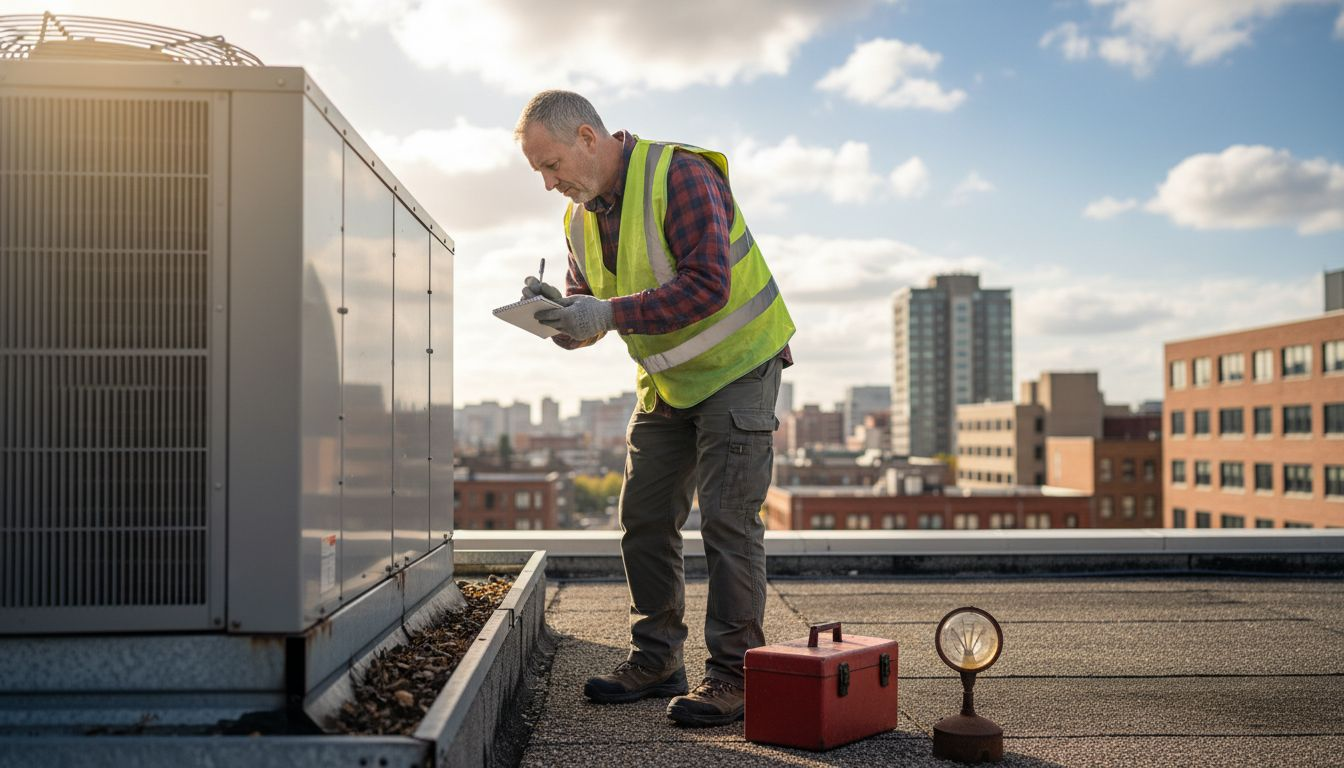
Weather in urban centres like London, New York, and Singapore can turn gutter issues into urgent, expensive emergencies for property managers. When heavy rain hits and debris piles up, commercial buildings become vulnerable to leaks, dampness, and even structural damage from blocked drainage. Gutter maintenance is a legal responsibility with real financial consequences. Discover practical approaches for keeping gutters in top condition, reducing costly repairs and insurance risks while maintaining building integrity.
Table of Contents
- Gutter Cleaning in Commercial Properties Explained
- Common Gutter Systems and Site Challenges
- Effects of Neglected Gutters on Structures
- Legal Duties and Liability for Property Managers
- Financial Impact: Water Damage and Insurance Risks
Key Takeaways
| Point | Details |
|---|---|
| Importance of Gutter Maintenance | Regular gutter cleaning is essential to prevent structural damage and costly repairs in commercial properties. |
| Legal Responsibilities | Property managers must ensure compliance with maintenance regulations to avoid legal issues and liabilities. |
| Financial Risks | Neglected gutters can lead to significant repair costs and insurance complications, making routine maintenance a prudent investment. |
| Suggested Maintenance Frequency | Schedule professional inspections and cleanings at least biannually to mitigate risks and enhance building performance. |
Gutter Cleaning in Commercial Properties Explained
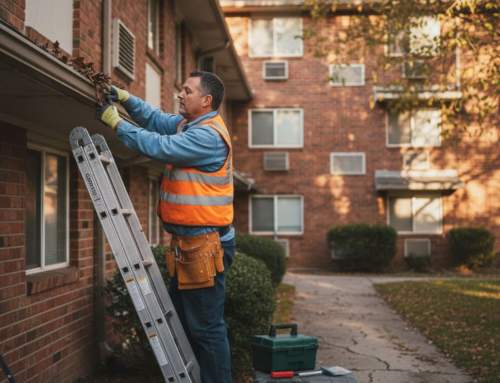
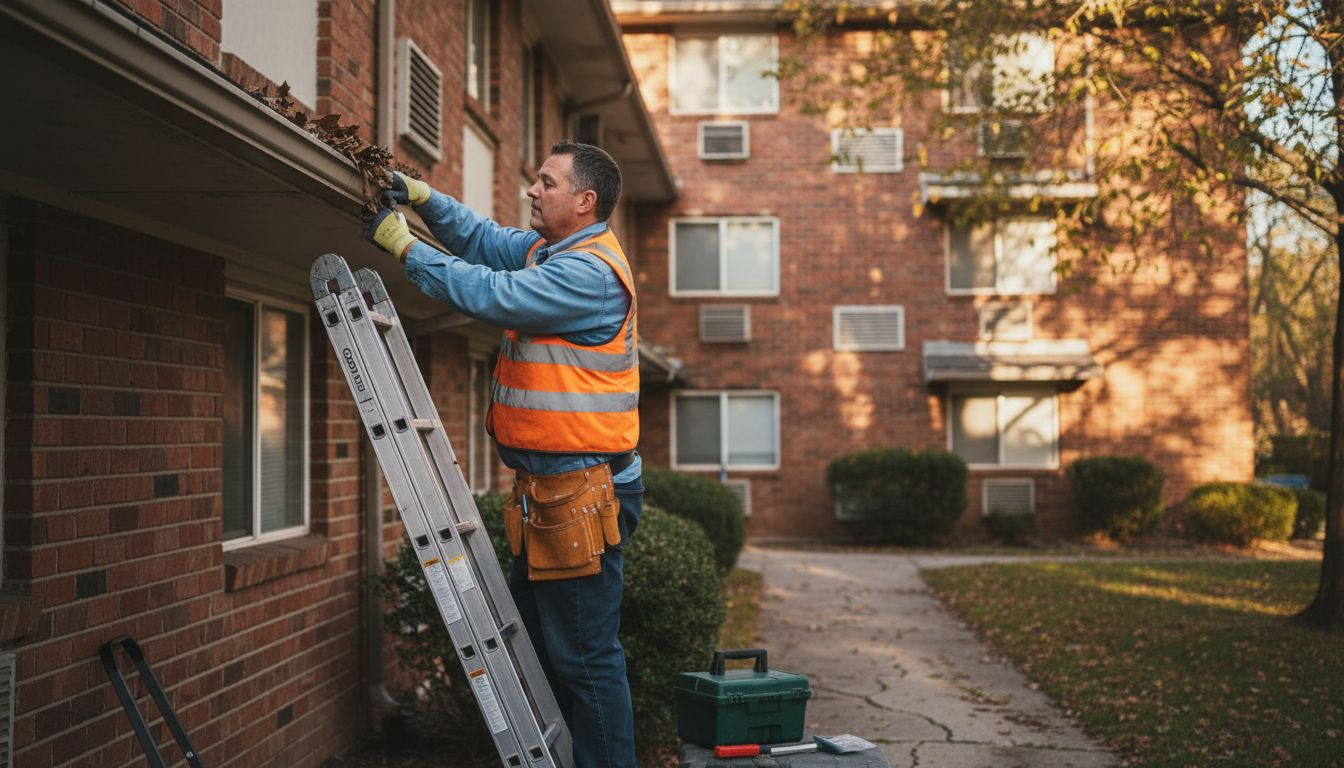
For commercial property managers, gutter maintenance represents a critical infrastructure responsibility that directly impacts building safety and longevity. Neglecting these essential drainage systems can lead to significant structural damage, costly repairs, and potential insurance complications. Comprehensive gutter maintenance checklists demonstrate the complex nature of this technical requirement.
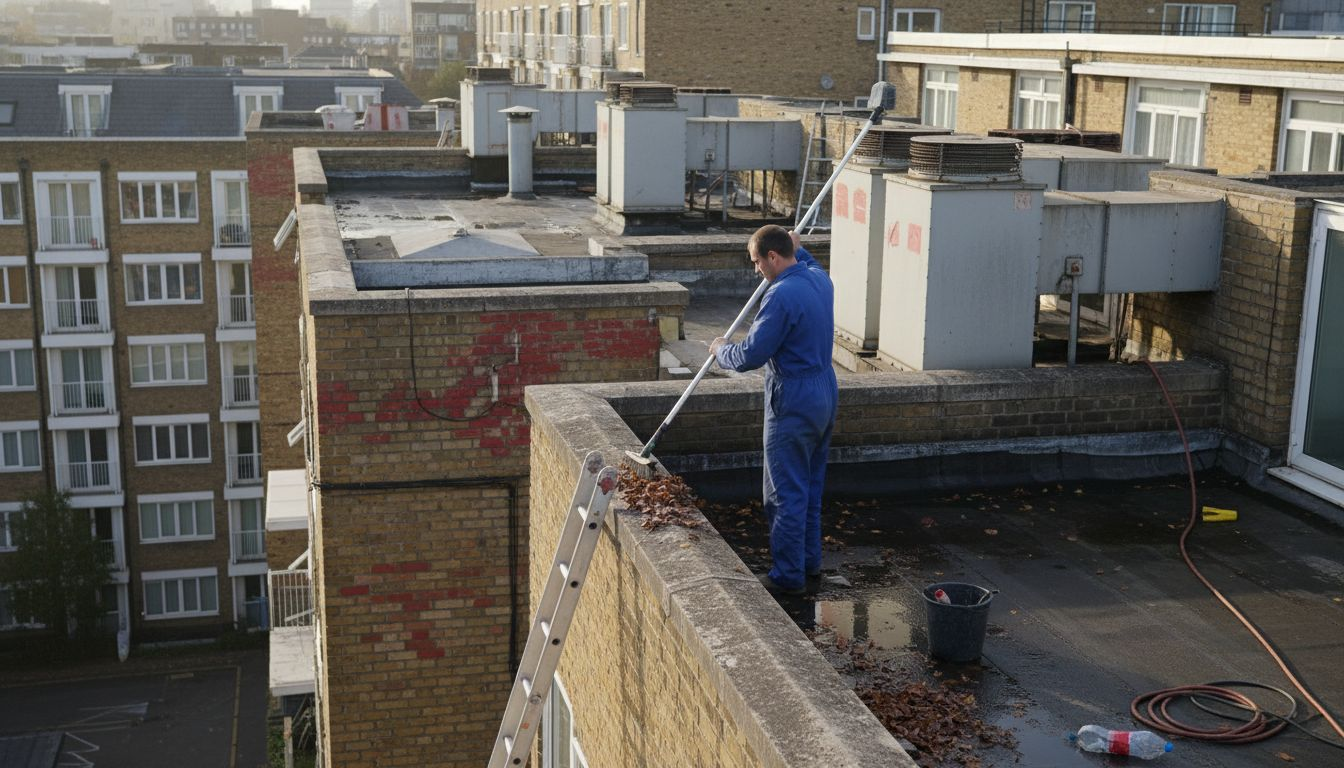
Commercial properties face unique challenges with gutter systems compared to residential buildings. High-rise structures, expansive roof surfaces, and varying architectural designs create complex drainage needs that require professional intervention. Blocked gutters in multi-storey buildings can cause water infiltration, potentially compromising entire structural frameworks. The risks include accelerated concrete deterioration, foundation weakening, and potential interior water damage that could disrupt business operations.
Professional gutter cleaning for commercial properties involves systematic processes targeting specific environmental challenges. Property managers must schedule regular inspections during critical seasonal periods, particularly in autumn when leaf debris accumulates and during spring when winter damage becomes apparent. These maintenance schedules help prevent emergency repairs, reduce long-term maintenance costs, and ensure consistent building performance.
Pro tip: Schedule professional gutter cleaning at least twice annually, prioritising comprehensive assessments that include detailed drainage system evaluations beyond simple debris removal.
Common Gutter Systems and Site Challenges
Commercial buildings require sophisticated gutter systems that can withstand complex environmental challenges. Advanced gutter materials have evolved to address the demanding requirements of modern architectural designs, with metals like aluminum, steel, copper, and zinc offering superior durability and performance across diverse building types.
The selection of gutter systems depends critically on architectural complexity, regional climate conditions, and specific building requirements. Industrial and commercial properties typically utilise heavy-duty materials such as galvanized steel and aluminium, while older buildings might feature cast iron or PVC components. These systems must effectively manage substantial water volumes, withstand temperature fluctuations, and resist corrosion that can compromise structural integrity.
Here’s a comparison of popular commercial gutter materials and their technical characteristics:
| Material | Durability Level | Corrosion Resistance | Common Application |
|---|---|---|---|
| Aluminium | High | Excellent | Offices, retail complexes |
| Galvanised Steel | Very high | Good | Warehouses, factories |
| Copper | Exceptional | Outstanding | Historic or luxury buildings |
| PVC | Moderate | Limited | Older or smaller properties |
| Zinc | Very high | Excellent | Modern, eco-friendly sites |
Modern commercial gutter technologies have responded to increasing environmental challenges by developing high-capacity troughs and downspouts designed to handle extreme weather conditions. Industrial guttering systems now incorporate advanced features to mitigate risks associated with heavy rainfall, snowmelt, and potential climate change impacts. Professional property managers must consider factors like material resistance, installation precision, and ongoing maintenance strategies to ensure long-term drainage system reliability.
Pro tip: Conduct comprehensive material assessments that evaluate gutter system compatibility with your specific building’s architectural design, local climate conditions, and anticipated environmental stressors.
Effects of Neglected Gutters on Structures
Neglected gutters represent a silent but significant threat to building structural integrity, potentially causing extensive and expensive damage that extends far beyond simple drainage issues. Water mismanagement through poorly maintained gutter systems can trigger a cascading series of structural complications that compromise the entire building’s foundation, walls, and internal systems. Comprehensive gutter maintenance becomes crucial in preventing these potentially catastrophic structural failures.
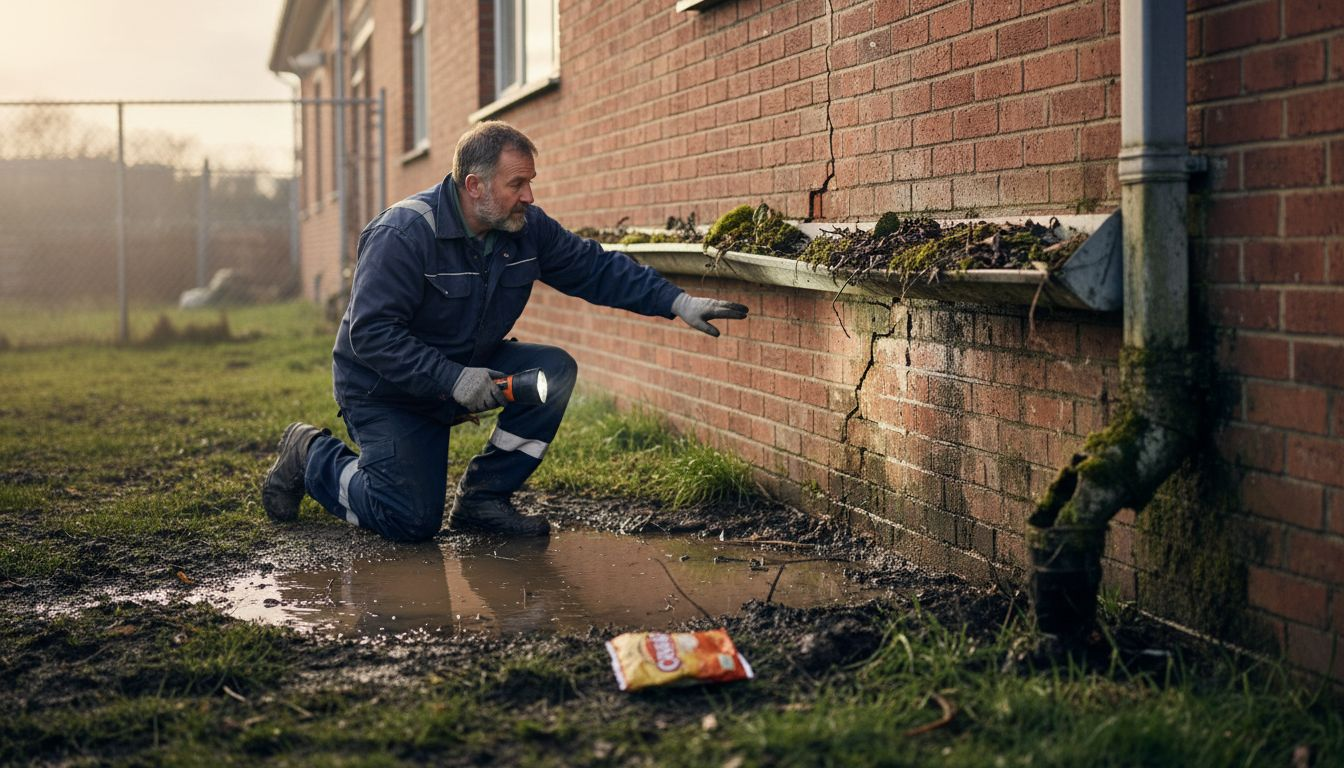
The most immediate and dangerous consequence of unmaintained gutters involves water infiltration and redirection. When gutters become blocked or damaged, rainwater cannot flow efficiently away from the building’s structure. This ineffective drainage causes water to accumulate around foundations, potentially seeping into basement areas, weakening concrete structures, and creating conditions conducive to significant structural movement, settling, and potential cracking. Persistent moisture can also compromise building materials, leading to accelerated deterioration of external walls, window frames, and foundational elements.
Beyond direct water damage, neglected gutters create additional architectural risks that compound over time. Blocked gutters can become incredibly heavy with accumulated debris, potentially causing structural stress to roof edges and fascia boards. The additional weight and moisture retention can lead to wood rot, metal corrosion, and weakening of critical connection points between roofing and wall structures. These progressive damages often remain unnoticed until substantial repair work becomes necessary, making regular professional inspections an essential preventative strategy for building managers.
Pro tip: Implement a quarterly visual inspection programme to identify potential gutter damage early, focusing on signs of sagging, water staining, or debris accumulation that could indicate developing structural risks.
Legal Duties and Liability for Property Managers
Property managers operate within a complex legal framework that imposes significant responsibilities regarding building maintenance, particularly concerning critical infrastructure like gutter systems. Property management legal obligations extend beyond simple maintenance, encompassing broader duties to ensure tenant safety, structural integrity, and compliance with housing regulations.
The legal landscape surrounding gutter maintenance is nuanced, with specific responsibilities varying depending on lease agreements, local building codes, and property types. Commercial and multi-unit properties typically place the burden of maintenance squarely on property managers, who must demonstrate proactive management to prevent potential water damage, structural deterioration, and associated health risks. Failure to maintain gutters can result in serious legal consequences, including potential negligence claims, insurance complications, and substantial financial penalties for property damage.
Understanding the depth of legal accountability requires a comprehensive approach to risk management. Property manager legal responsibilities mandate not just reactive repairs, but systematic preventative maintenance. This includes regular professional inspections, documented maintenance records, and prompt addressing of any drainage issues. Property managers must demonstrate reasonable care and diligence, which means implementing structured maintenance programmes that can withstand potential legal scrutiny and protect both the property and its occupants from water-related damages.
Pro tip: Develop a comprehensive maintenance log that records all gutter inspections, cleaning activities, and repairs, creating a robust documentation trail to demonstrate legal compliance and proactive management.
Financial Impact: Water Damage and Insurance Risks
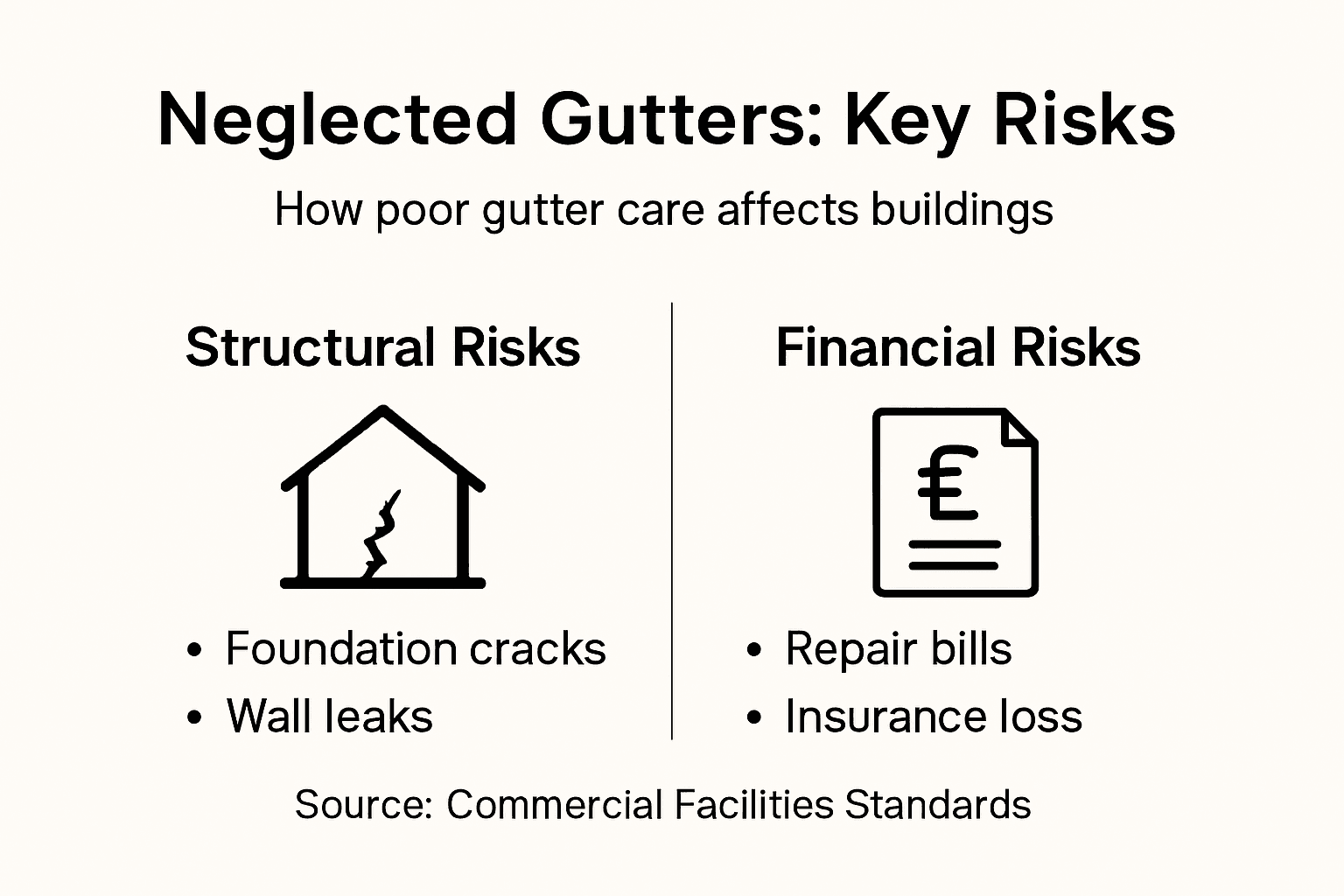
Property managers face substantial financial risks from neglected gutter systems, with potential damages far exceeding the modest cost of routine maintenance. Clogged gutter consequences can escalate quickly, transforming a minor drainage issue into a catastrophic financial burden that threatens both property value and insurance coverage.
The financial implications of water damage extend well beyond immediate repair costs. Foundation repairs, structural reinforcement, and moisture remediation can rapidly consume thousands of pounds, often rendering properties temporarily uninhabitable. Insurance providers are increasingly stringent about maintenance documentation, with many policies explicitly excluding damage resulting from preventable maintenance failures. This means property managers could face complete claim rejection if they cannot demonstrate consistent, professional gutter maintenance and proactive risk management.
This table summarises the financial impact of neglected gutter maintenance for property managers:
| Financial Concern | Immediate Risk | Long-Term Effect | Insurance Implication |
|---|---|---|---|
| Foundation Repairs | Structural weakness | Increased repair costs | Claim rejection if neglected |
| Water Damage Remediation | Uninhabitable conditions | Decreased property value | Policy exclusions possible |
| Roof Structural Issues | Emergency expensive fixes | Ongoing operational disruption | Higher premiums or no coverage |
Risk mitigation requires a strategic approach to financial planning and infrastructure management. Water damage prevention strategies must include comprehensive documentation, regular professional inspections, and systematic maintenance protocols. By investing in routine gutter cleaning and maintenance, property managers can significantly reduce potential repair expenses, maintain insurance eligibility, and protect the long-term financial integrity of their commercial properties. These preventative measures represent a fraction of the potential cost of extensive water damage restoration.
Pro tip: Develop a detailed financial risk assessment model that calculates potential water damage costs, using this analysis to justify proactive gutter maintenance investments to stakeholders.
Protect Your Commercial Property with Expert Gutter Cleaning
Building managers face serious challenges with neglected gutters including structural damage, costly repairs, and legal liabilities. You deserve a partner who understands the critical importance of professional gutter maintenance that goes beyond debris removal to comprehensive inspections and tailored solutions for commercial buildings and blocks of flats. Maintaining the integrity of your gutters safeguards foundations, prevents water damage, and preserves property value.
Do not wait until gutter issues threaten your building’s safety or your insurance claims. Benefit from the proven expertise of our Gutter Cleaning Service for Blocks of Flats and Commercial Buildings that delivers reliable, consistent cleaning and maintenance. Take control now—visit our main site to schedule your professional gutter cleaning. Protect your investment with timely care and expert advice tailored to your building’s unique needs.
Frequently Asked Questions
Why is gutter cleaning important for building managers?
Regular gutter cleaning is essential for preventing water infiltration and drainage issues that can compromise the structural integrity of a building. Neglected gutters can lead to significant water damage, increased repair costs, and potential legal liabilities for property managers.
How often should commercial gutters be cleaned?
It is recommended that professional gutter cleaning be scheduled at least twice a year, particularly in autumn and spring, to address debris accumulation and potential damage from winter weather. Regular inspections help prevent emergencies and maintain effective drainage systems.
What are the consequences of neglected gutters?
Neglected gutters can lead to water accumulation around foundations, causing structural movement, basement flooding, and deterioration of building materials. This can result in costly repairs, increased insurance risks, and potential legal complications for property managers.
What materials are commonly used in commercial gutter systems?
Common materials for commercial gutter systems include aluminium, galvanised steel, copper, and PVC. Each material has distinct durability levels and corrosion resistance, making them suitable for various building types and environmental conditions.


Leave A Comment