
Blocked gutters in a United Kingdom flat or a Canadian office tower can quickly lead to expensive repairs. For property managers, the challenge is finding a cleaning schedule that actually matches each building’s unique needs and environment. By focusing on a risk-based approach to gutter cleaning intervals and aligning maintenance to real-world risk factors, you gain true control over water management, asset protection, and day-to-day operational costs.
Table of Contents
- Step 1: Assess Property Type And Gutter Requirements
- Step 2: Establish Ideal Cleaning Intervals Using Risk Factors
- Step 3: Schedule Professional Inspections For Verification
- Step 4: Document Findings And Adjust Cleaning Plans
Quick Summary
| Key Insight | Explanation |
|---|---|
| 1. Assess property types and gutter needs | Evaluate architectural design and environmental context to determine gutter maintenance requirements properly. |
| 2. Establish cleaning intervals based on risk | Create a cleaning schedule based on environmental and structural risk factors to optimise maintenance frequency. |
| 3. Schedule professional inspections regularly | Professional inspections help detect vulnerabilities and ensure gutters function effectively; aim for biannual checks. |
| 4. Document findings meticulously | Systematic documentation aids in proactive maintenance and helps refine cleaning schedules over time. |
| 5. Utilise digital management systems | Implement digital tools for efficient tracking and retrieving of inspection reports and maintenance records. |
Step 1: Assess property type and gutter requirements
Gutter cleaning requirements vary dramatically depending on your specific property characteristics. Property managers must carefully evaluate several critical factors to determine appropriate gutter maintenance strategies.
The first step involves understanding your property’s unique architectural design and environmental context. Different building types – whether residential blocks, commercial complexes, or industrial facilities – demand tailored gutter assessment approaches. Factors such as roof area, pitch, surrounding vegetation, and local rainfall patterns significantly influence gutter sizing and maintenance needs.
Key considerations for property managers include:
- Total roof surface area
- Roof pitch and configuration
- Number of gutter sections and downspouts
- Local annual rainfall intensity
- Proximity to trees and potential debris sources
- Building age and existing gutter system condition
Professional assessment typically involves measuring precise roof dimensions, analysing drainage patterns, and calculating potential water volume. Utilising technical resources like industry calculators can help determine precise gutter requirements, ensuring optimal water management and preventing potential structural damage.
Top Tip: Conduct a comprehensive property survey annually to identify subtle changes in gutter performance and potential maintenance requirements.
Step 2: Establish ideal cleaning intervals using risk factors
Effective gutter maintenance requires a strategic approach to determining cleaning frequencies that balance operational efficiency with property protection. Property managers must develop a nuanced understanding of the specific risk factors that influence gutter performance and potential degradation.
The core of establishing ideal cleaning intervals lies in comprehensively evaluating multiple environmental and structural risk factors. Storm drain system cleaning guidelines recommend a dynamic approach that considers several critical elements affecting gutter maintenance schedules.
Key risk factors to assess include:
- Local rainfall intensity and seasonal precipitation patterns
- Surrounding vegetation density and types
- Property location and exposure to environmental debris
- Building usage and traffic patterns
- Age and condition of existing gutter infrastructure
- Proximity to trees, construction sites, or industrial areas
Property managers should categorise their properties into risk tiers, with high-risk locations requiring more frequent inspections and cleaning. For instance, properties near dense forests or in regions with heavy seasonal leaf fall might necessitate quarterly cleaning, whereas urban buildings with minimal surrounding vegetation could extend intervals to semi-annually.
Comprehensive risk assessment allows property managers to optimise gutter maintenance schedules, preventing costly water damage and system failures.
Additionally, documenting each property’s unique characteristics and creating a tailored maintenance log helps track performance and refine cleaning intervals over time. Digital tracking tools can assist in managing these complex scheduling requirements effectively.
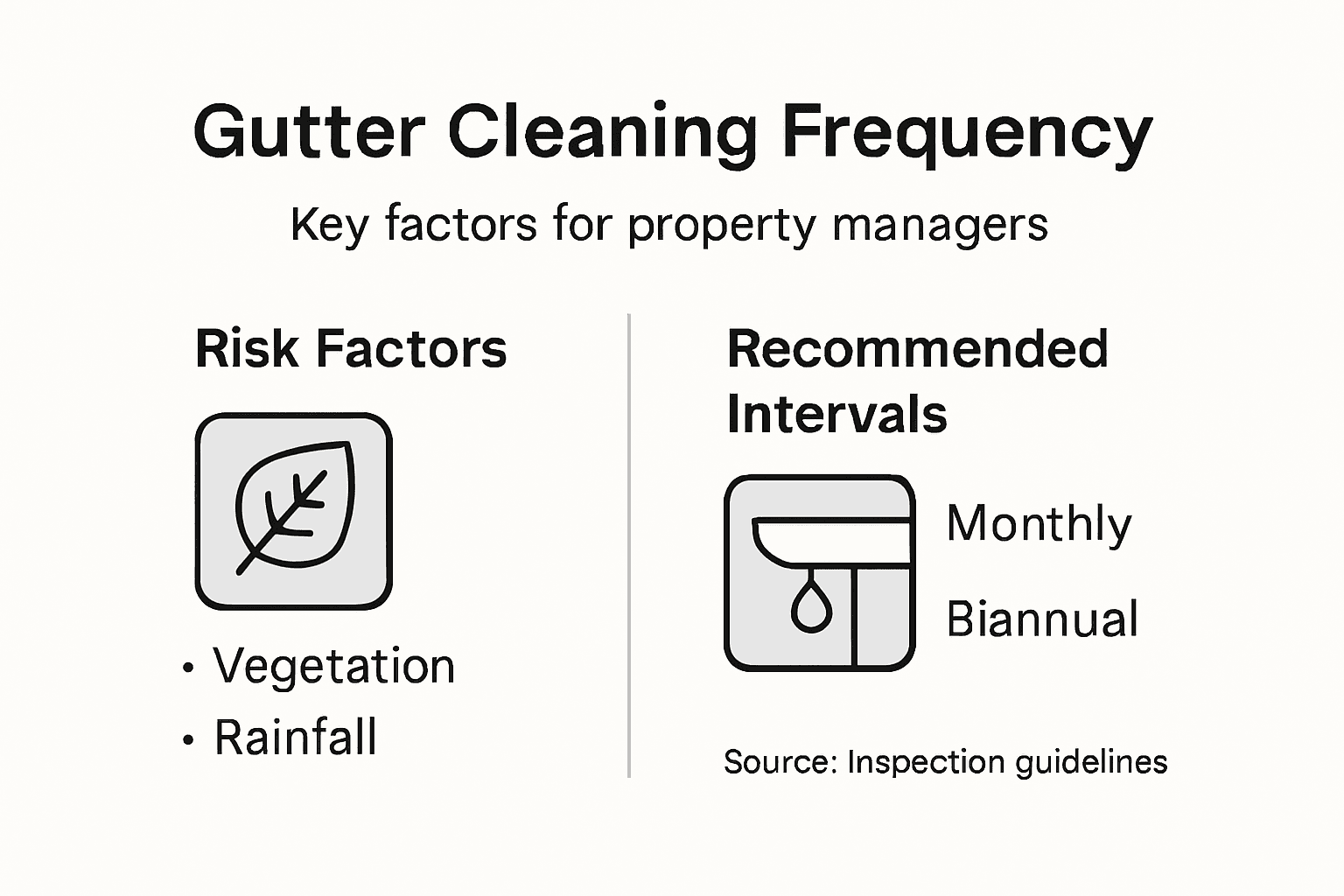
Here’s a comparison of typical gutter cleaning intervals based on property risk tier:
| Risk Tier | Suggested Inspection Frequency | Common Property Types |
|---|---|---|
| High Risk | Every 3 months | Woodland-surrounded estates |
| Moderate Risk | Every 6 months | Suburban office buildings |
| Low Risk | Once a year | Urban commercial properties |
Top Tip: Create a comprehensive risk matrix for each property to standardise and streamline your gutter maintenance scheduling process.
Step 3: Schedule professional inspections for verification
Professional gutter inspections are a critical component of comprehensive property maintenance, providing expert verification of your gutter system’s overall condition and performance. These specialised assessments go beyond simple visual checks, offering property managers detailed insights into potential vulnerabilities and maintenance requirements.
Gutters and downspouts inspection protocols recommend comprehensive evaluations that cover multiple critical aspects of system functionality. Professional inspectors systematically assess various elements to ensure optimal gutter performance and prevent potential water damage.
Key inspection components typically include:
- Verifying proper gutter slope and alignment
- Checking for signs of rust, corrosion, or structural damage
- Examining downspout connections and water redirection efficiency
- Identifying potential blockages or debris accumulation
- Assessing sealant integrity and joint connections
- Evaluating overall drainage system performance
Property managers should aim to schedule professional inspections at least twice annually – ideally during spring and autumn – to capture seasonal variations and potential weather-related impacts. These strategic assessments allow for proactive maintenance and early detection of potential issues before they escalate into costly repairs.
Professional inspections provide a comprehensive assessment that goes beyond surface-level observations, identifying hidden vulnerabilities in gutter systems.
When selecting an inspection professional, prioritise those with specific qualifications in stormwater management and building maintenance. Detailed inspection reports should include photographic documentation, specific recommendations, and estimated timelines for potential repairs or maintenance.
Top Tip: Negotiate a standardised inspection report format with your chosen professional to ensure consistent and comparable assessments across multiple properties.
Step 4: Document findings and adjust cleaning plans
Systematic documentation of gutter maintenance findings is crucial for developing adaptive and efficient property management strategies. By meticulously recording inspection and cleaning outcomes, property managers can create data-driven approaches that continuously improve gutter system performance and maintenance efficiency.

Gutter and downspout maintenance documentation/Book%3A_To_Catch_the_Rain_(Grafman)/04%3A_Calculations/4.03%3A_Gutter_and_Downspout_Sizing) requires comprehensive tracking of multiple critical parameters to support strategic decision-making.
Key documentation elements should include:
- Date and time of inspection/cleaning
- Specific location and property details
- Volume and type of debris removed
- Observed structural conditions
- Photographic evidence of damage or wear
- Recommendations for repairs or modifications
- Estimated maintenance intervals
- Weather conditions during inspection
Digital documentation platforms can significantly streamline this process, allowing property managers to create standardised templates and generate comparative reports across multiple properties. Consistent record-keeping enables more precise prediction of maintenance requirements and potential system vulnerabilities.
Systematic documentation transforms reactive maintenance into a proactive, strategic management approach for gutter systems.
Property managers should establish a standardised reporting framework that allows for easy comparison and trend analysis. By tracking performance metrics over time, you can identify patterns, anticipate potential issues, and optimise cleaning schedules to prevent costly repairs and water damage.
Below is a summary of core benefits of consistent gutter documentation:
| Benefit | Result for Property Managers |
|---|---|
| Early risk identification | Prevents costly repair emergencies |
| Maintenance trend analysis | Optimises scheduling for future needs |
| Enhanced compliance | Simplifies audits and insurance claims |
| Improved asset longevity | Extends gutter system lifespan |
Top Tip: Implement a digital asset management system that automatically timestamps and categorises inspection reports for seamless tracking and retrieval.
Take Control of Your Gutter Maintenance Today
Managing the complex gutter cleaning schedules outlined in our guide can quickly become overwhelming, especially when balancing risk factors and the need for detailed documentation. Property managers know that ignoring proper inspection routines and cleaning intervals can lead to costly water damage and structural issues. At Local Gutter Cleaner, we specialise in providing reliable gutter cleaning services tailored for blocks of flats and commercial buildings ensuring your gutters are maintained with precision and care.
Don’t wait for hidden vulnerabilities to escalate into expensive repairs. Benefit from professional inspections and systematic maintenance that align perfectly with your risk assessment needs. Visit Local Gutter Cleaner Services now and discover how our expert team can help you standardise your gutter care. Start protecting your properties today with effective, scheduled cleaning and inspection services designed especially for your complex property types.
Frequently Asked Questions
How often should I clean gutters on my property?
Cleaning frequencies for gutters depend on risk factors such as vegetation density and rainfall intensity. Generally, properties near heavy foliage should be cleaned every three months, while urban locations with minimal debris can schedule cleanings once a year.
What risk factors should I consider when determining gutter cleaning intervals?
Key risk factors include local rainfall patterns, the density of surrounding vegetation, and the property’s exposure to debris sources. Assess these factors to establish cleaning schedules; for instance, properties in high-risk areas may require more frequent inspections.
How can I create a maintenance log for my property’s gutters?
Develop a maintenance log by systematically recording each cleaning and inspection’s date, debris volume, and observed conditions. This log will help you track gutter performance over time and adjust cleaning schedules based on documented findings.
When is the best time to schedule professional gutter inspections?
Professional gutter inspections are best scheduled at least twice a year, ideally in spring and autumn. This timing captures seasonal variations and potential weather impacts, allowing for proactive maintenance before issues escalate.
What are the benefits of documenting gutter maintenance findings?
Documenting maintenance findings allows for the early identification of risks, optimised scheduling, and improved compliance during audits. This proactive approach can prevent costly repairs and enhance the longevity of the gutter system.
Recommended
- Gutter Cleaning Service Wilmington – Houses – Blocks of flats
- Gutter Cleaning Service Greenhithe – Houses – Blocks of flats
- Gutter Cleaning Service Lee Green – Houses – Blocks of flats
- Gutter Cleaning Service Longfield – Houses – Blocks of flats
- Fleet Management Basics: Everything You Need to Know – ORNER




[…] Gutter Cleaning Frequency Guide for Property Managers […]