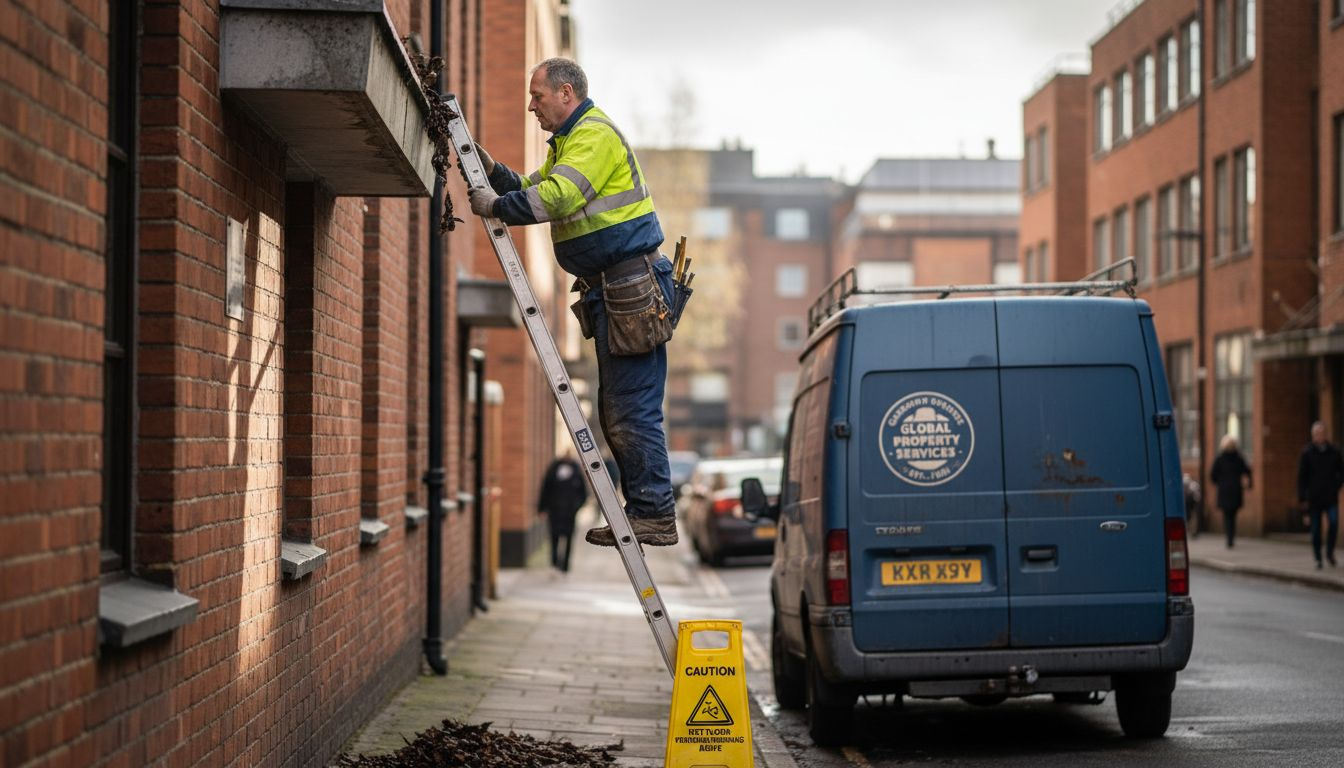
Blocked gutters cause over £20 million in property damage across British commercial buildings every year. For facility managers tasked with keeping properties damp-free and audit-ready, even a small oversight can snowball into costly repairs or compliance headaches. Understanding professional gutter cleaning options is key to protecting your British assets, maintaining healthy drainage, and avoiding the risks that unchecked water brings to complex commercial infrastructure.
Table of Contents
- Defining Commercial Gutter Cleaning Services
- Types of Commercial Gutters and Challenges
- How Blocked Gutters Cause Structural Damage
- Legal Responsibilities for Facility Managers
- Risks of Neglect and Benefits of Routine Care
Key Takeaways
| Point | Details |
|---|---|
| Importance of Commercial Gutter Maintenance | Regular gutter cleaning prevents structural damage and costly repairs in commercial properties. |
| Types of Gutter Systems | Understanding different gutter types helps in selecting the appropriate system for diverse architectural needs. |
| Legal Responsibilities for Facility Managers | Facility managers must ensure compliance with maintenance regulations to avoid legal liabilities related to water damage. |
| Benefits of Routine Care | Consistent maintenance enhances building lifespan and reduces potential repair costs through early detection of issues. |
Defining Commercial Gutter Cleaning Services
Commercial gutter cleaning services represent a specialised maintenance approach designed to protect commercial property infrastructure through systematic removal of debris, blockages, and potential water damage risks. Unlike residential gutter maintenance, these services address complex drainage systems found in larger establishments such as office buildings, industrial complexes, shopping centres, and institutional facilities.
Typically, commercial gutter cleaning encompasses comprehensive assessments and interventions that go beyond simple debris removal. Professional technicians utilise specialised equipment like industrial-grade pressure washers, extendable cleaning tools, and safety harnesses to navigate challenging architectural configurations. These services are crucial for preventing water ingress, structural damage, and potential damp-related issues that can significantly impact a property’s integrity and operational efficiency.
The scope of commercial cleaning services extends far beyond basic maintenance, incorporating risk management and preventative strategies. Skilled technicians conduct thorough inspections to identify potential structural vulnerabilities, assessing gutter alignments, checking for corrosion, and ensuring proper water flow management. They typically provide detailed reports highlighting areas of concern, recommended interventions, and projected maintenance schedules tailored to specific building requirements.
Understanding the intricate requirements of commercial properties means recognising that gutter maintenance is not a one-size-fits-all solution. Different architectural designs, regional weather patterns, and specific business environments demand customised approaches that address unique drainage challenges.
Expert Maintenance Tip: Schedule comprehensive gutter assessments at least twice annually, ideally before winter and after autumn leaf fall, to prevent potential water damage and maintain optimal drainage performance.
Types of Commercial Gutters and Challenges
Commercial properties require sophisticated gutter systems that can handle complex drainage requirements across diverse architectural designs. Choosing the right gutter system involves understanding multiple gutter types, each engineered to address specific structural and environmental challenges. The primary commercial gutter configurations include K-Style, Half-Round, Box, and Fascia gutters, each offering unique performance characteristics suited to different building profiles.
The K-Style gutter represents the most common commercial configuration, featuring a flat back and decorative front edge that resembles crown moulding. These gutters provide excellent water capacity and integrate seamlessly with modern architectural designs. Half-Round gutters, characterised by their semicircular shape, offer superior water flow dynamics and work exceptionally well with historic or traditional building aesthetics. Box gutters, typically concealed within the building’s structure, provide a streamlined appearance and can manage substantial water volumes, making them ideal for large commercial complexes.
Here is a comparison of the main types of commercial gutters and their typical applications:
| Gutter Type | Key Features | Best Suited For |
|---|---|---|
| K-Style | Crown-moulding appearance, high capacity | Modern office buildings |
| Half-Round | Semicircular, efficient water flow | Historic and traditional properties |
| Box | Concealed design, large capacity | Industrial complexes |
| Fascia | Mounted to fascia boards, neat look | Retail centres and schools |
Environmental challenges significantly impact gutter performance, requiring nuanced selection strategies. Commercial gutter designs must account for regional weather patterns, precipitation levels, and architectural specifics. Seamless gutters have gained popularity due to their reduced leak potential, while materials like aluminium, copper, and galvanised steel offer varying durability and corrosion resistance. Factors such as roof pitch, building height, and local rainfall intensity determine the most appropriate gutter system configuration.
Beyond material selection, commercial gutter systems must address complex installation challenges. Uneven roof lines, multiple drainage points, and intricate architectural features demand customised solutions that standard residential approaches cannot accommodate. Professional assessment becomes crucial in identifying potential water management risks and developing comprehensive drainage strategies.
Professional Selection Tip: Consult a specialist who can conduct a comprehensive site survey, evaluating your specific building’s architectural characteristics, regional climate conditions, and water management requirements before selecting a gutter system.
How Blocked Gutters Cause Structural Damage
Blocked gutters represent a silent but catastrophic threat to commercial property infrastructure, capable of causing extensive and expensive structural damage if left unaddressed. When gutters become obstructed with leaves, debris, moss, and other organic materials, they lose their primary function of efficiently channelling water away from critical building structures, leading to potentially devastating consequences.
Water redirection problems emerge rapidly when gutters cannot perform their fundamental drainage role. Blocked gutter systems create significant water overflow risks, causing water to cascade down building walls, saturate foundations, and penetrate critical structural elements. This uncontrolled water flow can compromise building materials, leading to accelerated concrete deterioration, steel reinforcement corrosion, and progressive structural weakening.
The cascading damage from blocked gutters extends far beyond surface-level concerns. Prolonged water exposure can trigger severe moisture-related issues including foundation settlement, wall structural cracking, basement flooding, and accelerated masonry degradation. Moisture penetration creates ideal conditions for mould proliferation, wood rot, and compromises the building’s thermal insulation properties. Commercial properties with complex architectural designs are particularly vulnerable, as irregular rooflines and multiple drainage points increase the potential for blocked water channels.
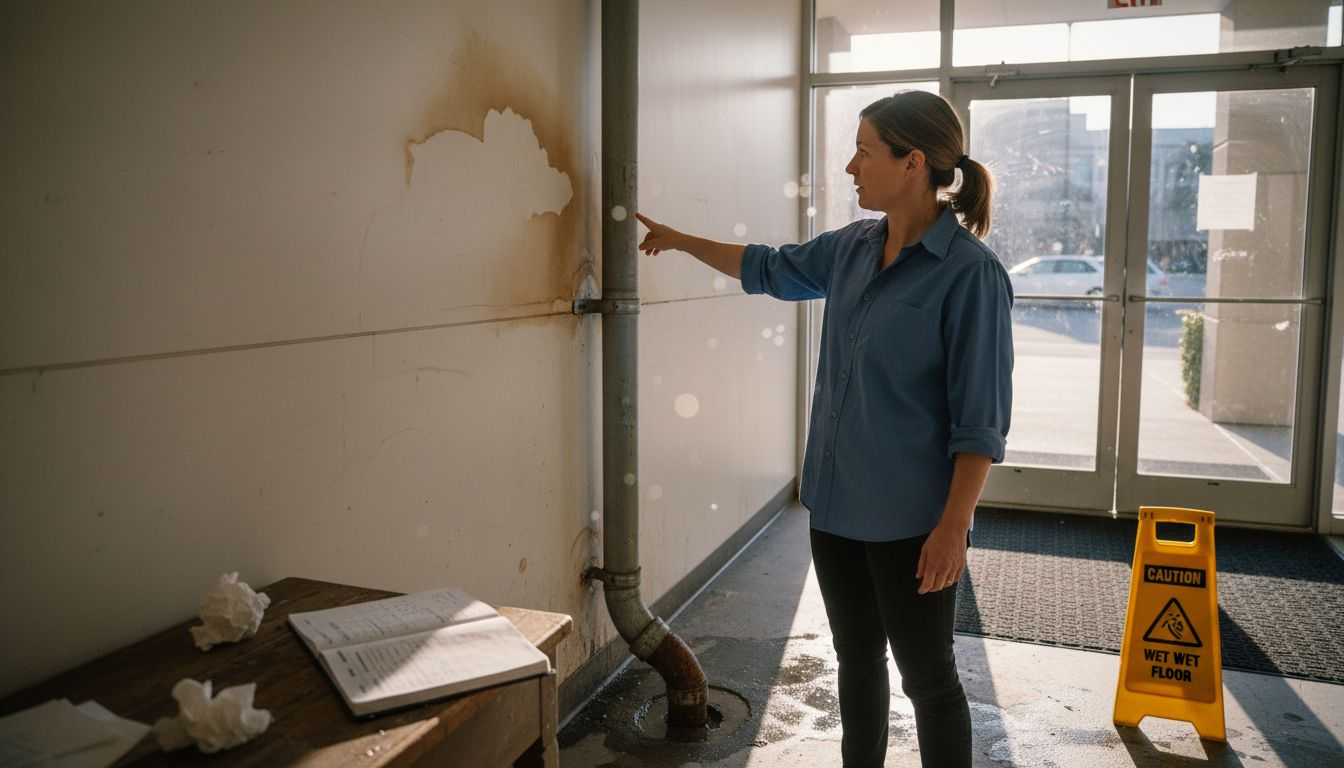
Each unresolved gutter blockage transforms from a minor maintenance issue into a potential multi-thousand-pound repair scenario. The incremental damage occurs silently, often remaining undetected until significant structural compromise has already manifested. Professional building managers must recognise that preventative gutter maintenance represents a strategic investment in long-term property preservation.
Structural Protection Tip: Implement quarterly professional gutter inspections and cleaning to prevent water damage, identifying and resolving potential blockage points before they escalate into costly structural repair projects.
Legal Responsibilities for Facility Managers
Facility managers occupy a critical role in maintaining commercial property infrastructure, with legal obligations that extend far beyond routine maintenance. These professionals bear significant responsibility for ensuring building systems function safely and efficiently, with gutter maintenance representing a crucial aspect of their regulatory compliance requirements.
Property maintenance responsibilities encompass a comprehensive set of legal expectations that protect both building occupants and the structural integrity of commercial assets. Duty of care principles mandate that facility managers proactively identify and mitigate potential hazards, including water damage risks arising from neglected gutter systems. Failure to address drainage issues could potentially expose organisations to legal liability, insurance complications, and substantial financial penalties should structural damage or safety incidents occur.
The legal framework surrounding facility management requires systematic documentation of maintenance activities, risk assessments, and remediation efforts. This documentation serves multiple purposes: demonstrating compliance with health and safety regulations, providing evidence of responsible management, and creating a clear audit trail in the event of potential legal challenges. Comprehensive maintenance records become crucial when investigating structural issues, insurance claims, or potential litigation related to property damage.
Beyond immediate structural concerns, facility managers must consider broader regulatory requirements that intersect with gutter maintenance. Building safety legislation, insurance policy stipulations, and workplace health regulations all impose specific expectations regarding property upkeep. These legal frameworks demand a proactive approach to maintenance, requiring regular inspections, timely repairs, and comprehensive risk management strategies that prevent potential structural compromises.
Compliance Protection Tip: Develop a structured maintenance log documenting all gutter cleaning, inspection, and repair activities, ensuring comprehensive evidence of your proactive approach to property management and regulatory compliance.
Risks of Neglect and Benefits of Routine Care
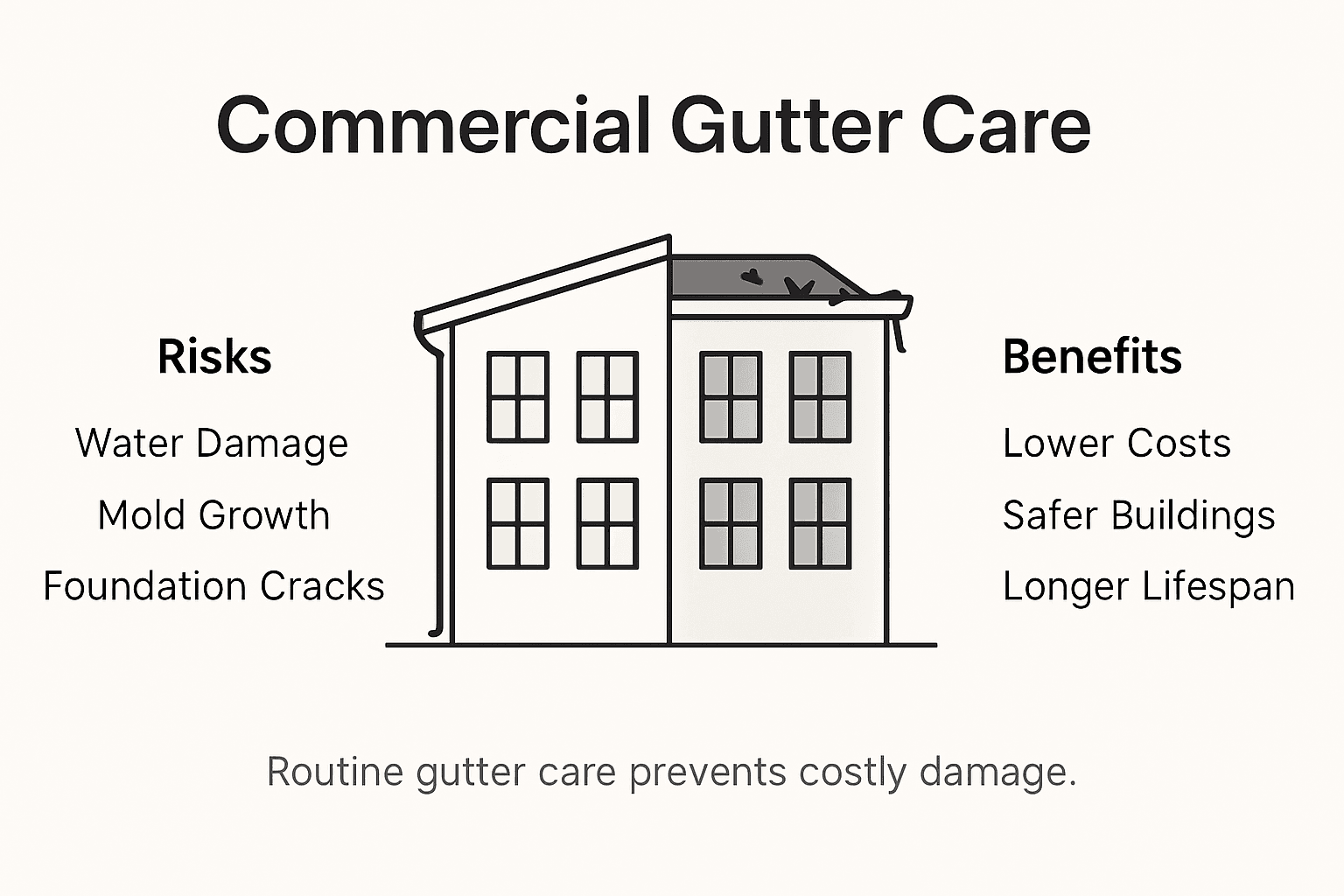
Commercial gutter maintenance represents a critical investment in property preservation, where the consequences of neglect can far outweigh the modest expense of routine care. Systematic gutter maintenance transforms from a simple operational task into a strategic risk management approach, protecting substantial financial assets from incremental and potentially catastrophic damage.
The risks of neglecting gutter systems are both immediate and progressive. Unaddressed blockages create cascading structural problems that compound exponentially, including foundation erosion, wall structural degradation, and moisture penetration that compromises building integrity. Water damage can trigger extensive repair requirements, with potential costs ranging from thousands to potentially hundreds of thousands of pounds. The subtle nature of these damages means that significant structural compromises often remain undetected until substantial financial intervention becomes unavoidable.
Routine care provides multifaceted benefits beyond simple damage prevention. Regular professional gutter maintenance offers comprehensive property health assessments, identifying potential structural vulnerabilities before they escalate. These inspections create opportunities for early intervention, allowing facility managers to address minor issues proactively. Additional advantages include improved water management, enhanced building aesthetic preservation, extended infrastructure lifespan, and potential insurance premium reductions through demonstrated responsible property management.
Each commercial property presents unique maintenance challenges, influenced by architectural design, regional weather patterns, and surrounding environmental conditions. Sophisticated gutter maintenance strategies must therefore be tailored to specific building characteristics, recognising that a standardised approach cannot address the nuanced requirements of diverse commercial infrastructure. Professional assessment becomes crucial in developing targeted, effective maintenance protocols that protect long-term property value and operational efficiency.
The table below summarises the impact of neglected vs. well-maintained commercial gutters:
| Maintenance Approach | Likely Risks | Long-term Benefits |
|---|---|---|
| Neglected Gutters | Foundation erosion, costly repairs | Extensive structural damage avoidance |
| Routine Care | Rare minor issues, early detection | Reduced repair costs, longer building lifespan |
Preventative Maintenance Tip: Develop a customised gutter maintenance schedule that includes quarterly professional inspections and bi-annual comprehensive cleaning, ensuring your property remains protected against potential water damage risks.
Protect Your Commercial Property with Expert Gutter Cleaning
Blocked gutters can quietly cause serious structural damage to your commercial building if left unchecked. From foundation erosion to damp-related issues, the risks are costly and difficult to reverse. Professional commercial gutter cleaning is a vital preventative step that safeguards your property’s integrity while ensuring compliance with your legal duty of care. Our specialised techniques and thorough inspections tackle blockages and potential water flow problems before they escalate into expensive repairs.
Don’t wait for costly damage to appear. Partner with local experts who understand the unique demands of commercial gutter systems and offer customised maintenance solutions. Visit Local Gutter Cleaner to schedule your inspection today and protect your commercial property from hidden water damage risks. Learn more about commercial gutter cleaning and take control of your maintenance with confidence.
Frequently Asked Questions
What are commercial gutter cleaning services?
Commercial gutter cleaning services are specialised maintenance solutions designed to remove debris and blockages from gutter systems in commercial properties, thus preventing structural damage and water ingress.
How often should commercial properties have their gutters cleaned?
It is recommended to schedule comprehensive gutter assessments at least twice a year, ideally before winter and after autumn leaf fall, to prevent potential water damage and maintain optimal drainage performance.
What types of gutters are commonly used in commercial properties?
Common types of commercial gutters include K-Style, Half-Round, Box, and Fascia gutters, each designed to meet specific drainage needs and architectural styles of various commercial buildings.
What are the risks of neglecting gutter maintenance in commercial properties?
Neglecting gutter maintenance can lead to serious structural issues such as foundation erosion, wall structural degradation, and water damage, resulting in costly repairs and potential property damage liabilities.
Recommended
- Commercial Gutter Cleaning – Why Property Health Depends On It
- Role of Gutter Maintenance – Protecting Property Health
- How to Clean Gutters Safely for Better Water Flow
- Gutter Cleaning Greenhithe – Houses – Blocks of flats – Industrial
- Public Adjuster Roof Claim Assistance For Residential & Commercial Solutions






Leave A Comment