
Blocked gutters cause over £20 million in damp-related insurance claims each year across British homes and properties. This often overlooked chore can quickly escalate into costly structural damage if neglected. For British homeowners and property managers, mastering regular gutter maintenance is not just a wise investment but a vital strategy for protecting your building against persistent damp, mould, and premature wear. Discover practical steps to keep your property’s drainage running smoothly and safeguard its value year-round.
Table of Contents
- Understand The Importance Of Routine Gutter Cleaning
- Inspect Gutters And Downpipes For Blockages
- Use Safe Equipment And Protective Gear
- Remove Debris With Effective Cleaning Tools
- Check For Signs Of Damage Or Wear
- Ensure Proper Water Flow After Cleaning
- Schedule Professional Maintenance As Needed
Quick Summary
| Takeaway | Explanation |
|---|---|
| 1. Schedule Regular Gutter Cleaning | Clean gutters at least twice a year to prevent water damage and maintain property health. |
| 2. Inspect for Blockages Periodically | Regular checks for leaves and debris can avert serious structural issues over time. |
| 3. Use Appropriate Safety Gear | Protective equipment is essential to ensure safety while cleaning gutters. |
| 4. Verify Water Flow After Cleaning | Test your gutters post-cleaning to ensure proper drainage and prevent pooling. |
| 5. Consider Professional Maintenance | Hire experts at least twice yearly for comprehensive assessments and maintenance. |
1. Understand the Importance of Routine Gutter Cleaning
Routine gutter cleaning is far more than a simple home maintenance task. It is a critical defence mechanism that protects your property from potential water damage and structural deterioration.
When gutters become blocked with leaves, twigs, and debris, they prevent rainwater from properly channelling away from your home’s foundation. This obstruction can lead to significant problems. Safeguarding your property’s health requires understanding how blocked gutters can cause extensive damage.
Water that cannot flow through gutters will overflow, saturating the soil surrounding your building’s foundation. This moisture can seep into basement walls, creating ideal conditions for mould growth, wood rot, and structural weakening. Research indicates that unmanaged water flow can compromise a building’s durability and potentially lead to expensive repair work.
Moreover, properly maintained gutters contribute to broader environmental sustainability. By managing water runoff effectively, homeowners help reduce soil erosion and prevent potential water contamination in local ecosystems.
Regular gutter maintenance involves clearing debris, checking for damage, and ensuring downspouts direct water at least 1.5 metres away from your property’s foundation. This simple practice can save thousands in potential repair costs and preserve your home’s structural integrity.
Top Tip: Schedule professional gutter cleaning at least twice annually to prevent potential water damage and maintain your property’s long-term health.
2. Inspect Gutters and Downpipes for Blockages
Blockages in gutters and downpipes are silent saboteurs of home maintenance. Regular inspection is your first line of defence against potential water damage and structural complications.
Gutter blockages occur gradually as leaves, twigs, moss, and debris accumulate over time. These obstructions prevent rainwater from flowing smoothly through your drainage system. Gutter maintenance steps become crucial in preventing potential water infiltration and property damage.
Blocked gutters create significant risks for homeowners. When water cannot drain properly, it can overflow and saturate the ground near your foundation, potentially causing soil erosion, basement flooding, and structural instability. Research indicates that unmanaged water flow can lead to substantial property damage if left unchecked.
To effectively inspect your gutters, you will need a sturdy ladder, gloves, and a small trowel or gutter scoop. Begin by checking for visible debris and checking that downpipes are clear and directing water away from your property’s foundation. Look for signs of sagging, rust, or separation between gutter sections that might indicate underlying structural issues.
Pay special attention to corners and junctions where debris tends to accumulate most frequently. Carefully remove any blockages and check that water can flow freely through the entire system during a test with a garden hose.
Top Tip: Conduct gutter inspections at least twice annually in spring and autumn to catch potential problems before they escalate into costly repairs.
3. Use Safe Equipment and Protective Gear
Gutter cleaning might seem straightforward, but it involves significant safety risks that require careful preparation and professional attention. Protecting yourself is paramount when undertaking this essential home maintenance task.
Personal protective equipment is not just a recommendation it is a critical safeguard against potential injuries. Your safety toolkit should include sturdy work gloves to protect against sharp debris and metal edges, non slip footwear with excellent traction, and safety glasses to shield your eyes from falling particles.
Choosing the right ladder is equally important. Select a robust aluminium ladder with adjustable legs that can be securely positioned on stable ground. Avoid wooden ladders that may have hidden structural weaknesses and ensure the ladder extends at least one metre above the gutter line for safe access and support.
Before beginning your gutter maintenance, perform a comprehensive safety check. Inspect your ladder for any damage, ensure all locking mechanisms function correctly, and position the ladder on level ground. Consider having a second person present to stabilise the ladder and provide immediate assistance if required.
Wear clothing that allows free movement but provides adequate protection. Long sleeved shirts and trousers made from durable materials can prevent cuts and scratches while working in potentially challenging environments. Consider wearing a lightweight safety helmet for additional head protection.
Top Tip: Always keep three points of contact with your ladder during gutter cleaning and never overreach or work in adverse weather conditions.
4. Remove Debris with Effective Cleaning Tools
Effective gutter maintenance hinges on selecting the right cleaning tools for thorough debris removal. The method you choose can significantly impact the efficiency and safety of your gutter cleaning process.
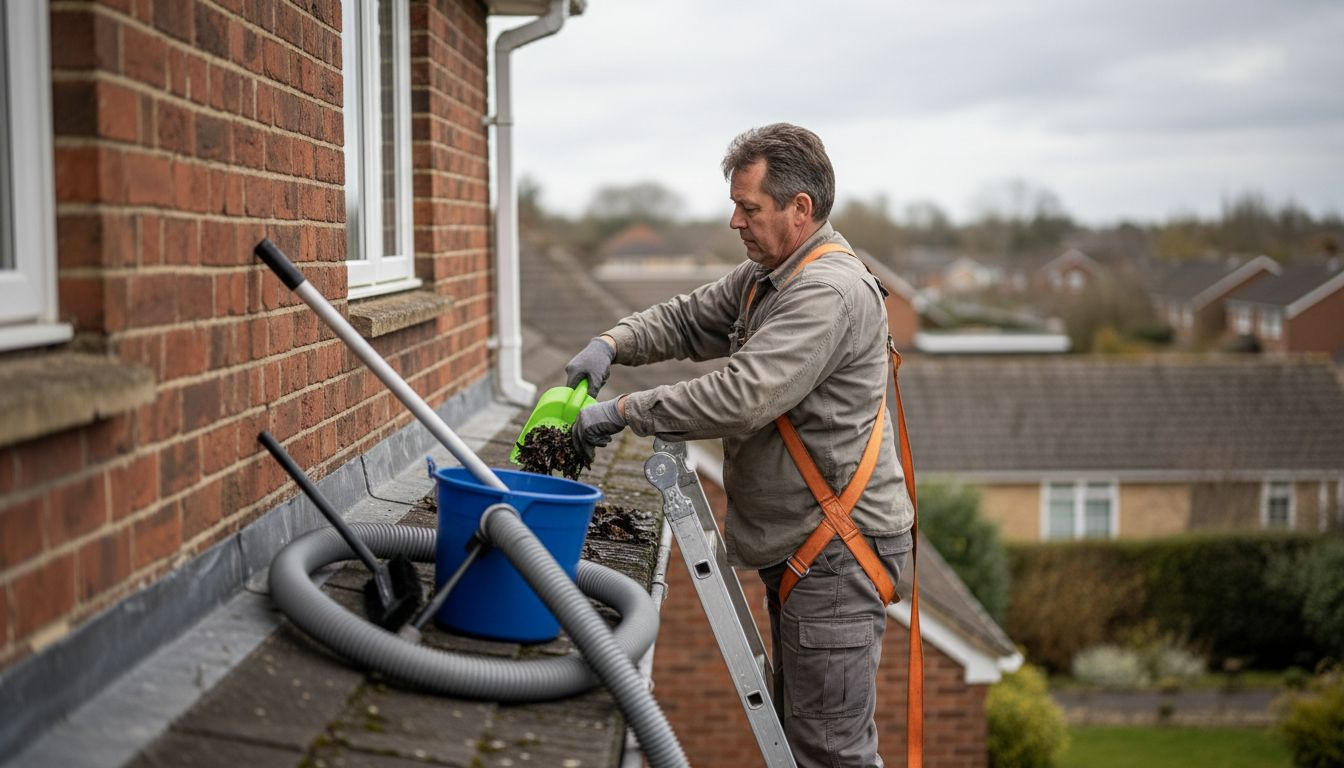
Gutter cleaning tools range from simple hand tools to more advanced equipment designed to make the task easier and more comprehensive. A basic toolkit should include a sturdy gutter scoop, robust work gloves, a garden trowel, and a stable bucket for collecting debris.
Plastic gutter scoops are particularly effective for removing leaves, twigs, and accumulated sediment without scratching or damaging the gutter surface. Opt for a scoop with a flexible edge that can conform to the gutter’s shape, allowing you to remove debris more efficiently than using your hands.
For hard to reach areas or more stubborn blockages, consider investing in extendable tools. Telescopic gutter cleaning wands can help you remove debris from ground level, reducing the need for precarious ladder positioning. Specialised gutter vacuums can also provide a more thorough cleaning, especially for gutters with compacted organic matter.
When removing debris, work systematically from one end of the gutter to the other. Start near the downspout and move away from it, ensuring that you do not push debris into the downspout, which could cause further blockages. Place a large bucket or tarpaulin beneath your work area to catch falling debris and minimise ground cleanup.
Top Tip: Clean your gutters when the material is slightly damp but not wet, making debris easier to remove and preventing dust from becoming airborne.
5. Check for Signs of Damage or Wear
Your gutters are silent guardians protecting your home from water damage. Regular inspection for signs of wear and deterioration is crucial to prevent potentially expensive structural issues.
Gutter damage indicators can range from subtle to obvious. Look for telltale signs such as rust spots, small cracks, sagging sections, or loose fasteners that might compromise your drainage system’s effectiveness.
Metal gutters are particularly prone to rust and corrosion. Pay close attention to joints and seams where water tends to accumulate. Inspect the gutter brackets and ensure they remain securely attached to your property’s fascia board. Loose or damaged brackets can cause gutters to pull away from the building, creating gaps that allow water to penetrate your home’s exterior.
Check for paint peeling around gutter areas, which could indicate water is not being channelled correctly. Water stains on exterior walls or unusual dampness near your foundation might suggest your gutters are not functioning optimally. These signs often precede more serious structural complications if left unaddressed.
Look for visible deformation such as bending or warping in the gutter line. Aluminium and plastic gutters can become misshapen over time, especially in regions with significant temperature variations. Uneven gutter lines can prevent proper water flow and lead to potential overflow during heavy rainfall.
Top Tip: Conduct a thorough gutter inspection during daylight hours and after rainfall to identify water flow patterns and potential problem areas.
6. Ensure Proper Water Flow After Cleaning
After thoroughly cleaning your gutters, verifying water flow is a critical final step that many homeowners overlook. Proper water channelling protects your property from potential moisture damage and structural complications.
Water management strategies begin with testing your newly cleaned gutter system. Use a garden hose to simulate rainfall and observe how water moves through the gutters and downspouts. Watch for smooth, uninterrupted flow and check that water is directed at least 1.5 metres away from your property’s foundation.
Pay particular attention to downspout positioning. Ideally, downspouts should channel water to areas with proper drainage or into rainwater collection systems. Avoid directing water towards your home’s foundation or areas with poor soil absorption, which can lead to moisture infiltration and potential structural issues.
Check for any remaining blockages or water pooling during your flow test. Stagnant water or slow drainage might indicate partial obstructions that require additional attention. Look for areas where water might be overflowing or not following the intended path, which could suggest misalignment or subtle damage in your gutter system.
Consider installing gutter extensions or splash blocks if your current setup does not effectively divert water away from your property. These simple additions can significantly improve water management and protect your home’s foundational integrity.
Top Tip: Conduct your water flow test on a clear day with good visibility to easily identify any potential drainage problems.
7. Schedule Professional Maintenance as Needed
Professional gutter maintenance goes beyond simple DIY cleaning. Experts can identify subtle issues that might escape an untrained eye and prevent potential costly repairs down the line.
Preventive maintenance strategies are critical for maintaining your property’s structural integrity. Professional gutter technicians possess specialised equipment and expertise to conduct comprehensive assessments that homeowners cannot easily replicate.
Most properties benefit from professional gutter inspection at least twice annually once in spring and once in autumn. These strategic maintenance windows allow experts to assess winter damage and prepare your guttering system for upcoming seasonal challenges. Professional services can detect early signs of wear such as microscopic cracks, subtle misalignments, or potential water damage that might otherwise go unnoticed.
During a professional maintenance visit, technicians will typically perform a range of critical assessments. They will examine gutter attachment points, check for proper slope and alignment, inspect seals and joints, and evaluate the overall drainage performance. They can also provide recommendations for repairs or replacements before minor issues escalate into significant structural problems.
Consider professional maintenance particularly important if your property has complex roofing, multiple levels, or is located in an area with significant tree coverage. Homes with unique architectural features or those situated in regions with harsh weather conditions require more specialised attention.
Top Tip: Maintain a detailed maintenance log of professional inspections to track your gutter system’s condition and anticipate potential future repairs.
Below is a comprehensive table summarising the essential steps and considerations for effective gutter cleaning and maintenance as discussed in the article.
| Key Topic | Description | Benefits |
|---|---|---|
| Importance of Regular Cleaning | Routine cleaning mitigates water damage risks by preventing blockages caused by debris accumulation. | Protects structural integrity, saves repair costs, supports environmental sustainability. |
| Inspection of Gutters and Downpipes | Regularly checking for obstructions or damages keeps your drainage system functioning correctly. | Prevents basement flooding, soil erosion, and structural issues. |
| Use of Appropriate Tools and Gear | Employing safety equipment and effective cleaning tools such as scoops and ladders ensures efficient cleaning and personal safety. | Reduces risks of injury, enhances thoroughness of cleaning. |
| Addressing Damage and Wear | Inspect gutters for rust, cracks, and misalignments to maintain their operational capabilities. | Prevents minor defects from escalating, ensuring long-term functionality. |
| Confirming Proper Water Flow | Testing with a garden hose ensures cleaned gutters channel water effectively away from your property’s foundation. | Ensures system efficiency, prevents water stagnation and potential damage. |
| Scheduling Professional Maintenance | Engaging experts ensures comprehensive evaluations and maintenance for complex or challenging situations. | Provides access to specialised equipment and expertise, identifies subtle issues early. |
This table concisely outlines the primary components of thorough gutter maintenance, offering actionable steps and their resulting advantages.
Protect Your Home with Expert Gutter Cleaning Services
Blocked gutters and poor water drainage can lead to serious structural damage, mould growth and costly repairs. This article reveals the vital best practices to keep your gutters free of debris, well maintained and functioning safely. If you want to avoid the stress of managing gutter inspections, debris removal and damage checks on your own, our local professional team is here to help.
Take the smart approach and secure your property’s health with trustworthy gutter cleaning from Local Gutter Cleaner. Our experts follow all essential safety protocols, use the right tools and perform thorough inspections to detect early signs of wear or blockages. Schedule your service now and benefit from routine maintenance tailored to your home or commercial premises. Don’t wait until water damage strikes – visit Local Gutter Cleaner today to request your quote and experience peace of mind from expert gutter care.
Frequently Asked Questions
How often should I clean my gutters?
Routine gutter cleaning should be performed at least twice annually, ideally in spring and autumn. Schedule these cleanings to prevent blockages and protect your home from potential water damage.
What are the signs that my gutters need cleaning?
Look for visible debris accumulation, overflowing water during rain, or sagging sections. If you notice these issues, clean your gutters promptly to prevent drainage problems and structural damage.
What tools do I need for effective gutter cleaning?
Essential tools for gutter cleaning include sturdy gloves, a gutter scoop, a garden trowel, and a stable bucket for debris collection. Gather these tools before starting to ensure a thorough and efficient cleaning process.
How can I check for blockages in my gutters?
Inspect your gutters from a sturdy ladder, looking for visible debris and ensuring downpipes are clear. Additionally, test water flow using a garden hose to identify any hidden blockages or slow drainage areas.
What safety precautions should I take while cleaning gutters?
Always wear appropriate protective gear, including gloves and safety glasses, when cleaning gutters. Ensure your ladder is stable and never lean too far while working—keep three points of contact at all times.
When should I consider professional gutter maintenance?
Consider hiring professionals if your gutters are difficult to access, if you notice signs of damage, or if you prefer a thorough assessment. Schedule this service at least twice a year to catch issues early and maintain your gutters effectively.




Leave A Comment