
Blocked gutters are responsible for nearly 40 percent of water damage claims in British properties each year. Ignoring regular gutter maintenance allows rainwater to infiltrate walls and foundations, threatening the stability of any structure. For British homeowners and property managers, safeguarding against costly repairs starts with understanding how systematic cleaning and professional inspections can keep water risks in check and your building’s value protected.
Table of Contents
- What Gutter Maintenance Involves
- Main Types of Gutter Upkeep
- How Poor Maintenance Affects Properties
- Legal Duties and Safety for UK Owners
- Choosing DIY Versus Professional Services
Key Takeaways
| Point | Details |
|---|---|
| Regular Maintenance is Essential | Conduct inspections at least twice a year to prevent costly repairs and structural damage in the long term. |
| Proactive Approach is Key | Address issues like leaks or blockages promptly to maintain gutter functionality and protect property integrity. |
| Know Your Legal Responsibilities | UK property owners must ensure gutters function correctly to avoid legal consequences concerning tenant safety and property damage. |
| Consider Professional Services for Complex Issues | While DIY maintenance can save costs, professional services offer expertise that ensures thorough and safe upkeep, preventing potential hazards. |
What Gutter Maintenance Involves
Gutter maintenance is a systematic process of ensuring your home’s rainwater management system functions effectively and prevents potential water damage. At its core, this involves preserving the integrity of rainwater discharge systems to protect your property’s structural foundations and prevent moisture-related issues.
The primary components of comprehensive gutter maintenance include regular debris removal, checking for proper water flow, inspecting for damage, and ensuring downspouts channel water safely away from your home’s foundation. Professional maintenance typically involves several critical steps: clearing leaves and organic matter, checking gutter alignment and slope, examining joints and connections for potential leaks, and verifying that water flows smoothly without pooling or overflowing.
Homeowners should understand that effective gutter maintenance goes beyond simple cleaning. It requires a proactive approach to preventing moisture problems such as mold and structural damage. This means conducting thorough inspections at least twice annually – ideally in spring and autumn – to identify potential issues before they escalate into costly repairs. Key areas of focus include checking for rust, structural damage, loose fasteners, and ensuring downspouts direct water at least 1.5 metres away from the building’s foundation.
Top Maintenance Tip: Schedule professional gutter inspections during shoulder seasons to catch potential issues before they become serious structural problems, saving significant repair costs in the long term.
Main Types of Gutter Upkeep
Gutter upkeep encompasses several critical maintenance approaches designed to protect your property’s structural integrity and prevent water-related damage. Comprehensive maintenance involves strategic material selection and systematic inspection to ensure optimal rainwater management and long-term performance.
The primary types of gutter upkeep can be categorised into four distinct areas. First, debris removal involves thoroughly clearing leaves, twigs, and organic matter that can obstruct water flow. Second, structural inspection requires carefully examining gutter systems for potential damage, including checking for rust, loose fasteners, and alignment issues. Third, leak prevention and repair focuses on identifying and addressing any weak points, sealant deterioration, or connection problems that might compromise the gutter’s functionality. Fourth, drainage assessment ensures that downspouts effectively channel water away from your property’s foundation, maintaining the recommended minimum distance of 1.5 metres.
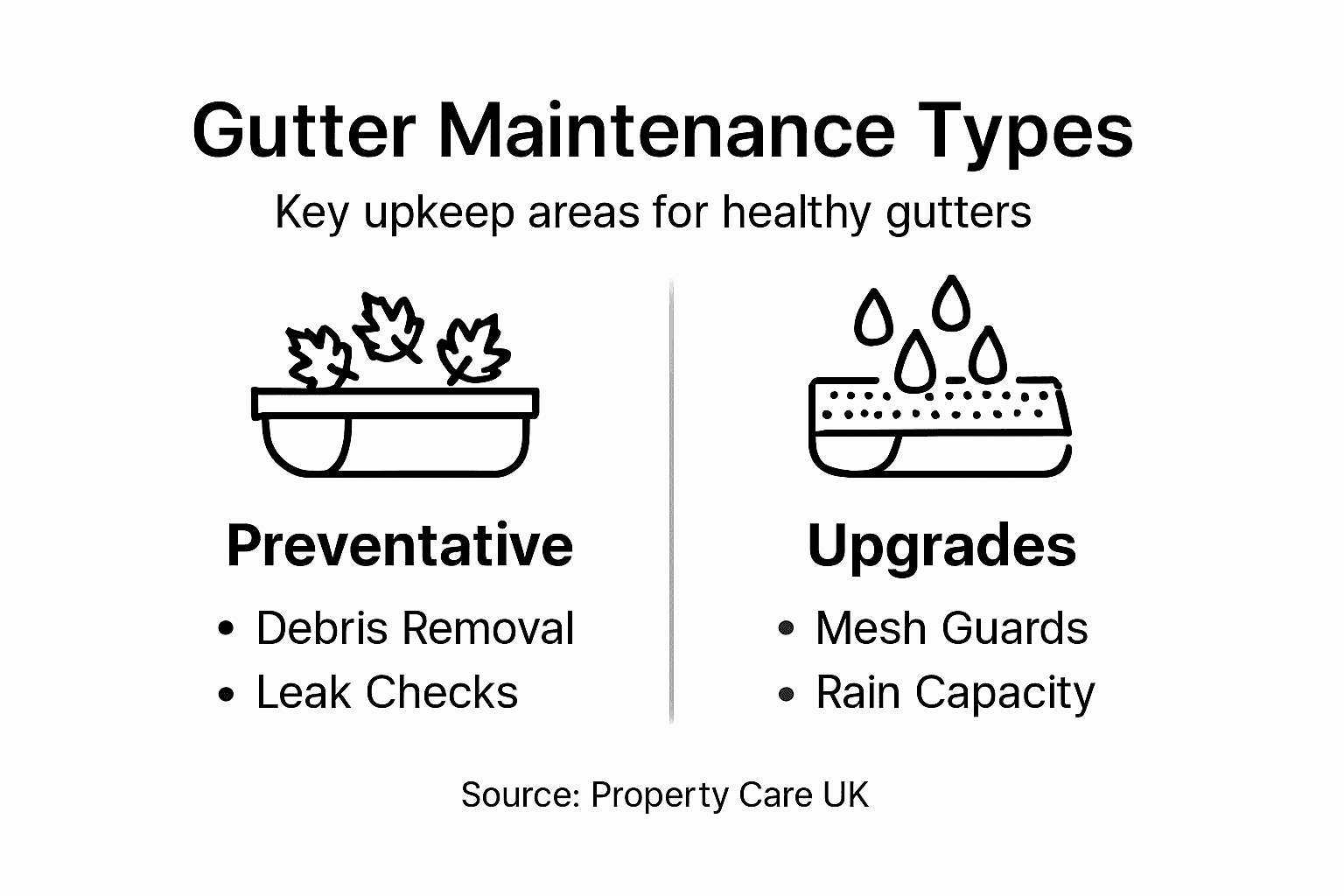
Gutter maintenance also involves strategically upgrading systems to improve rainfall handling capacity. This might include replacing outdated materials with more corrosion-resistant options, adjusting gutter sizing to match local precipitation patterns, and installing additional protective features like gutter guards to minimise debris accumulation. Proactive homeowners recognise that these maintenance strategies are not just about cleaning, but about implementing a comprehensive approach to protecting their property’s structural health.
For a clearer understanding of gutter upkeep, the following table summarises the main approaches and their unique benefits:
| Upkeep Type | Focus Area | Benefit for Property |
|---|---|---|
| Debris Removal | Organic matter removal | Prevents blockages |
| Structural Inspection | Physical condition | Early damage detection |
| Leak Prevention and Repair | Joints and connections | Avoids unwanted water seepage |
| Drainage Assessment | Water discharge route | Protects foundations |
Pro Maintenance Tip: Conduct a detailed gutter inspection during shoulder seasons, using a systematic checklist to ensure no potential issues are overlooked and documenting any necessary repairs or replacements.
How Poor Maintenance Affects Properties
Neglecting gutter maintenance can trigger catastrophic property damage that extends far beyond simple cosmetic concerns. When gutters fail to function correctly, they create a cascading series of structural vulnerabilities that can compromise an entire building’s integrity, potentially leading to expensive and complex repair scenarios.
The consequences of poor gutter maintenance manifest in multiple critical areas. Foundation damage represents the most severe risk, where blocked or misaligned gutters allow water to pool and saturate the ground surrounding a property’s base. This constant moisture can cause soil erosion, create hydrostatic pressure against foundation walls, and potentially lead to significant structural cracking or shifting. Similarly, roof deterioration becomes inevitable when gutters cannot efficiently channel water away, resulting in water backing up underneath roof tiles, rotting wooden structures, and creating entry points for moisture that can compromise roof decking and internal ceiling systems.
Building deterioration accelerates dramatically with consistent moisture exposure, creating an environment ripe for mould growth, wood rot, and persistent damp conditions. These issues not only compromise the structural integrity of a property but also generate significant health risks for inhabitants. Unaddressed gutter problems can reduce property value, increase repair costs exponentially, and create potentially hazardous living environments where structural weakness becomes a genuine safety concern.
Pro Maintenance Tip: Invest in a professional gutter inspection at least twice annually to catch potential issues early and prevent costly long-term property damage.
Legal Duties and Safety for UK Owners
UK property owners face significant legal responsibilities regarding building maintenance, with gutter upkeep forming a critical component of these obligations. The Health and Safety at Work Act 1974 establishes clear guidelines that demand proactive property management to prevent potential hazards and ensure public safety.
For property owners and landlords, these legal duties extend across multiple domains. Residential property owners must maintain structures to prevent water-related damage that could compromise building integrity or tenant safety. This includes ensuring gutters function correctly to prevent water ingress, structural deterioration, and potential health risks from damp conditions. Landlords specifically must address maintenance issues promptly, with legal obligations to keep rented properties free from moisture-related hazards and structural weaknesses that might impact inhabitant well-being.
The legal framework surrounding property maintenance places substantial emphasis on preventative action rather than reactive repairs. Failure to maintain gutters can result in significant legal and financial consequences, including potential negligence claims, insurance invalidation, and regulatory penalties. Local authorities and health and safety regulators can issue enforcement notices, impose fines, or take legal action against property owners who consistently neglect essential maintenance responsibilities that pose risks to public safety.
Pro Safety Tip: Maintain comprehensive documentation of all gutter maintenance activities, including professional inspection reports and repair records, to demonstrate compliance with legal obligations.
Choosing DIY Versus Professional Services
Homeowners face complex decisions when maintaining gutters, balancing potential cost savings against professional expertise and safety considerations. Understanding the nuanced differences between DIY and professional gutter maintenance can help property owners make informed choices that protect their home’s structural integrity.
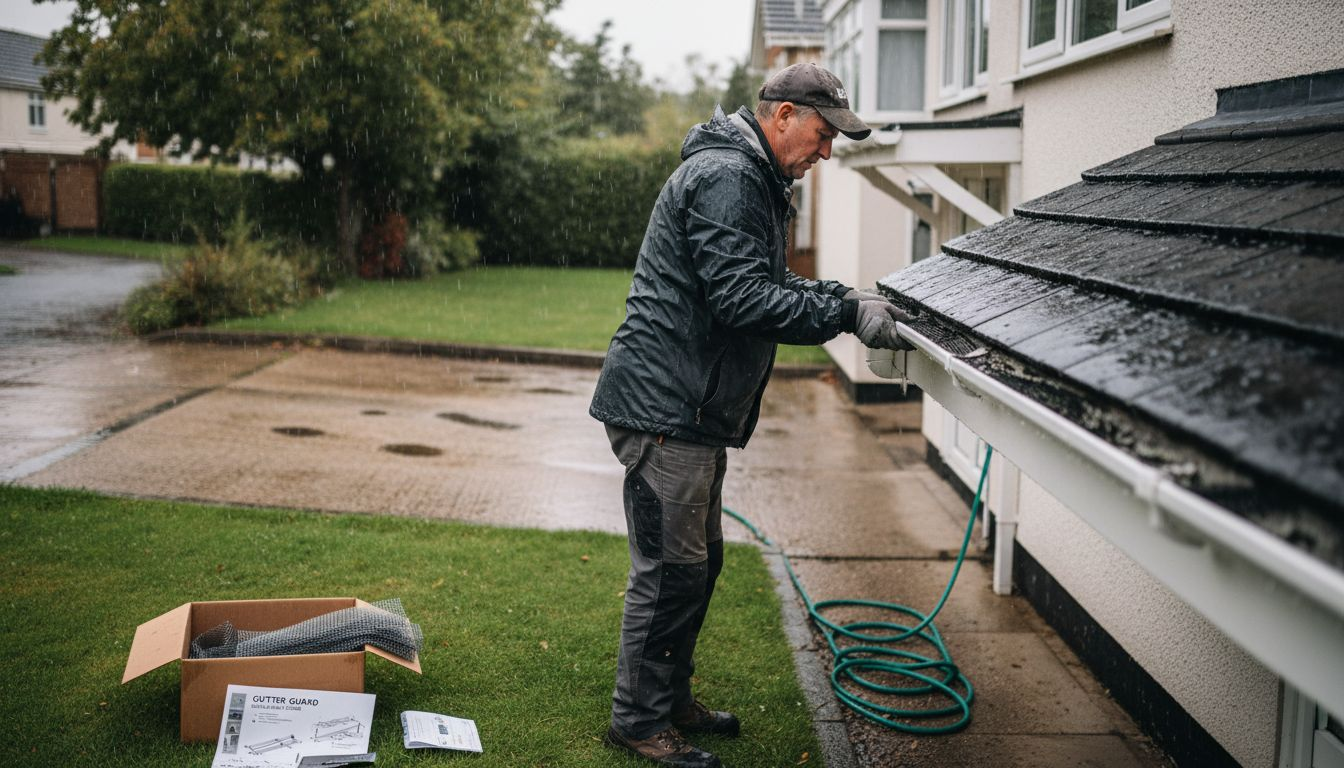
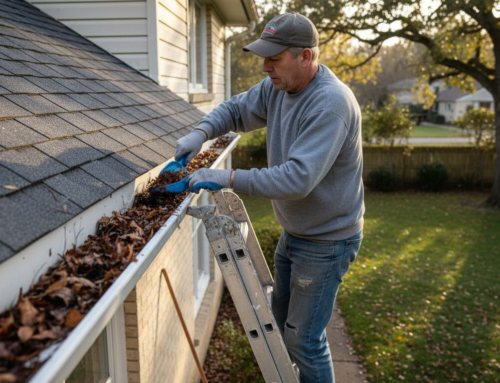
DIY gutter maintenance offers potential cost benefits but requires specific skills and equipment. Routine tasks like basic cleaning and debris removal can be managed by homeowners with appropriate safety equipment, including sturdy ladders, protective gloves, and basic tools. However, complex repairs, installations involving height work, or situations requiring specialist knowledge are best left to professionals. Gutter maintenance involves significant safety considerations that many homeowners underestimate, including risks of ladder accidents, potential structural damage from improper techniques, and potential personal injury.
Professional gutter services provide comprehensive solutions that extend beyond simple cleaning. Trained technicians can identify potential structural issues, recommend preventative measures, and implement advanced solutions like gutter guard installations. They possess specialised equipment, understand local building regulations, and can provide warranties on their work. Their expertise ensures thorough maintenance that addresses not just immediate cleaning needs but long-term property protection, potentially saving homeowners significant expense and preventing future structural complications.
Here is a comparison of DIY gutter maintenance and professional services to guide homeowners:
| Aspect | DIY Maintenance | Professional Service |
|---|---|---|
| Required Skills | Basic tools and safety awareness | Qualified expertise |
| Equipment Needed | Ladder, gloves, bucket | Specialist tools and ladders |
| Safety Risks | Higher risk of accidents | Controlled work, insured |
| Long-Term Value | May miss underlying issues | Proactive, thorough protection |
Pro Maintenance Tip: Assess your personal skill level, available time, and comfort with heights before deciding between DIY and professional gutter maintenance, prioritising safety and comprehensive property care.
Protect Your Property with Expert Gutter Maintenance
Regular gutter checks are essential to stop costly damage caused by blockages, leaks and poor drainage. The article highlights common risks such as structural decay, foundation damage and mould growth that arise when gutters are neglected. If you want to avoid the stress of unexpected repairs and preserve your home or commercial building’s integrity, understanding the need for professional upkeep is crucial. Key terms like debris removal, structural inspection and drainage assessment emphasise how thorough maintenance safeguards your property for the long term.
Take control of your property’s health today with trusted local gutter cleaning experts. Visit Local Gutter Cleaner for a full range of services designed to prevent moisture damage and maintain safe, efficient water flow. Our professional team specialises in both residential and commercial gutters including flats and industrial buildings. Don’t wait until small blockages turn into major problems. Book your gutter inspection or cleaning service now to secure peace of mind and protect your investment. Find out more at https://local-guttercleaner.co.uk and get a free quote today.
Frequently Asked Questions
What are the main components of gutter maintenance?
Gutter maintenance includes regular debris removal, checking for proper water flow, inspecting for damage, and ensuring downspouts channel water safely away from your home’s foundation.
How often should gutters be inspected?
Gutters should ideally be inspected at least twice a year, in spring and autumn, to identify potential issues before they escalate into costly repairs.
What are the consequences of poor gutter maintenance?
Neglecting gutter maintenance can lead to serious issues such as foundation damage, roof deterioration, mould growth, and even reduced property value due to unaddressed structural weaknesses.
Is it better to perform gutter maintenance myself or hire a professional?
While DIY maintenance can save costs for basic tasks, professional services offer comprehensive solutions that include expert inspections and repairs, ensuring long-term property protection and safety.


Leave A Comment