
Blocked gutters are a common headache for many British homeowners, with millions spent each year on water damage repairs across the United Kingdom. Keeping gutters free from leaves and debris is not just about curb appeal, it is vital for protecting your home from costly structural risks. Learning how gutter guards actually work can help you cut down maintenance, avoid unexpected repairs, and defend your property against unpredictable weather.
Table of Contents
- What Are Gutter Guards And How They Work
- Main Types Of Gutter Guards Compared
- Preventing Blockages And Water Damage Risks
- Maintenance, Longevity, And Cost Implications
- When Gutter Guards Are Not Enough
Key Takeaways
| Point | Details |
|---|---|
| Gutter Guards Functionality | Gutter guards filter debris to maintain unobstructed water flow, significantly reducing maintenance and mitigating water damage risks. |
| Variety of Guard Types | Homeowners should evaluate various gutter guard types to select the most effective option based on environmental conditions and maintenance preferences. |
| Regular Maintenance Importance | Despite their efficacy, regular maintenance and inspections are essential to address potential vulnerabilities in gutter guard systems. |
| Long-Term Cost Considerations | Assess the total lifetime costs, including installation, maintenance, and potential repair savings, to inform your gutter guard investment decision. |
What Are Gutter Guards and How They Work
Gutter guards are sophisticated protective systems designed to shield your property’s drainage infrastructure from debris accumulation. These protective coverings with lattice or mesh structures prevent leaves, twigs, and other organic materials from blocking water channels while ensuring seamless liquid flow. By installing these ingenious devices, homeowners can significantly reduce maintenance requirements and protect their property from potential water damage.
The fundamental mechanism of gutter guards involves creating a strategic barrier that filters out solid materials. Gutter covers are installed over or into existing guttering systems, featuring intricate designs that allow rainwater to pass through while blocking larger debris. Mesh configurations, perforated metal sheets, and surface tension systems are common approaches, each offering unique advantages in managing water flow and preventing blockages.
Most gutter guard designs incorporate advanced engineering principles to address specific environmental challenges. Key features typically include:
- Micro-mesh screens with ultra-fine openings
- Angled installation to encourage natural debris slide-off
- Rust-resistant materials like aluminium and stainless steel
- Compatibility with various roof and gutter configurations
Pro Tip: Professional Inspection Recommendation: Have your gutter guard system professionally assessed annually to ensure optimal performance and identify any potential maintenance requirements before minor issues escalate into costly repairs.
By understanding how gutter guards function, property owners can make informed decisions about protecting their buildings from water-related structural risks. The right gutter guard system acts as a critical line of defence against potential moisture damage, preserving your property’s long-term integrity and reducing ongoing maintenance expenses.
Main Types of Gutter Guards Compared
Gutter guard technologies represent a diverse range of protective solutions designed to prevent debris accumulation in drainage systems. Homeowners can choose from six primary configurations, each offering unique advantages and performance characteristics. Understanding these variations helps property owners select the most appropriate solution for their specific environmental conditions and maintenance preferences.
The primary gutter guard types include mesh, micro-mesh, screen, foam, brush, and reverse curve systems. Screen and mesh guards are particularly popular due to their balanced performance and affordability. Micro-mesh guards stand out for their exceptional filtration capabilities, featuring ultra-fine openings that block even the smallest debris particles while maintaining optimal water flow. These advanced systems provide superior protection compared to more basic alternatives.
A comprehensive comparison reveals distinct characteristics of each gutter guard type:
- Micro-mesh Guards:
- Highest debris filtration
- Most expensive option
- Requires professional installation
- Mesh Guards:
- Good debris prevention
- Moderate cost
- Relatively easy installation
- Screen Guards:
- Budget-friendly
- Simple installation
- Less effective against small debris
- Foam Guards:
- Lowest cost
- Easy DIY installation
- Shortest lifespan
- Brush Guards:
- Inexpensive
- Quick installation
- Regular maintenance required
- Reverse Curve Guards:
- Unique water redirection design
- Medium price point
- Specialised water management
Pro Tip: Material Selection Strategy: Choose gutter guard materials that match your local climate conditions, considering factors like rainfall intensity, tree coverage, and potential environmental challenges.
By carefully evaluating these gutter guard variations, property owners can make informed decisions that balance cost-effectiveness, maintenance requirements, and long-term protection. The right selection can dramatically reduce gutter maintenance efforts while preventing potential water damage to your property’s infrastructure.
To help property owners select the most suitable gutter guard, here is a clear comparison of typical applications and ideal user profiles:
| Gutter Guard Type | Best For | Typical Users |
|---|---|---|
| Micro-mesh | Maximum debris areas | Premium homeowners |
| Mesh | Suburban settings | Average residential owners |
| Screen | Light debris zones | Budget-conscious households |
| Foam | Quick, temporary fix | DIY enthusiasts |
| Brush | Low maintenance need | Cost-sensitive buyers |
| Reverse curve | Heavy rainfall areas | Custom installation seekers |
Preventing Blockages and Water Damage Risks
Gutter guards play a critical role in preventing water damage by creating an effective barrier against debris accumulation. These protective systems are engineered to maintain unobstructed water flow, directing liquid away from critical structural components like foundations, walls, and landscaping. By intercepting leaves, twigs, and other potential blockage materials, gutter guards significantly reduce the risk of moisture-related structural complications.

The consequences of blocked gutters extend far beyond simple inconvenience. Unmanaged water overflow can lead to serious issues including mould, mildew, and pest infestations, which compromise both property integrity and occupant health. Water that cannot properly drain can seep into foundations, causing significant structural damage, basement flooding, and potentially undermining the entire building’s structural stability.
Key risks mitigated by effective gutter guard systems include:
- Foundation Damage:
- Prevents water pooling near building base
- Reduces soil erosion risks
- Minimises potential structural shifting
- Roof Protection:
- Prevents water backing up under roof tiles
- Reduces ice dam formation
- Extends roofing material lifespan
- Wall and Siding Preservation:
- Prevents moisture penetration
- Reduces paint and rendering degradation
- Protects against timber rot
- Landscape Conservation:
- Eliminates destructive water overflow
- Prevents soil erosion
- Protects garden beds and planted areas
Pro Tip: Seasonal Assessment Strategy: Conduct thorough gutter guard inspections twice annually, preferably during spring and autumn, to ensure optimal performance and identify any potential maintenance requirements.
Investing in high-quality gutter guards represents a proactive approach to property maintenance. By understanding and addressing potential water damage risks, homeowners can protect their most significant asset from preventable structural deterioration, ultimately saving substantial repair costs and preserving property value.
Maintenance, Longevity, and Cost Implications
Gutter guard durability varies significantly across different material types and configurations, presenting homeowners with complex considerations regarding long-term investment and maintenance requirements. Understanding the nuanced relationship between initial purchase costs, installation expenses, and ongoing maintenance is crucial for making an informed decision about protecting your property’s drainage infrastructure.
The lifecycle of gutter guards encompasses multiple financial and performance dimensions. High-end mesh and micro-mesh systems represent a premium solution, offering exceptional longevity spanning 20-30 years while providing superior debris protection. These advanced systems typically require professional installation and command higher upfront costs, but their extended lifespan and reduced maintenance needs can offset initial expenses through long-term property protection and reduced repair requirements.
Cost and maintenance considerations for different gutter guard types include:
- Mesh/Micro-mesh Guards:
- Highest initial investment
- Professional installation recommended
- 20-30 year expected lifespan
- Minimal ongoing maintenance
- Screen Guards:
- Moderate cost
- DIY installation possible
- 10-15 year expected lifespan
- Occasional cleaning required
- Foam Guards:
- Lowest initial cost
- Easy self-installation
- 2-5 year expected lifespan
- Frequent replacement necessary
- Brush Guards:
- Budget-friendly option
- Simple installation
- 1-3 year expected lifespan
- Regular cleaning essential
Pro Tip: Long-term Investment Strategy: Calculate total lifetime costs by considering initial purchase price, installation expenses, maintenance requirements, and potential property damage prevention when selecting gutter guard systems.
Ultimately, selecting the right gutter guard involves balancing immediate financial constraints with long-term property protection goals. Homeowners must carefully evaluate their specific environmental conditions, budget limitations, and maintenance capabilities to choose a solution that provides optimal protection while remaining economically sustainable.
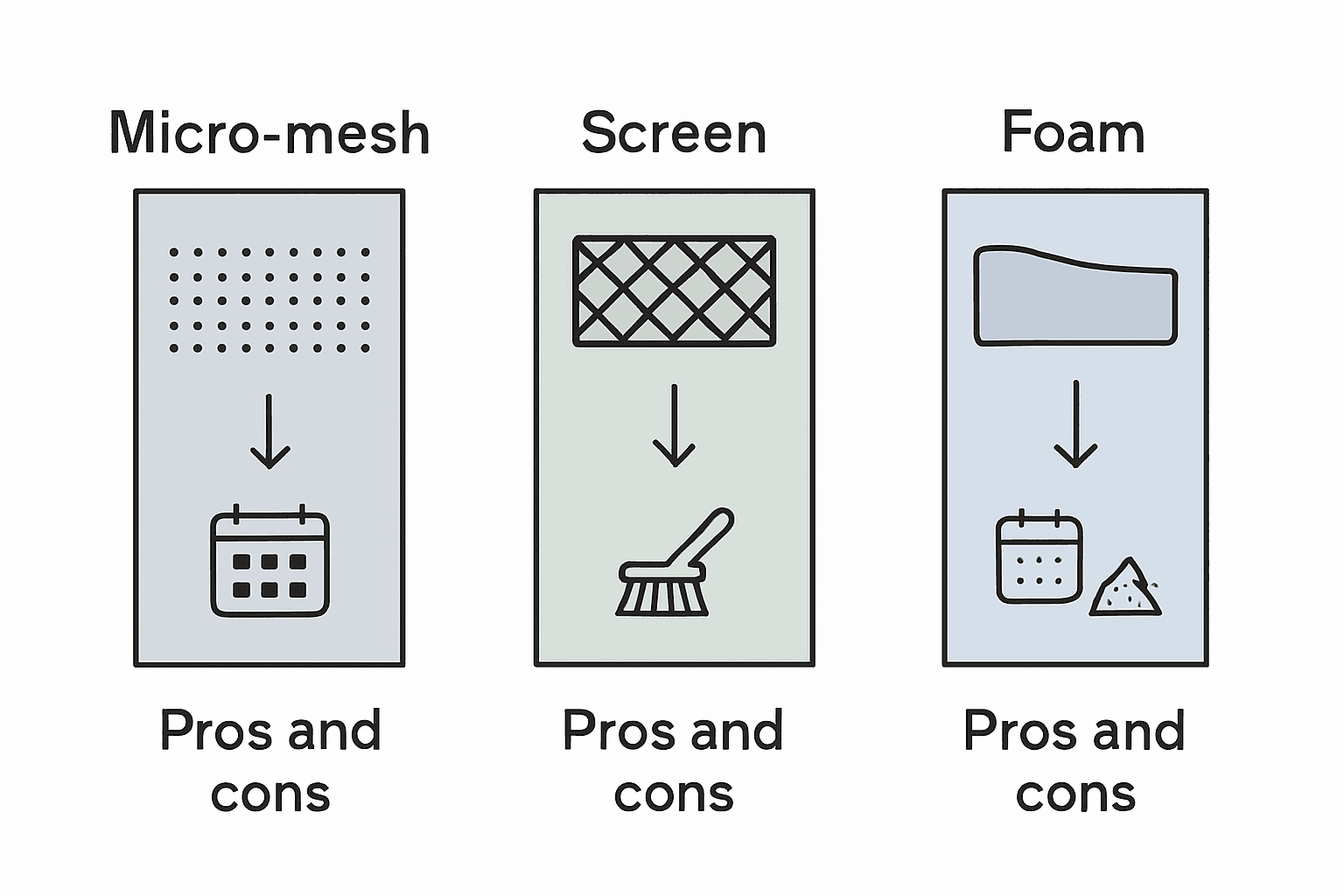
Below summarises recommended maintenance frequency by gutter guard type, improving planning for long-term upkeep:
| Gutter Guard Type | Inspection Interval | Typical Cleaning Needed |
|---|---|---|
| Micro-mesh | Annually | Very minimal |
| Mesh | 1-2 times per year | Occasional debris brush |
| Screen | Twice per year | Moderate cleaning |
| Foam | Every 6 months | Frequent replacement |
| Brush | Every 6 months | Regular removal/cleaning |
When Gutter Guards Are Not Enough
Gutter guard technologies are not an absolute guarantee of comprehensive drainage protection, despite their significant advantages in reducing maintenance challenges. Homeowners must understand that while these protective systems substantially mitigate debris accumulation, they cannot completely eliminate all potential drainage complications. Recognising the limitations of gutter guards is essential for developing a comprehensive property maintenance strategy.
Regular maintenance remains crucial, even with advanced gutter guard installations. Certain environmental conditions and specific architectural characteristics can compromise gutter guard effectiveness, creating potential vulnerabilities in your property’s drainage system. Fine debris like pine needles, roof grit, and particulate matter may still penetrate some guard designs, necessitating periodic professional inspection and cleaning.
Key limitations of gutter guard systems include:
- Debris Penetration:
- Fine particulate materials bypass some guard designs
- Pine needles and roof grit can accumulate
- Microscopic debris may compromise water flow
- Climate Sensitivity:
- Performance varies in extreme weather conditions
- Potential ice dam formation in cold regions
- Reduced effectiveness during heavy rainfall
- Architectural Constraints:
- Incompatibility with certain roof configurations
- Installation challenges on complex roof structures
- Potential interference with existing drainage systems
- Maintenance Requirements:
- Not a permanent, zero-maintenance solution
- Periodic professional cleaning still necessary
- Potential degradation of guard materials over time
Pro Tip: Comprehensive Protection Strategy: Combine professional gutter guard installation with annual comprehensive drainage system inspections to identify and address potential vulnerabilities before they escalate into significant property damage.
Ultimately, gutter guards represent an important component of property maintenance, but they should be viewed as a strategic tool rather than an absolute solution. Intelligent homeowners will combine technological protection with regular professional assessment to ensure optimal drainage performance and long-term structural integrity.
Protect Your Property with Expert Gutter Cleaning and Guard Solutions
The article highlights how gutter guards play a crucial role in preventing blockages and long-term water damage to your property. Yet, it also reveals that these systems are not foolproof and still require regular professional inspection and maintenance. If you are concerned about foundation damage, roof protection, or preserving your walls and landscaping from moisture-related issues, trusting reliable experts is essential. The challenge lies in balancing high-quality guard installation with ongoing care to avoid costly repairs and structural risks.
At Local Gutter Cleaner, we understand these critical pain points and offer specialised gutter cleaning services tailored to protect both residential and commercial properties. Our team uses proven techniques to clear stubborn debris that gutter guards can miss, ensuring your gutters function flawlessly year-round.
Don’t let blocked gutters compromise your property’s integrity. Book a professional inspection or routine cleaning today with Local Gutter Cleaner. Get expert advice on the best gutter guard options and maintain peace of mind knowing your drainage is in safe hands. Act now to safeguard your investment against water damage before minor issues escalate. Request a quote or contact us directly through our website at https://local-guttercleaner.co.uk.
Frequently Asked Questions
What are gutter guards and how do they work?
Gutter guards are protective systems designed to prevent debris from accumulating in drainage systems. They filter out leaves, twigs, and other materials while allowing rainwater to flow through. These guards are installed over or into existing gutters, ensuring optimal performance and reducing maintenance needs.
What are the different types of gutter guards?
There are six main types of gutter guards: micro-mesh, mesh, screen, foam, brush, and reverse curve systems. Each type varies in terms of cost, installation ease, and effectiveness in filtering debris, allowing homeowners to choose based on their specific needs and environmental conditions.
How often should gutter guards be maintained?
Maintenance frequency varies by type of gutter guard. Generally, micro-mesh guards require annual inspections with minimal cleaning, while foam and brush guards need inspections every six months due to their shorter lifespans and higher maintenance requirements.
Can gutter guards eliminate the need for gutter cleaning?
While gutter guards significantly reduce debris accumulation and the need for cleaning, they do not provide a complete solution. Fine debris such as pine needles and roof grit can still bypass some guard designs, necessitating regular inspections and occasional professional cleaning.
Recommended
- Role of Gutter Maintenance – Protecting Property Health
- How to Clean Gutters Safely for Better Water Flow
- Commercial Gutter Cleaning – Why Property Health Depends On It
- Gutter Cleaning Longfield – Houses – Blocks of flats – Industrial
- Surface Treatment Process for Durable Infrastructure Results
- Durable Wood Protection – Timber Windows & Wooden Doors – ATW






Leave A Comment