
Blocked gutters are one of the top contributors to damp problems in British homes, yet many property owners underestimate the risk. Each year, overflowing rainwater quietly damages more than 25 percent of domestic properties across the United Kingdom, leaving behind costly repairs and persistent moisture issues. By understanding how a simple blockage can escalate into widespread structural concerns, you can take practical steps to protect your investment from unwanted British weather damage.
Table of Contents
- What Happens When Gutters Are Blocked
- How Gutters Prevent Damp and Damage
- Types of Gutters and Common Problems
- Routine Cleaning Methods and UK Best Practice
- Potential Risks of Neglecting Gutter Maintenance
Key Takeaways
| Point | Details |
|---|---|
| Blocked Gutters Lead to Serious Damage | Accumulation of debris in gutters can cause water to overflow, leading to structural issues such as wood decay and mould growth. |
| Regular Maintenance is Essential | Conduct gutter inspections at least twice a year to prevent costly repairs and ensure efficient water drainage. |
| Understanding Gutter Types is Important | Different gutter designs have unique maintenance needs; knowing these can aid in better upkeep and prolong lifespan. |
| Neglecting Maintenance Has Serious Risks | Ignoring gutters can result in major structural damage and increased pest issues, leading to higher long-term costs. |
What Happens When Gutters Are Blocked
Blocked gutters create a domino effect of moisture-related problems that can seriously compromise your home’s structural integrity. When debris accumulates and prevents proper water drainage, rainwater begins to overflow and pool around your property’s foundations, creating significant risks. Moisture buildup around building materials can lead to extensive damage, including wood decay, mold growth, and potential structural weakening.
The consequences extend beyond mere water retention. Blocked gutters force water to cascade down external walls, saturating brickwork and creating ideal conditions for dampness to penetrate interior spaces. This uncontrolled water flow can cause rapid deterioration of external rendering, create unsightly water stains, and potentially compromise the breathability of your home’s exterior walls. The persistent moisture encourages fungal growth and can gradually erode mortar joints, leading to more severe structural concerns.
Moreover, blocked gutters present additional environmental and safety challenges. Stagnant water and organic debris become breeding grounds for insects, potentially attracting pests like mosquitoes and providing habitats for rodents. Excessive moisture can also contribute to soil erosion and landscape damage, undermining your property’s external environment and potentially destabilising garden features.
Pro tip: Conduct a visual gutter inspection every three months, particularly after autumn leaf fall and winter storms, to prevent these potentially expensive and disruptive moisture-related issues.
How Gutters Prevent Damp and Damage
Gutter systems play a critical role in protecting homes from moisture-related damage by efficiently managing rainwater flow. Gutters channel large volumes of water away from the roof and foundation, preventing the saturated soil conditions that can introduce dampness into interior spaces. By redirecting water flow, these systems create a crucial barrier against potential structural and environmental threats.
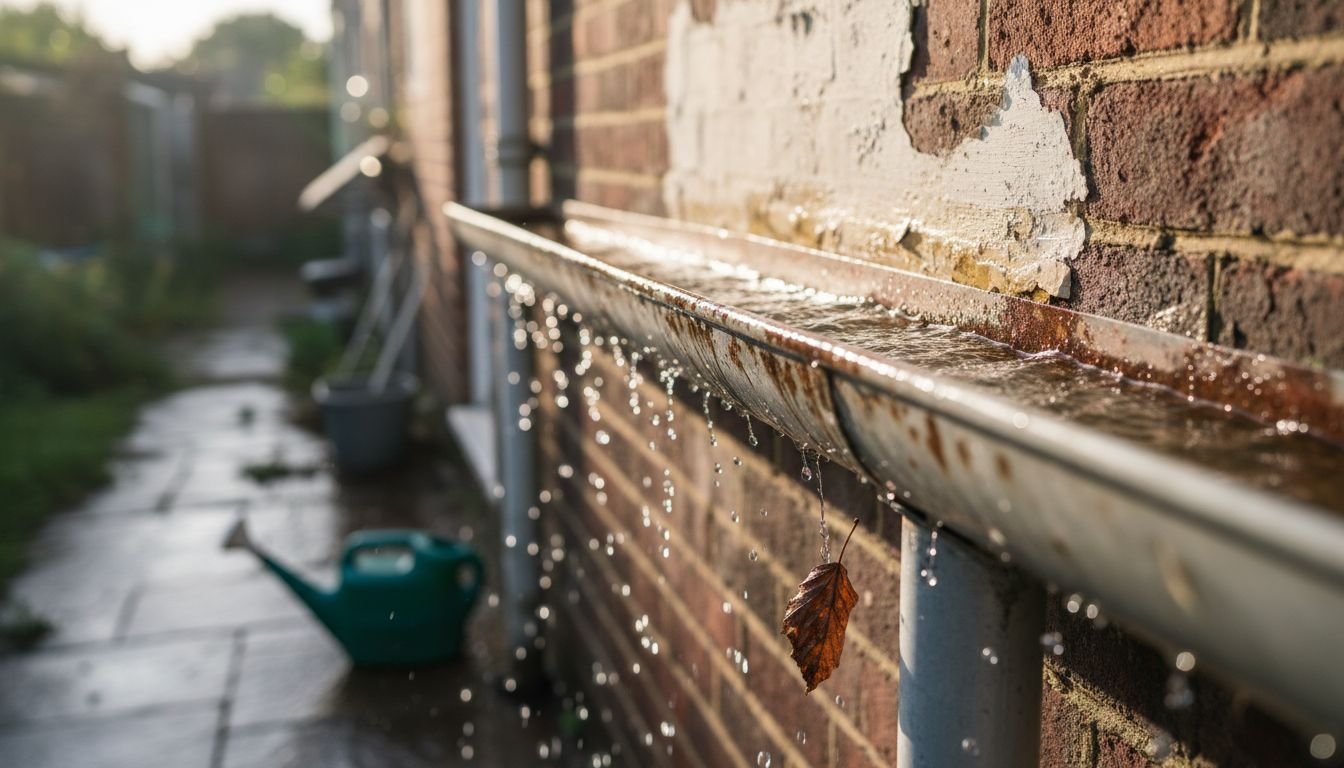
The engineering behind effective guttering is surprisingly sophisticated. When functioning correctly, gutters prevent water from accumulating around your home’s foundations, walls, and structural elements. Their design protects both exterior and interior building spaces from uncontrolled water ingress, which can lead to serious long-term issues such as timber decay, mould growth, and progressive structural deterioration. By maintaining a consistent water management pathway, gutters essentially act as a home’s first line of defence against moisture-related damage.
Beyond foundation protection, gutters also play a crucial role in preserving your property’s aesthetic and structural integrity. Water that is not properly channelled can cause significant erosion around landscaping, damage external rendering, and create unsightly water stains on walls. By efficiently moving water away from your property, gutters help maintain the overall health of your building’s external environment, preventing potential costly repairs and preserving your home’s value.
Pro tip: Invest in gutter guards or mesh screens to reduce debris accumulation and minimise the frequency of manual gutter cleaning maintenance.
Types of Gutters and Common Problems
Gutter systems are diverse, with multiple design types engineered to manage water drainage effectively. Rain gutters encompass several variations including eaves gutters, valley gutters, parapet gutters, and box gutters, constructed from materials like cast iron, UPVC, aluminium, steel, copper, and more. Each type serves a specific architectural purpose, with design nuances that influence water management and long-term performance.
The materials and construction of gutters significantly impact their durability and potential maintenance challenges. Historic and modern gutter installations frequently encounter similar structural issues, such as leaks at joint connections, material degradation, and persistent blockages. Specific problems can include sagging caused by inadequate support, corrosion from prolonged moisture exposure, and structural weakening due to accumulated debris and standing water.
Understanding the characteristics of different gutter types helps homeowners make informed maintenance decisions. Eaves gutters, the most common residential type, are typically mounted directly beneath roof edges and require regular inspection. Valley gutters, often found in complex roof designs, collect water from intersecting roof planes and are more prone to debris accumulation. Box gutters, commonly used in commercial and industrial settings, are integrated directly into building structures and demand specialised maintenance approaches.
Here’s a comparison of common gutter types and their key characteristics:
| Gutter Type | Typical Material | Installation Location | Maintenance Challenge |
|---|---|---|---|
| Eaves Gutter | UPVC, aluminium | Beneath roof edge | Regular debris removal |
| Valley Gutter | Lead, steel | Where roof planes intersect | Frequent blockage monitoring |
| Box Gutter | Cast iron, steel | Built into structure | Specialist inspection needed |
| Parapet Gutter | Lead, asphalt | Behind parapet walls | Leak check at wall junctions |
Pro tip: Conduct a comprehensive gutter assessment annually, paying special attention to joint seals, mounting brackets, and potential signs of material stress or corrosion.
Routine Cleaning Methods and UK Best Practice
Gutter maintenance is a critical aspect of home preservation, particularly in the United Kingdom’s moisture-prone climate. Routine gutter cleaning involves systematic debris removal and comprehensive inspection techniques, designed to ensure optimal water management and prevent potential structural damage. Homeowners should approach gutter maintenance as a structured process, combining manual intervention with strategic technological solutions.
The recommended cleaning approach typically involves multiple stages. Initially, debris should be carefully removed by hand, using protective gloves to extract leaves, twigs, and accumulated organic matter. Specialised tools like gutter vacuums, high-pressure blowers, and extendable cleaning attachments can effectively clear hard-to-reach areas without risking personal safety. Professional gutter cleaning services often employ advanced techniques that combine manual inspection with technological diagnostics to identify potential structural weaknesses or drainage issues.
British weather conditions demand a particularly rigorous approach to gutter maintenance. Seasonal variations, characterised by frequent rainfall and potential frost, create unique challenges for property owners. Recommended best practices include conducting comprehensive gutter assessments at least twice annually – typically during late autumn after leaf fall and early spring before the primary rainfall season. These inspections should focus on checking downspout functionality, identifying potential blockages, examining joint seals for integrity, and ensuring proper water flow and drainage across the entire system.

Pro tip: Schedule professional gutter inspections during shoulder seasons, prioritising thorough cleaning and preventative maintenance before extreme weather periods.
Potential Risks of Neglecting Gutter Maintenance
Gutter neglect poses significant and multifaceted risks to residential properties, extending far beyond simple aesthetic concerns. Planned preventative maintenance is crucial for safeguarding building performance and protecting property value, with unaddressed gutter issues potentially leading to extensive and expensive structural damage. Homeowners who ignore routine maintenance are essentially gambling with their property’s long-term integrity.
Water overflow and foundation saturation represent some of the most serious consequences of unmaintained gutters, creating an environment ripe for structural deterioration. Persistent moisture can seep into foundations, causing progressive damage that weakens load-bearing structures, creates opportunities for mould proliferation, and potentially compromises the entire building’s stability. The financial implications of such damage can far exceed the modest investment required for regular gutter maintenance.
Beyond structural risks, neglected gutters introduce additional hazards that impact both property and personal safety. Accumulated debris increases fire risks, particularly during dry periods, while creating ideal breeding environments for pests such as mosquitoes, rodents, and other unwanted organisms. The potential health risks associated with these conditions cannot be understated, as compromised gutter systems can directly impact indoor air quality and introduce harmful biological contaminants into living spaces.
The following table summarises key risks of neglected gutter maintenance and their potential impact:
| Issue Caused by Neglect | Main Structural Impact | Secondary Consequence |
|---|---|---|
| Foundation saturation | Subsurface masonry weakening | Internal dampness or rot |
| Debris accumulation | Gutter sag or collapse | Increased fire and pest risk |
| Persistent overflow | Exterior render deterioration | Unsightly water staining |
| Infrequent inspections | Unnoticed minor damage grows | Higher long-term repair costs |
Pro tip: Implement a biannual gutter inspection schedule, documenting each assessment to track potential developing issues and maintain a comprehensive maintenance history.
Ensure Your Home Stays Dry with Expert Gutter Care
Blocked gutters cause serious problems like damp, mould, and even structural damage through foundation saturation and overflowing water. If you want to avoid these costly issues, proactive gutter maintenance is essential. Our local experts understand the importance of gutters in preventing moisture buildup and preserving your property’s health.
Act now to protect your home from damp and damage. Visit Local Gutter Cleaner for professional gutter cleaning and maintenance services tailored to both residential and commercial properties. Don’t wait for problems to escalate. Book your gutter inspection and cleaning today to secure peace of mind and maintain your property’s value.
Frequently Asked Questions
Why is regular gutter cleaning important for protecting my home from damp?
Regular gutter cleaning is crucial as it prevents blockages that can cause water to overflow and pool around your home’s foundation. This moisture can lead to structural damage, mould growth, and other severe damp-related issues.
How often should I clean my gutters to maintain home safety?
It is recommended to conduct a visual inspection of your gutters every three months and carry out a thorough cleaning at least twice a year, ideally after autumn leaf fall and before the main rainfall season in spring.
What are the most common problems caused by neglected gutters?
Neglected gutters can lead to overflowing water, foundation saturation, mould proliferation, and even pest infestations due to accumulated debris, all of which can compromise your home’s structural integrity and safety.
What are the benefits of using gutter guards or screens?
Gutter guards or screens help reduce debris accumulation, allowing rainwater to flow freely while minimising the need for frequent manual cleaning. This can significantly lower maintenance efforts and prolong the lifespan of your gutter system.






Leave A Comment