
A single blocked gutter can cost British homeowners hundreds in repairs after heavy rainfall causes water damage. Protecting your investment starts with regular maintenance, and learning the basics of gutter cleaning can save time and money year-round. This practical guide gives you everything needed to tackle the job safely, explaining which tools matter and why a methodical approach helps keep your property secure and its value intact.
Table of Contents
- Step 1: Prepare Essential Gutter Cleaning Tools And Safety Gear
- Step 2: Inspect And Clear Debris From Accessible Gutters
- Step 3: Flush Gutters And Downpipes With Clean Water
- Step 4: Examine Gutters For Damage Or Blockage Issues
- Step 5: Dispose Of Gutter Waste And Tidy Up The Work Area
Quick Summary
| Key Point | Explanation |
|---|---|
| 1. Gather essential tools and safety gear | Use sturdy ladders, gloves, and safety glasses to ensure a safe gutter cleaning experience. Always maintain contact points when climbing. |
| 2. Inspect gutters for blockages | Remove large debris and check for pooling water to identify drainage issues. Ensure gutters slope correctly towards downspouts. |
| 3. Flush gutters with water | Use a hose to verify the flow of water through gutters and downpipes, checking for hidden blockages and inspecting drainage performance. |
| 4. Examine gutters for damage | Look for cracks, rust, or sagging sections that may indicate the need for repair or professional assistance. |
| 5. Dispose of waste responsibly | Compost organic material when possible and clean tools after use to maintain their condition and help the environment. |
Step 1: Prepare essential gutter cleaning tools and safety gear
Before ascending that ladder and tackling your gutters, gathering the right equipment is paramount for a safe and efficient cleaning process. Proper safety protocols are critical to preventing accidents and ensuring a smooth maintenance experience.
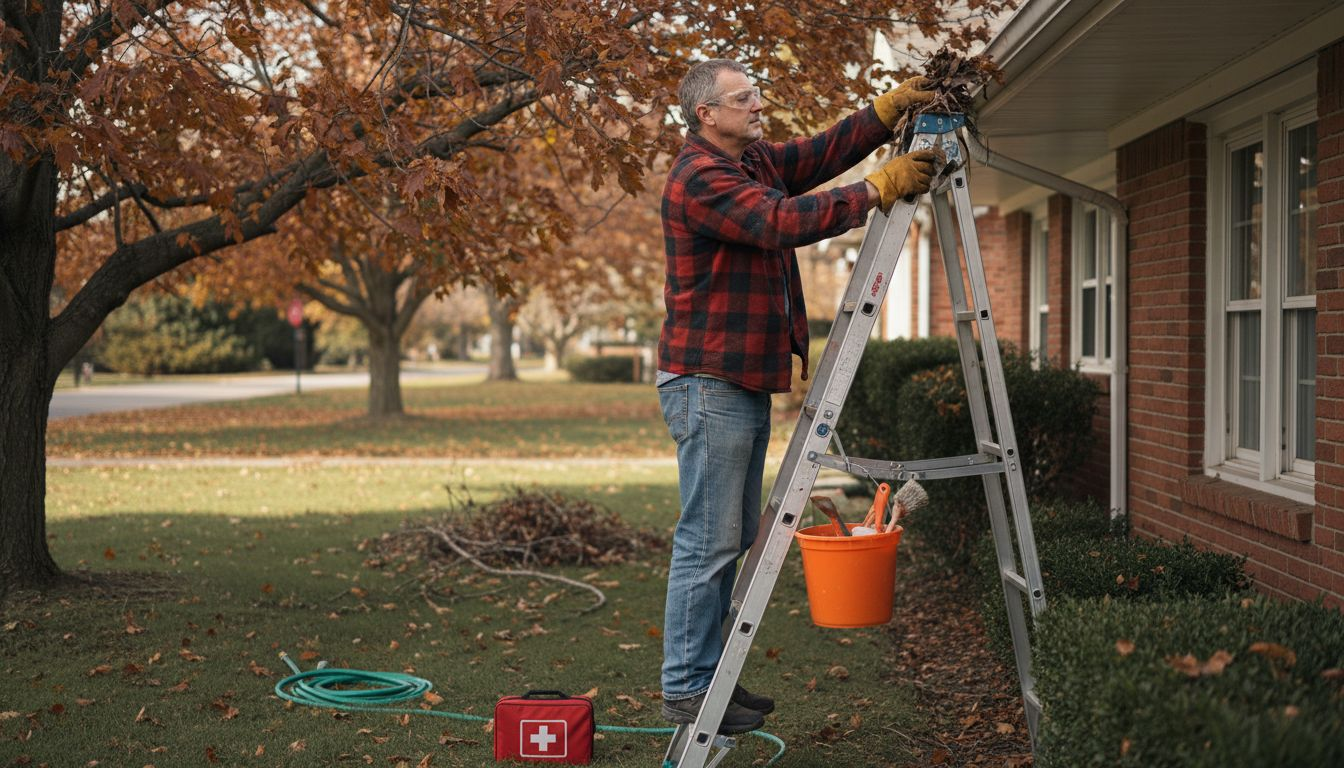
Your essential toolkit should include sturdy extension ladders with stabilisers, heavy-duty rubber gloves, safety glasses, non-slip work boots, and protective clothing that covers your arms and legs. Consider wearing a long-sleeved shirt and trousers made from durable fabric to protect against debris and potential scratches. Additional recommended items include a sturdy bucket for collecting debris, a gutter scoop, garden trowel, pressure washer or garden hose, and a robust rubbish bag for disposing of collected leaves and organic matter.
Ensure your ladder is in excellent condition before use, checking for any structural damage or worn components. Position the ladder on firm, level ground and maintain three points of contact when climbing. If possible, have a second person present to hold the ladder and provide additional safety support.
Expert Advice: Always check weather conditions before starting gutter maintenance work, avoiding wet or windy days which significantly increase safety risks.
Step 2: Inspect and clear debris from accessible gutters
Now that you are safely positioned on your ladder, it is time to thoroughly examine and clean your gutters. Systematic gutter inspection helps prevent water damage and maintain your property’s structural integrity.
Begin by carefully removing large debris like fallen leaves, twigs, and accumulated organic matter using your gloved hands or a gutter scoop. Work systematically along the gutter length, placing collected debris directly into your rubbish bag. Pay special attention to downspout entrances where blockages are most likely to occur. Look for signs of potential problems such as standing water, which indicates improper drainage or a blocked downspout. Remove any nests, moss, or compacted material that might impede water flow.
As you progress, check the gutter’s alignment and slope. Gutters should have a slight gradient towards downspouts to ensure water flows smoothly. If you notice areas where water appears to pool, this could signal installation issues that might require professional adjustment. Clean both the interior of the gutters and their external surfaces, wiping away any dirt or grime that could potentially cause corrosion or blockage.
Expert Advice: Use a garden hose to flush remaining small debris and test water flow after initial cleaning to confirm proper drainage.
Step 3: Flush gutters and downpipes with clean water
With the debris removed, the next critical stage is thoroughly flushing your gutters and downpipes to ensure complete clearance and verify proper water drainage. Water flow testing helps identify any hidden blockages or potential drainage issues.
Use a garden hose with a spray nozzle attachment to direct water through the gutter system. Start at the end opposite the downspout, allowing water to flow naturally towards the drainage point. Observe how the water moves watch for any areas where it pools or overflows. This will highlight potential problems such as incorrect gutter alignment or localised blockages that were not immediately visible during the initial cleaning process.
Pay close attention to the downspout discharge area. The water should flow smoothly and quickly away from your property’s foundation. If you notice slow drainage or water backing up, this might indicate a more significant blockage that requires additional attention. In such cases, you may need to use a plumber’s snake or contact a professional gutter cleaning service to resolve the issue.
Expert Advice: Perform this water test during dry weather to accurately assess your gutter system’s performance without the complications of active rainfall.
Step 4: Examine gutters for damage or blockage issues
After cleaning, conduct a thorough visual inspection to identify potential problems that could compromise your gutter system’s effectiveness. Comprehensive gutter inspection is critical for preventing water damage to your property.

Check each section of the gutter for signs of wear and structural damage. Look closely for rust spots, small holes, or cracks that might allow water to leak. Pay special attention to the seams and joints where gutters connect, as these areas are most likely to develop weaknesses. Examine the gutter’s alignment and slope carefully. Your gutters should have a slight gradient towards the downspouts to ensure water flows smoothly. Sagging sections or areas where water appears to pool indicate potential installation problems that require immediate attention.
Inspect the downspout connections and discharge points meticulously. Ensure that downspouts are securely attached and direct water at least one metre away from your property’s foundation. Watch for signs of water staining on the walls, foundation, or nearby surfaces, which could indicate previous overflow or drainage issues. If you notice significant damage or complex structural problems, it might be time to consult a professional gutter maintenance service.
Here’s a summary of common gutter faults and what they might indicate:
| Issue Detected | Potential Cause | Recommended Action |
|---|---|---|
| Standing water | Blocked downspout or poor slope | Adjust slope, remove blockage |
| Rust spots | Prolonged moisture exposure | Treat rust, apply sealant |
| Sagging gutters | Loose brackets or excess debris | Reinforce supports, remove buildup |
| Water stains on walls | Overflow or poor drainage | Clean thoroughly, inspect flow |
Expert Advice: Take photographs of any damage you discover to help professionals accurately assess potential repair needs.
Step 5: Dispose of gutter waste and tidy up the work area
With your gutter cleaning complete, the final stage involves responsibly managing the collected debris and restoring your work environment. Waste management practices are crucial for maintaining environmental responsibility and workplace safety.
Carefully transfer the collected organic debris into a designated garden waste bag or compost bin. If you have a garden, leaves and small twigs can be excellent additions to compost heaps, creating nutrient-rich material for future planting. For larger quantities of waste, check local council guidelines for green waste disposal. Some areas offer specific collection services or designated drop off points for garden and organic materials.

Thoroughly clean your equipment using a garden hose or damp cloth, removing any remaining dirt or organic matter. Store your tools in a dry location to prevent rust and maintain their condition. Inspect your ladder for any debris or damage, wipe it down, and return it to its proper storage space. Take a moment to do a final sweep of the area around your property, ensuring no fallen leaves or debris remain on pathways or garden beds.
Compare the environmental impact of different gutter waste disposal methods:
| Disposal Method | Environmental Impact | Best Practice Recommendation |
|---|---|---|
| Composting | Enriches soil, sustainable | Use for organic, non-toxic matter |
| General rubbish | Increases landfill use | Only for contaminated waste |
| Council green waste | Proper recycling, efficient | Utilise local collection schemes |
Expert Advice: Rinse your rubber gloves with water and mild detergent before storing to prevent organic matter build up and potential mould growth.
Keep Your Home Safe with Professional Gutter Cleaning Services
Maintaining clean and well-functioning gutters is essential to prevent water damage and costly repairs. As highlighted in the article “Step by Step Gutter Cleaning for Safe Home Maintenance,” key challenges include safely removing debris, flushing out blockages, and identifying damage that might threaten your property’s health. Tackling these issues alone can be risky and time-consuming, especially when dealing with blocked downspouts or sagging gutters that cause standing water and damp problems.
Do not wait for these problems to escalate. Our experts at Local Gutter Cleaner specialise in comprehensive gutter cleaning solutions designed to protect both residential and commercial properties. We prioritise safety protocols and use professional equipment to ensure gutters are cleared efficiently while preventing accidents. Whether you have a block of flats or industrial gutters, we offer tailored services that extend your gutter system’s lifespan and safeguard your building against water damage.
Take control of your property maintenance today by choosing trusted professionals who understand every step of the gutter cleaning process. Visit Local Gutter Cleaner now to request a quote or learn more about how our safe, thorough gutter cleaning can keep your home or business dry and secure. Don’t let blocked gutters threaten your investment when expert help is just a click away.
Frequently Asked Questions
What tools do I need for safe gutter cleaning?
You will need essential tools such as a sturdy extension ladder, heavy-duty rubber gloves, safety glasses, and a garden trowel. Gather these items before beginning to ensure a safe and efficient cleaning process.
How do I inspect my gutters for potential problems during cleaning?
Examine your gutters while clearing debris for signs of wear such as rust spots, small holes, or cracks. Pay close attention to the alignment and slope of the gutters, as they should guide water to downspouts without pooling.
What should I do if I find a blockage in my downspout?
If you notice a blockage during your inspection, use a garden hose to flush out debris or a plumber’s snake for more stubborn clogs. Ensure water flows freely through the downspout, moving away from your property’s foundation.
How can I properly dispose of gutter waste after cleaning?
Transfer collected debris into a compost bin or designated garden waste bag. Follow local disposal guidelines, and consider composting organic materials to create nutrient-rich soil for your garden.
What steps can I take to maintain my gutters after cleaning?
Regularly inspect and clean your gutters at least twice a year, ideally in Spring and Autumn, to prevent build-up. This proactive approach will help maintain proper water flow and prevent structural damage to your home.
How can I ensure my ladder is set up safely before climbing?
Before using your ladder, check for any damage and place it on firm, level ground. Maintain three points of contact when climbing, and, if possible, have a second person hold the ladder for added safety.




Leave A Comment