Water overflowing from clogged gutters can quickly turn a well-run commercial property into a source of headaches for both owners and tenants. For busy property managers, finding cost-effective gutter cleaning workflows is crucial to prevent water damage and keep tenants satisfied. This guide offers practical steps tailored to urban commercial buildings, from assessing building needs to selecting cleaning methods that match complex city environments.
Table of Contents
- Step 1: Assess Building Requirements And Budget
- Step 2: Select Optimal Gutter Cleaning Approach
- Step 3: Coordinate Service Scheduling And Access
- Step 4: Verify Quality And Document Costs
Quick Summary
| Key Point | Explanation |
|---|---|
| 1. Assess building needs and budget | Comprehensive understanding allows for effective planning and prevents costly repairs. Document factors like roof size and local weather. |
| 2. Choose appropriate cleaning method | Align your selection with building characteristics and local conditions to maximise effectiveness and minimize risk. |
| 3. Schedule with tenant consideration | Coordinate cleaning times that limit disruption to tenants and ensure contractor access is feasible and safe. |
| 4. Verify cleaning quality and costs | Conduct a thorough post-cleaning inspection to confirm job completion and maintain detailed records for future planning. |
Step 1: Assess building requirements and budget
Before you schedule your first gutter cleaning, you need a clear picture of your building’s specific needs and what you can realistically spend. This assessment becomes your roadmap for planning a sustainable maintenance workflow that prevents costly water damage whilst keeping tenant satisfaction high.
Start by examining your building’s physical characteristics. The roof size, number of storeys, surrounding trees, and local weather patterns all affect how often gutters need cleaning and what type of maintenance is required. A commercial building surrounded by mature oak trees in a high-rainfall area will need far more frequent attention than a modern office block in a drier region.
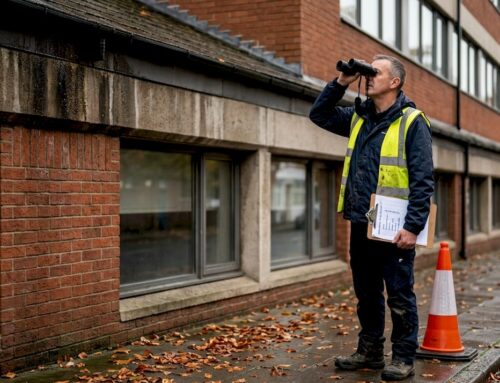
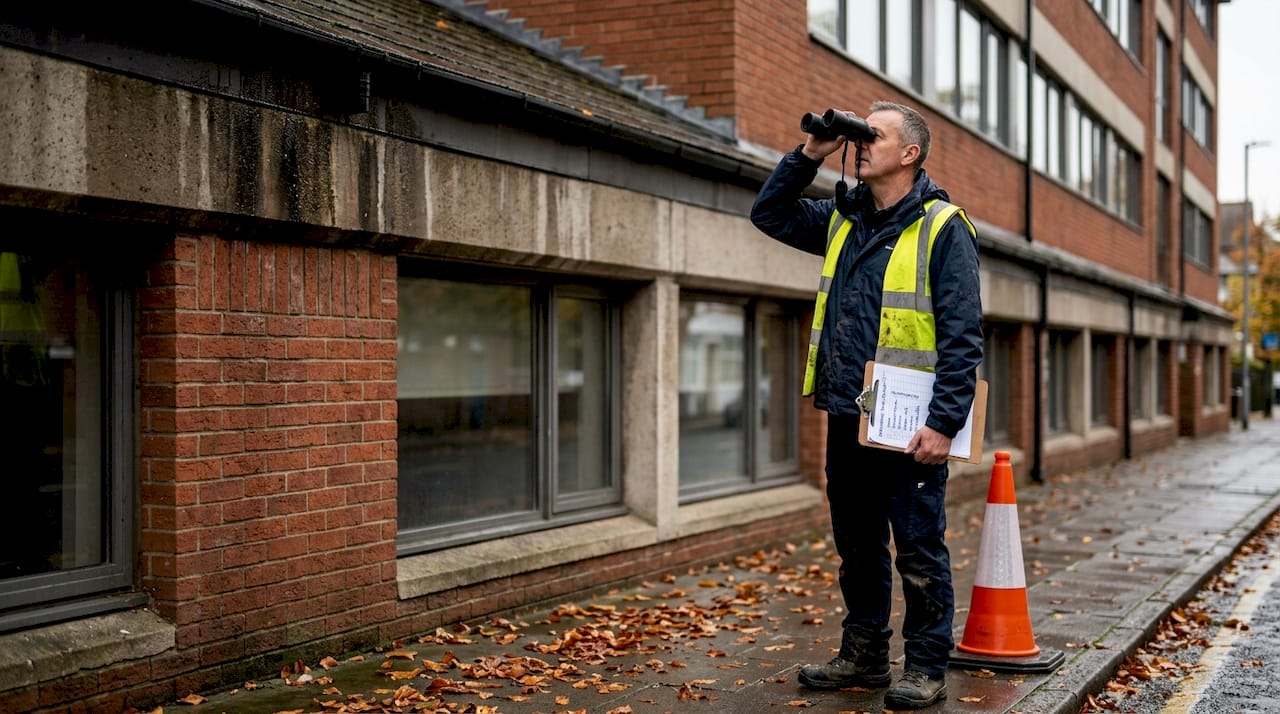
You’ll also want to understand your current gutter condition. Walk the perimeter (or hire a surveyor) and note any visible sagging, rust, cracks, or overflow marks. According to planned preventative maintenance standards, regular inspections are essential for identifying maintenance needs before they become expensive repairs.
Here’s what to include in your initial assessment:
- Building footprint and roof complexity
- Number and condition of downspouts
- Local rainfall averages and seasonal patterns
- Current gutter material (aluminium, steel, uPVC)
- Presence of nearby trees or vegetation
- Any existing water damage or damp issues
Knowing your building’s specific requirements lets you budget accurately and plan cleaning schedules that actually prevent problems rather than react to them.
Once you’ve documented these factors, you can establish a realistic annual budget. Gutter cleaning costs vary by location, building size, and cleaning frequency. A two-storey commercial building typically costs £200–£500 per visit, whilst larger multi-storey properties may range from £800–£2,000. Budget for at least two to four cleanings annually, depending on local conditions.
Consider also the cost of potential repairs discovered during cleaning. Setting aside 10–15% of your cleaning budget for unexpected issues (damaged joints, blocked downspouts, minor patching) prevents budget overruns and keeps your workflow predictable.
Pro tip: Document everything you find during your initial assessment with photos and dates—this creates a maintenance history that helps you spot patterns in cleaning frequency and justifies budget requests to stakeholders.
Step 2: Select optimal gutter cleaning approach
Now that you understand your building’s requirements and budget, you need to choose a cleaning method that matches your gutter type, building characteristics, and maintenance schedule. The right approach protects your investment whilst keeping costs predictable.
Your gutter material and design determine which cleaning techniques work best. Aluminium gutters need gentler handling than steel, whilst older cast iron systems require specialist care to avoid damage. Understanding how to plan routine gutter cleaning helps you align your chosen method with your property’s specific needs and long-term maintenance goals.
Consider these core cleaning options:
- Manual cleaning with hand tools and safety equipment
- High-pressure water jetting for stubborn debris removal
- Gutter vacuum systems that minimise ground mess
- Gutter guard installation to reduce future cleaning frequency
- Combination approaches tailored to seasonal conditions
Different buildings call for different strategies. A property surrounded by heavy tree coverage needs more frequent manual cleaning to prevent damage from sustained leaf blockages. By contrast, proper gutter management systems protect buildings through regular cleaning combined with guards or strainers suited to your environment.
Matching your cleaning method to your building type and local conditions prevents damage, extends gutter lifespan, and reduces long-term maintenance costs.
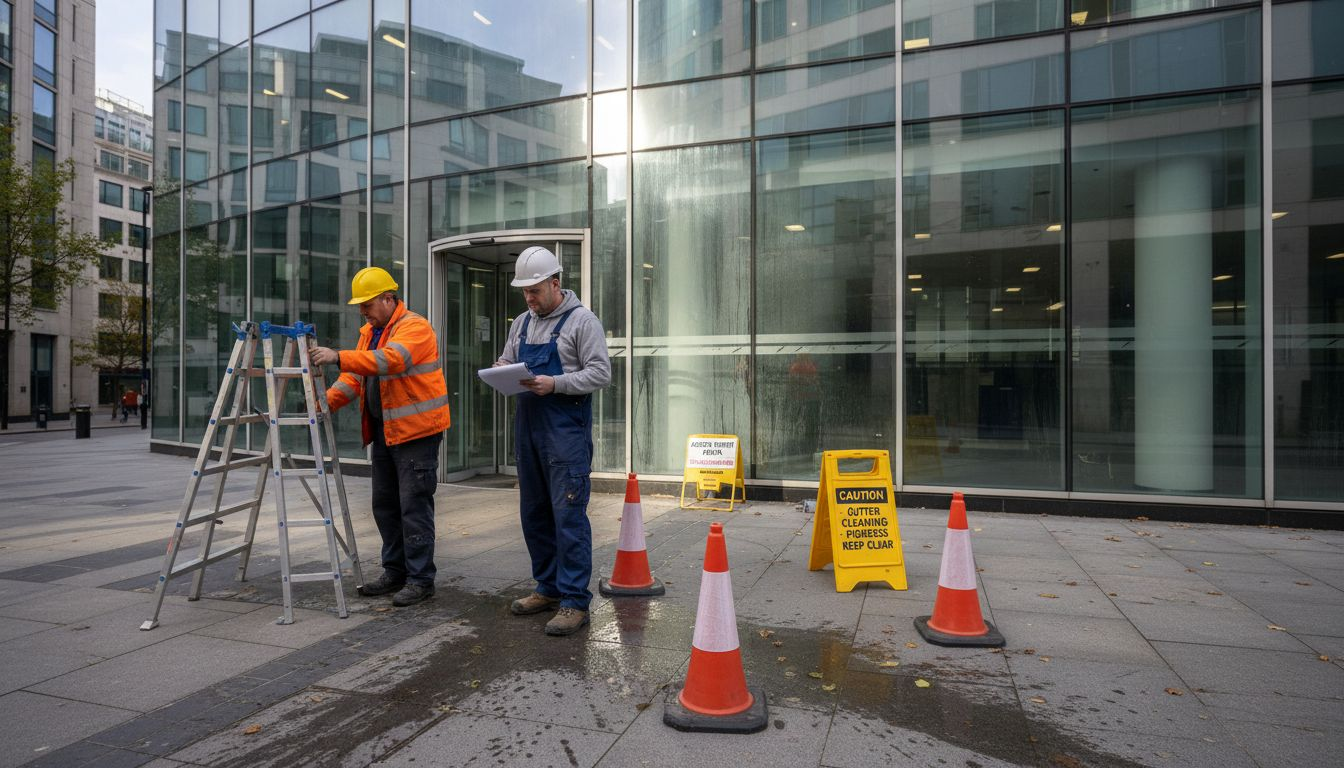
Factor in your tenant base and operational constraints. Properties with occupied spaces below may require methods that minimise noise and water runoff disruption. Urban high-rises need equipment and safety protocols that comply with local regulations. Properties in areas with seasonal heavy rainfall benefit from more frequent professional cleaning rather than relying solely on guards.
Building access also influences your choice. Multi-storey structures require proper scaffolding or rope access systems, which favour professional contractors over DIY approaches. Document your chosen method alongside the frequency schedule from Step 1, as this becomes your operational blueprint.
Here is a summary of factors that influence gutter cleaning approach selection:
| Factor | Impact on Approach | Typical Recommendation |
|---|---|---|
| Gutter Material | Determines cleaning method safety | Use gentle or specialist tools |
| Building Height/Design | Affects access and equipment needed | May require rope or scaffolding |
| Surrounding Vegetation | Increases frequency of cleaning | More frequent manual cleaning |
| Occupant Activity | Influences timing and noise levels | Schedule at low-activity times |
| Local Weather Patterns | Impacts debris build-up and timing | Adjust frequency seasonally |
Pro tip: Select a contractor experienced with your specific building type and gutter material—they understand the best cleaning techniques for your system and can spot issues during routine visits that prevent costly repairs later.
For quick reference, here’s a comparison of common gutter cleaning methods and their suitability:
| Cleaning Method | Best for Property Type | Notable Advantage | Key Limitation |
|---|---|---|---|
| Manual Cleaning | Most low-rise, leafy sites | Thorough debris removal | Labour-intensive, slower |
| High-Pressure Jetting | Commercial with limited debris | Clears blockages effectively | Risk of water ingress in leaks |
| Gutter Vacuum System | Urban and multi-storey | Clean, minimal ground mess | Less effective for heavy debris |
| Gutter Guards Installed | All, especially near trees | Reduces future cleaning needs | Initial cost, not debris-proof |
Step 3: Coordinate service scheduling and access
With your cleaning method chosen, you now need to schedule the work in a way that minimises disruption to tenants and operations whilst ensuring your contractor has safe, practical access. Good coordination prevents last-minute cancellations and keeps your maintenance workflow running smoothly.
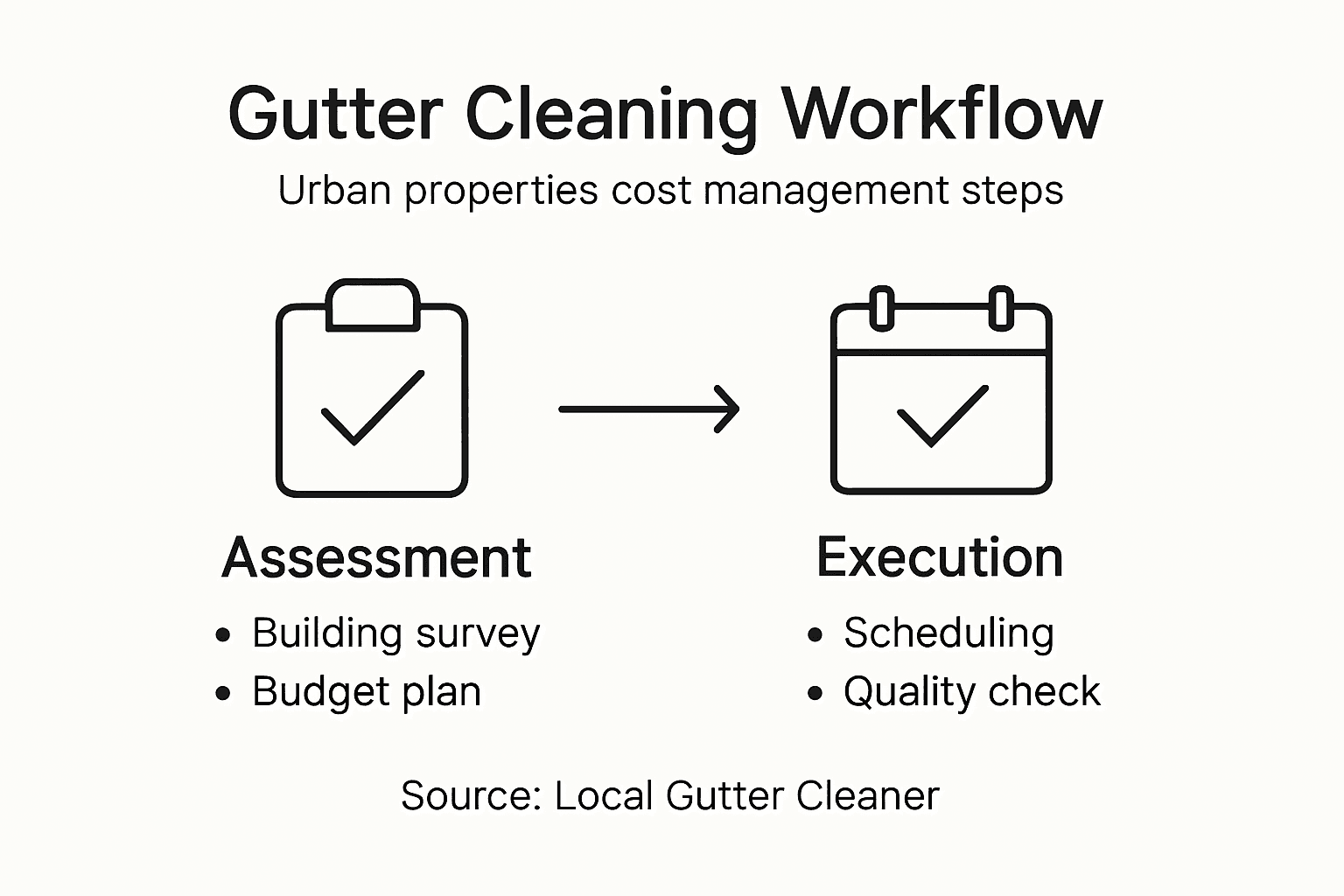
Start by identifying your optimal cleaning windows. Most commercial buildings benefit from early morning or late afternoon slots when tenant activity is lowest. Winter months often require more frequent cleaning due to leaf fall and debris accumulation, whilst summer allows longer gaps between visits. Check your lease agreements to confirm any tenant notification requirements, as many properties must give 24–48 hours’ notice before access.
Communication with all stakeholders is essential. Notify tenants, reception staff, and building security about upcoming cleaning dates and expected duration. Clear scheduling routines based on building needs help everyone prepare and reduce unexpected access conflicts.
Your coordination checklist should cover:
- Tenant notification timelines and preferred contact methods
- Contractor arrival times and estimated duration
- Safe access routes and equipment staging areas
- Weather contingencies and rescheduling protocols
- Documentation of completed work and findings
- Emergency contact numbers for both contractor and building staff
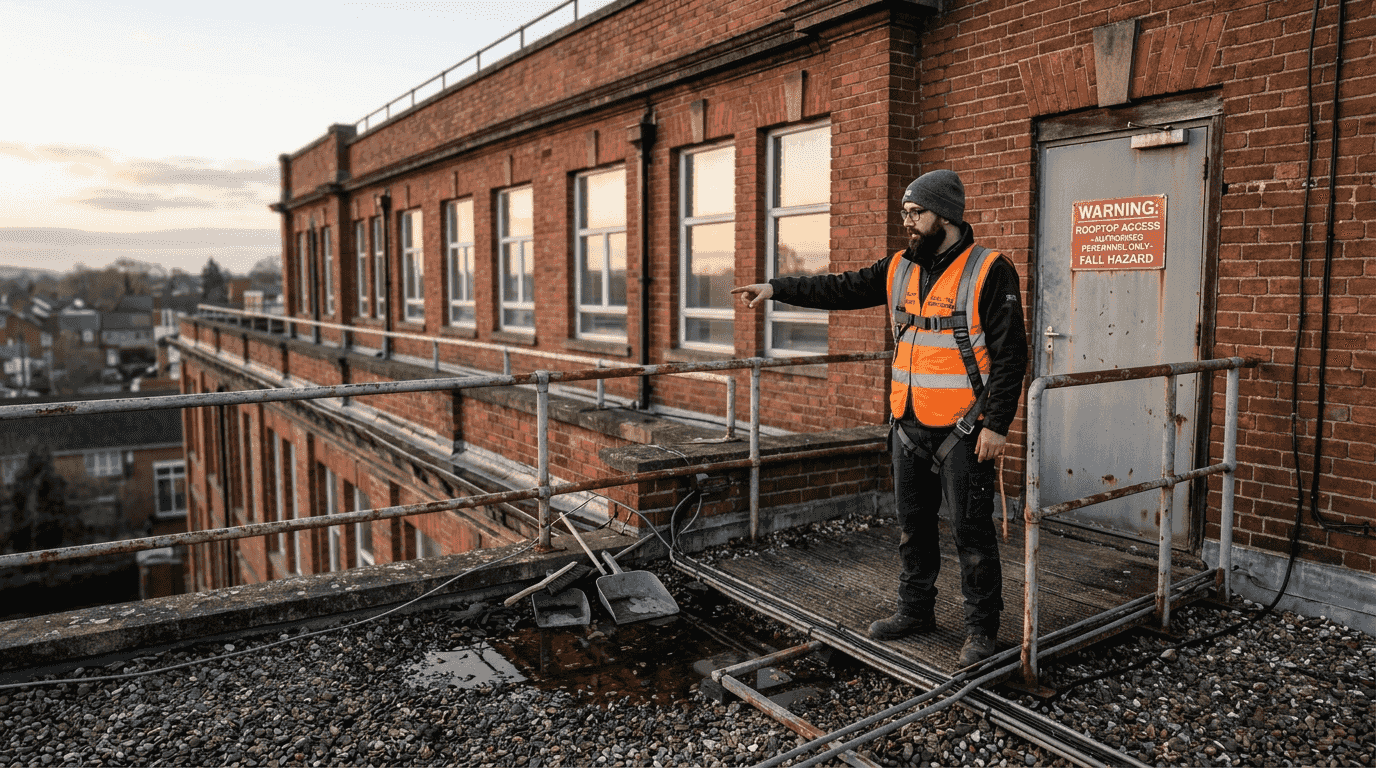
Access planning matters equally for safety and efficiency. Confirm whether your contractor needs roof access, ground-level ladders, or special equipment like cherry pickers for multi-storey buildings. Urban properties often have restricted street parking, so clarify where vehicles can stage. High-rise buildings may require advance notice to security or building management for extended access.
Effective scheduling eliminates surprises, reduces tenant complaints, and ensures contractors have everything they need to work safely and efficiently.
Document your agreed schedule in a master calendar visible to all relevant staff. This becomes your operational backbone, allowing you to track which buildings were cleaned, when the next visit is due, and any issues that require follow-up.
Pro tip: Schedule cleaning during your building’s quietest periods and always confirm access details 48 hours beforehand—this prevents contractor delays and ensures tenants receive proper notice of any disruption.
Step 4: Verify quality and document costs
After your contractor completes the cleaning work, you need to verify that the job meets your standards and then record all costs and findings. This final step closes the loop on each maintenance cycle and builds a reliable record for future planning.
Begin your quality check whilst the contractor is still on site. Walk the building perimeter and inspect gutters visually for debris removal, proper water flow, and any damage discovered during cleaning. Ask your contractor to point out problem areas they found, such as loose joints, rust spots, or blockages in downspouts. Taking photographs during this walkthrough creates a visual record that proves work completion and flags issues needing repair.
Verifying gutter condition and function includes checking that water flows freely towards downspouts without pooling. Ensure brackets are secure, seams are intact, and no new leaks have developed. If your contractor identified repairs needed beyond basic cleaning, request a separate quote and add it to your maintenance tracking system.
Your quality verification should address:
- Complete debris removal from gutters and downspouts
- Proper water flow without pooling or overflow
- Structural integrity of gutters, brackets, and joints
- Condition of any visible roof areas or fascia
- Photographs documenting completion and any issues
Once quality is confirmed, request an itemised invoice and retain all documentation. Record the following in your maintenance system:
- Date and time of service completion
- Contractor name and contact information
- Square meterage or number of buildings cleaned
- Cost per visit and total expenditure
- Issues identified and recommended repairs
- Next scheduled cleaning date
Detailed cost records reveal spending patterns, justify budget requests, and provide evidence of preventative maintenance investment that protects your buildings long-term.
Maintain these records digitally in a spreadsheet or property management software. Over time, your documented data shows which buildings require more frequent cleaning, seasonal cost variations, and opportunities to negotiate better rates with contractors.
Pro tip: Request before-and-after photographs from your contractor and keep them alongside your invoice—this visual evidence helps justify maintenance costs to stakeholders and proves work quality without revisiting the site.
Take Control of Your Urban Property’s Gutter Maintenance Today
Managing gutter cleaning workflows for blocks of flats and commercial buildings can feel overwhelming with all the challenges discussed in this article. From budgeting realistically to choosing the right cleaning methods and coordinating access while minimising tenant disruption, it is easy to lose control without expert support. Key pain points like unexpected repair costs, complicated scheduling, and the need for specialised equipment demand a trusted partner who understands urban property complexities.
At Local Gutter Cleaner, we take the stress out of your gutter maintenance. We specialise in tailored gutter cleaning services for blocks of flats and commercial buildings that match your building’s specific material, height, and environment. Our professional team handles everything from careful inspections to thorough debris removal and performs work at times that suit your tenants. By partnering with us you protect your investment, avoid costly water damage, and keep your buildings safe and attractive.
Ready to master your gutter cleaning cost workflow with confidence and ease Choose Local Gutter Cleaner as your reliable maintenance partner and benefit from expert advice and professional service customised for urban properties Don’t wait for problems to escalate Visit our Gutter Cleaning Service for Blocks of Flats and Commercial Buildings page now to schedule your first assessment and build a smart, cost-effective cleaning plan.
Frequently Asked Questions
How do I assess my building’s gutter cleaning needs and budget?
Start by evaluating the physical characteristics of your building, such as roof size, number of storeys, and local weather patterns. Document any visible issues and establish a realistic annual budget based on cleaning frequency and potential repairs.
What are the best gutter cleaning methods for urban properties?
The optimal cleaning method depends on your gutter material and building design. Consider options like manual cleaning, high-pressure water jetting, or gutter vacuum systems, and select one that minimizes disruption to tenants and complies with local regulations.
How can I effectively schedule gutter cleaning services?
To minimise disruption, schedule cleaning during low-activity times, such as early mornings or late afternoons. Notify tenants in advance and create a master calendar to track cleaning dates and access requirements.
What should I check after the gutter cleaning is completed?
Verify the quality of the cleaning by checking for complete debris removal and proper water flow. Document any issues your contractor noted during cleaning and ensure you have an itemised invoice for your records.
How do I budget for unexpected gutter repair costs?
Set aside approximately 10–15% of your cleaning budget for unforeseen repairs discovered during routine maintenance. This cushion can help you manage costs effectively and prevent budget overruns.