
Over 70% of gutter failures in UK blocks of flats and commercial buildings stem from organic debris blockages like leaves and bird nests. Property managers face hidden risks that threaten tenant safety, building integrity, and regulatory compliance. This guide equips you with actionable strategies to identify, assess, and mitigate gutter hazards effectively, protecting your properties and preserving their value.
Table of Contents
- Understanding Common Gutter Hazards In Blocks Of Flats And Commercial Buildings
- How Gutter Hazards Affect Safety And Building Integrity
- Legal And Compliance Implications For Property Managers In The UK
- Common Misconceptions About Gutter Hazards And Maintenance
- Comparing Gutter Hazard Mitigation Strategies: Maintenance And Technology
- Implementing A Proactive Gutter Hazard Management Plan
- Professional Solutions For Gutter Hazard Management
- Frequently Asked Questions
Key Takeaways
| Point | Details |
|---|---|
| Primary Causes | Organic debris, corrosion, and poor gutter slope create the majority of hazards. |
| Safety Impact | Overflow causes pedestrian slip incidents, structural water damage, and legal liability. |
| Legal Duty | UK Health and Safety at Work Act mandates proactive gutter maintenance for property managers. |
| Cost Reality | Preventative maintenance costs far less than emergency repairs and compliance penalties. |
| Effective Solutions | Combining biannual inspections with protective technology reduces incidents by 60%. |
Understanding Common Gutter Hazards in Blocks of Flats and Commercial Buildings
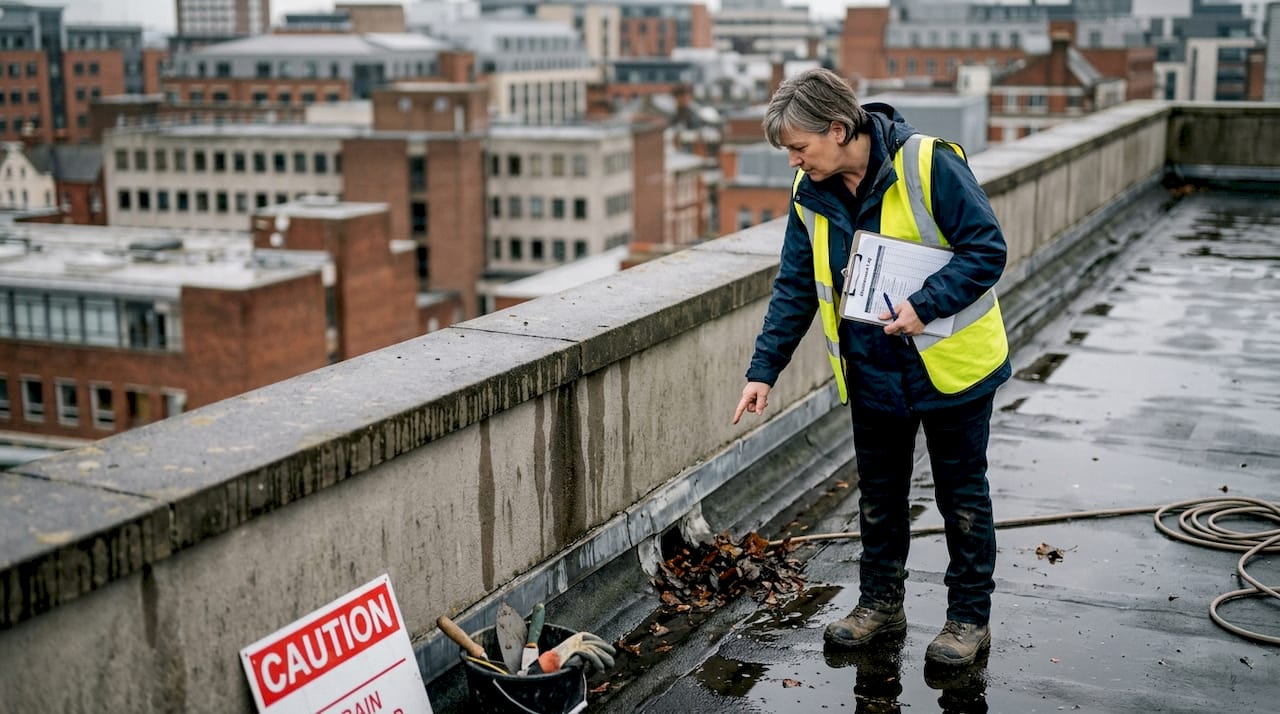
Gutter hazards in multi-occupancy buildings typically originate from three physical factors. First, blockages from organic debris and bird nests rank as the leading cause, restricting water flow and creating overflow points. Autumn leaves, moss, and nesting materials accumulate faster in larger roof areas typical of commercial properties and flat blocks.
Second, corrosion develops where stagnant water pools. Metal gutters deteriorate when water sits rather than drains, particularly in sections with inadequate fall or hidden low spots. You might not see this damage from ground level, but it weakens gutter integrity silently.
Third, structural factors like incorrect gutter slope cause persistent pooling. Even minor installation errors compound over years, creating stress points where gutters sag or separate from fascia boards. These weak spots amplify water damage risks during heavy rainfall.
Key physical hazard contributors include:
- Organic debris accumulation reducing drainage capacity
- Corrosion in stagnant water zones weakening gutter material
- Improper slope creating pooling and structural stress
- Physical impact damage from maintenance access or weather
- Joint failures where gutter sections connect poorly
For blocks of flats, these issues multiply across multiple floors and extensive rooflines. Professional gutter cleaning for blocks of flats addresses these challenges with specialized access equipment and systematic approaches.
How Gutter Hazards Affect Safety and Building Integrity
When gutters overflow, water cascades onto pavements and walkways below. This creates slippery surfaces that pose immediate pedestrian hazards, particularly during freezing conditions. Gutter-related slippery pavement incidents rise 45% in cold seasons, exposing property managers to liability claims and tenant safety complaints.
Water ingress from overflowing gutters damages building fabric systematically. Persistent moisture penetrates exterior walls, causing damp patches, mould growth, and structural deterioration. Repair costs escalate rapidly when water reaches internal spaces, affecting multiple units in flat blocks.

The legal dimension adds pressure. Neglected gutters create legal compliance risks under UK safety regulations, potentially resulting in enforcement notices, fines, or prosecution following incidents. Insurance claims from slip accidents or water damage often reveal inadequate maintenance records, complicating coverage.
Direct consequences of gutter hazards include:
- Pedestrian slip accidents from overflow onto walkways
- Structural water damage requiring costly remediation
- Regulatory enforcement action and financial penalties
- Insurance coverage complications and premium increases
- Tenant dissatisfaction affecting occupancy rates
Pro Tip: Document every gutter inspection and maintenance activity with dated photographs and written reports. This evidence demonstrates your duty of care and supports insurance claims or legal defences if incidents occur despite your efforts.
The importance of gutter safety extends beyond immediate hazards to long term building preservation. Proactive management protects both people and property value. Consult HSE official guidelines for comprehensive safety standards.
Legal and Compliance Implications for Property Managers in the UK
UK property managers operate under clear legal frameworks requiring gutter maintenance. The Health and Safety at Work Act mandates hazard prevention, placing duty of care obligations on those managing properties. This extends to preventing foreseeable risks from gutter failures affecting tenants, visitors, and the public.
Failure to maintain gutters can trigger multiple legal consequences. Local authorities issue enforcement notices requiring immediate remediation, often with follow up inspections. Persistent non compliance leads to prosecution and substantial fines. When gutter related incidents cause injury, civil liability claims follow, with damages potentially reaching tens of thousands of pounds.
Local council enforcement statistics show rising actions related to gutter neglect, reflecting increased scrutiny of multi occupancy building maintenance. Councils respond to complaints from tenants and neighbours, conducting inspections that can expose wider maintenance failures beyond gutters.
Key legal considerations include:
- Duty of care under Health and Safety at Work Act for all building users
- Local authority enforcement powers to require immediate repairs
- Civil liability for injuries or damage caused by gutter failures
- Insurance policy requirements for regular maintenance evidence
- Building regulation compliance for water management systems
Property managers hold ultimate responsibility for ensuring gutter systems function safely. Understanding blocked gutter legal risks helps you prioritize this maintenance aspect appropriately. The importance of gutter cleaning connects directly to fulfilling these legal duties.
Regular professional maintenance creates the audit trail demonstrating compliance. Review UK health and safety regulations annually to ensure your practices meet current standards.
Common Misconceptions About Gutter Hazards and Maintenance
Many property managers adopt reactive cleaning approaches, scheduling work only after visible problems emerge. This strategy misses hidden corrosion and structural damage developing between cleanings. By the time blockages overflow visibly, expensive secondary damage often exists.
Another widespread belief treats corrosion as uniform across gutter systems. Actually, corrosion concentrates where water pools due to poor fall or blockage points. These localized weak spots fail suddenly, often during heavy rainfall when you need gutters most.
53% of property managers underestimate maintenance frequency requirements for their properties. Annual cleaning might suffice for small buildings with minimal tree coverage, but blocks of flats and commercial properties typically need biannual or quarterly attention.
Gutter guards offer significant benefits but do not eliminate maintenance entirely. Quality systems reduce blockage formation by up to 85%, yet they still require periodic inspection and cleaning. Debris can accumulate on top of guards, and some small particles pass through mesh designs.
Common misconceptions include:
- Reactive cleaning suffices if no visible overflow occurs
- Corrosion develops evenly rather than at specific stress points
- Gutter guards eliminate all future cleaning requirements
- Annual inspections adequately protect commercial properties
- Minor blockages pose no immediate safety risks
Pro Tip: Schedule inspections after significant weather events, not just on calendar dates. Heavy storms and high winds deposit debris suddenly, potentially creating hazards between regular maintenance visits. A quick post storm check takes minutes but prevents costly damage.
Understanding gutter maintenance importance helps you move beyond these myths to evidence based practices. Invest in prevention rather than paying for emergency repairs.
Comparing Gutter Hazard Mitigation Strategies: Maintenance and Technology
Property managers face strategic choices between manual cleaning and technological solutions. Manual cleaning involves periodic professional visits to remove debris and flush systems. This approach requires lower upfront investment but demands ongoing labor costs and risks missing blockages between scheduled cleanings.
Gutter guards and protection systems represent higher initial capital expenditure but reduce blockage formation by approximately 85%. These technologies work by physically preventing large debris from entering gutters while allowing water flow. However, they require occasional inspection and cleaning to remove accumulated surface debris.

| Strategy | Upfront Cost | Annual Maintenance | Effectiveness | Best For |
|---|---|---|---|---|
| Manual Cleaning Only | Low | High (multiple visits) | Good if frequent | Small buildings |
| Gutter Guards + Inspection | High | Low (annual check) | Excellent | Large properties |
| Combined Approach | Medium | Medium | Very Good | Most buildings |
Biannual inspections reduce major incidents by 60% compared to annual schedules. For blocks of flats and commercial buildings, this frequency provides optimal protection without excessive costs. Inspections should occur in spring after blossom and seed fall, and in autumn after leaf drop.
Recommended maintenance schedules:
- Spring inspection and cleaning to remove winter debris and check for frost damage
- Autumn deep clean before winter rainfall peaks
- Post storm checks after severe weather events
- Quarterly visual inspections for high risk properties near heavy tree coverage
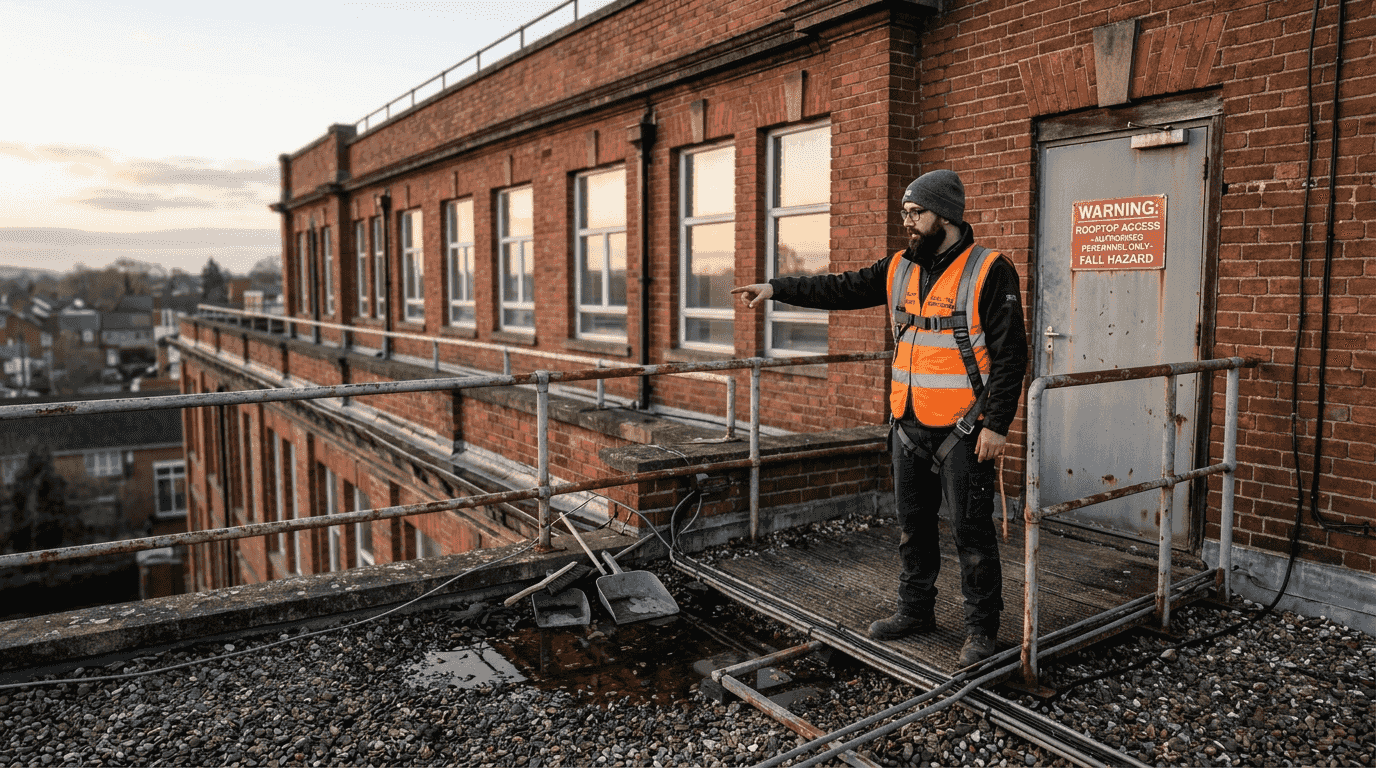
Cost considerations vary by building size and access difficulty. Ground floor commercial properties allow simpler access than high rise blocks requiring specialized equipment. Factor in safety costs for working at height, including proper scaffolding or mobile elevated work platforms.
The step by step gutter maintenance approach balances thoroughness with efficiency. Most property managers find combined strategies, using guards on difficult access areas while manually cleaning accessible sections, deliver optimal results.
Implementing a Proactive Gutter Hazard Management Plan
A structured management plan transforms gutter maintenance from reactive crisis response to predictable routine. Start by conducting comprehensive baseline inspections across all your properties. Document current gutter condition, noting blockages, corrosion, slope issues, and structural concerns.
Follow this systematic approach:
-
Conduct Thorough Baseline Inspections: Survey every gutter section, downpipe, and outlet. Photograph problem areas and map hazard locations on building plans. This creates your risk register.
-
Evaluate Severity and Prioritize Interventions: Rank identified issues by immediate danger level. Address active leaks and structural failures first, then tackle corrosion and minor blockages.
-
Establish Regular Maintenance Schedules: Set biannual professional cleaning dates, spacing them strategically around seasonal debris peaks. Add quarterly visual checks you can perform yourself.
-
Consider Protective Technology Installation: Assess whether gutter guards make financial sense for difficult access areas or sections with persistent blockage problems. Calculate payback periods against manual cleaning costs.
-
Execute Repairs and Replacements Promptly: Fix identified problems immediately rather than deferring work. Small repairs cost hundreds; delayed major replacements cost thousands.
-
Review and Update Plans Quarterly: Analyze maintenance records to spot recurring problem areas. Adjust cleaning frequency or upgrade protection where standard approaches fail.
Document everything meticulously. Maintain dated records of all inspections, cleaning work, repairs, and expenditures. This evidence demonstrates your duty of care and supports budgeting for future maintenance cycles.
The importance of gutter cleaning in property management justifies allocating sufficient budget annually. Most property managers find preventative maintenance costs roughly 30% of what emergency repairs and damage remediation demand. This makes proactive planning financially sensible beyond meeting legal obligations.
Train your maintenance team to spot early warning signs during routine property inspections. Water staining on exterior walls, ground level pooling below downpipes, and visible plant growth in gutters all signal developing problems requiring attention.
Professional Solutions for Gutter Hazard Management
Managing gutter hazards across multiple blocks of flats or commercial buildings demands specialized expertise and equipment. Professional gutter cleaning for blocks of flats ensures safe access to difficult areas while delivering thorough debris removal and system checks. Our technicians identify emerging issues before they escalate into costly emergencies.
We understand the unique challenges property managers face. Our commercial property cleaning services offer flexible scheduling around tenant activities, minimizing disruption while maintaining safety standards. Whether you manage a single block or a diverse portfolio, we tailor maintenance plans to your specific needs and compliance requirements.
Local service means rapid response when unexpected issues arise. Our Greenwich gutter cleaning services exemplify our commitment to supporting property managers with reliable, professional maintenance partnerships. Contact us to discuss how we can simplify your gutter hazard management while protecting your properties and meeting your legal obligations.
Frequently Asked Questions
How often should gutters be inspected on commercial buildings?
Inspect gutters biannually at minimum, ideally in spring and autumn around seasonal debris peaks. Properties near heavy tree coverage or with history of blockages benefit from quarterly checks. This frequency catches developing problems before they cause damage or safety incidents.
What are my legal responsibilities for gutter maintenance as a property manager?
You hold duty of care under the Health and Safety at Work Act to prevent foreseeable hazards affecting tenants and the public. This requires maintaining functional gutters, documenting inspections, and addressing identified problems promptly. Failure risks enforcement action, fines, and liability for resulting injuries or damage.
Do gutter guards eliminate the need for manual cleaning?
No, though quality guards reduce blockages by up to 85%. Debris still accumulates on top of guards and some fine particles pass through mesh designs. Annual inspection and light cleaning remain necessary, but guards dramatically reduce maintenance frequency and cost compared to unprotected gutters.
What signs indicate my gutters are causing safety hazards?
Watch for water overflowing during rain, pooling on pavements below downpipes, water staining on exterior walls, and visible sagging or separation from fascia boards. Plant growth in gutters signals long term blockages. Any of these indicators warrant immediate professional inspection and remediation.
How can I prioritize gutter repairs effectively?
Address immediate safety hazards first, including active leaks over walkways and structural failures. Next tackle significant blockages and corrosion before they worsen. Finally schedule cosmetic repairs and preventative upgrades. This risk based approach protects people and buildings while managing budgets sensibly.
What documentation should I keep for gutter maintenance?
Maintain dated records of all inspections with photographs, cleaning service invoices, repair work orders, and any incident reports. This audit trail demonstrates your duty of care, supports insurance claims, and defends against legal challenges. Digital records with cloud backup ensure documentation survives building transfers or emergencies.

[…] combination of these forces explains why gutter hazards in UK flats develop faster than many property managers expect. Each mechanism works continuously, and their […]
[…] gutter checks and cleaning stop 70% of blockages before they cause water […]
[…] Gutter Hazards: 70% Blockage Risk in UK Flats 2026 […]
[…] mistakes translate into practical solutions helps you implement effective maintenance strategies. Blocks of flats and commercial buildings face a 70% blockage risk if gutter maintenance is inadequate, making prevention […]