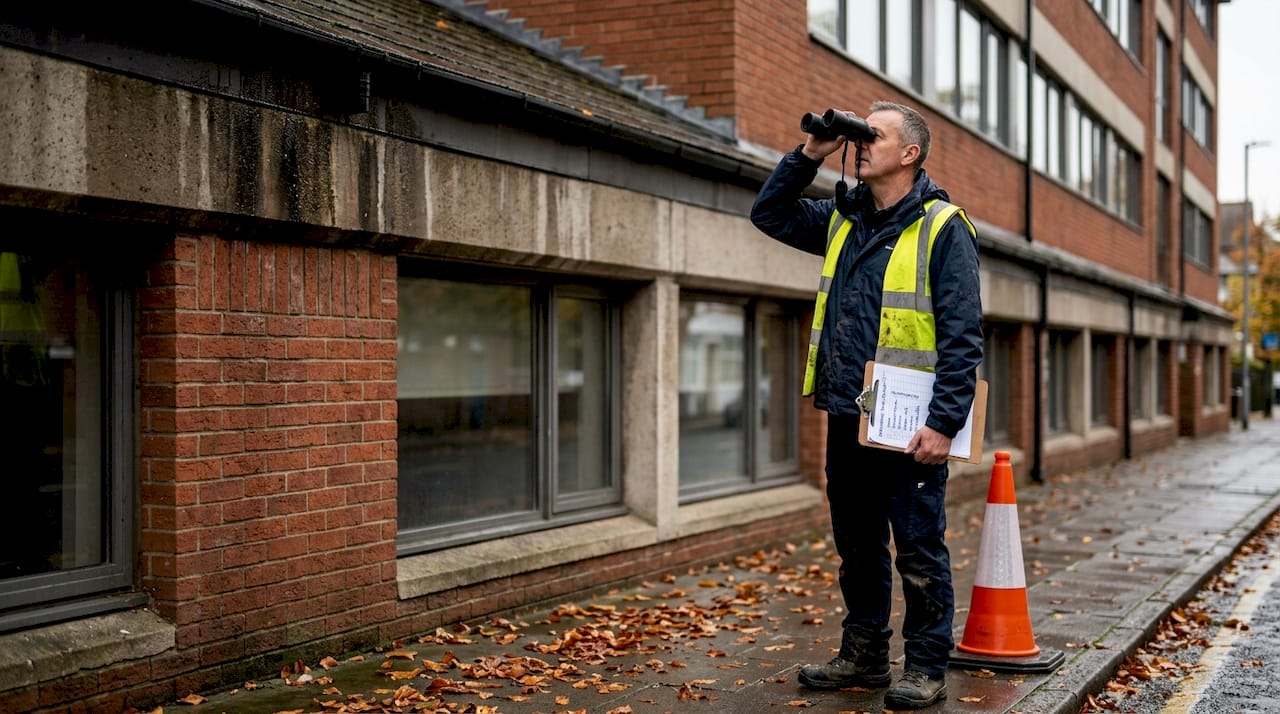
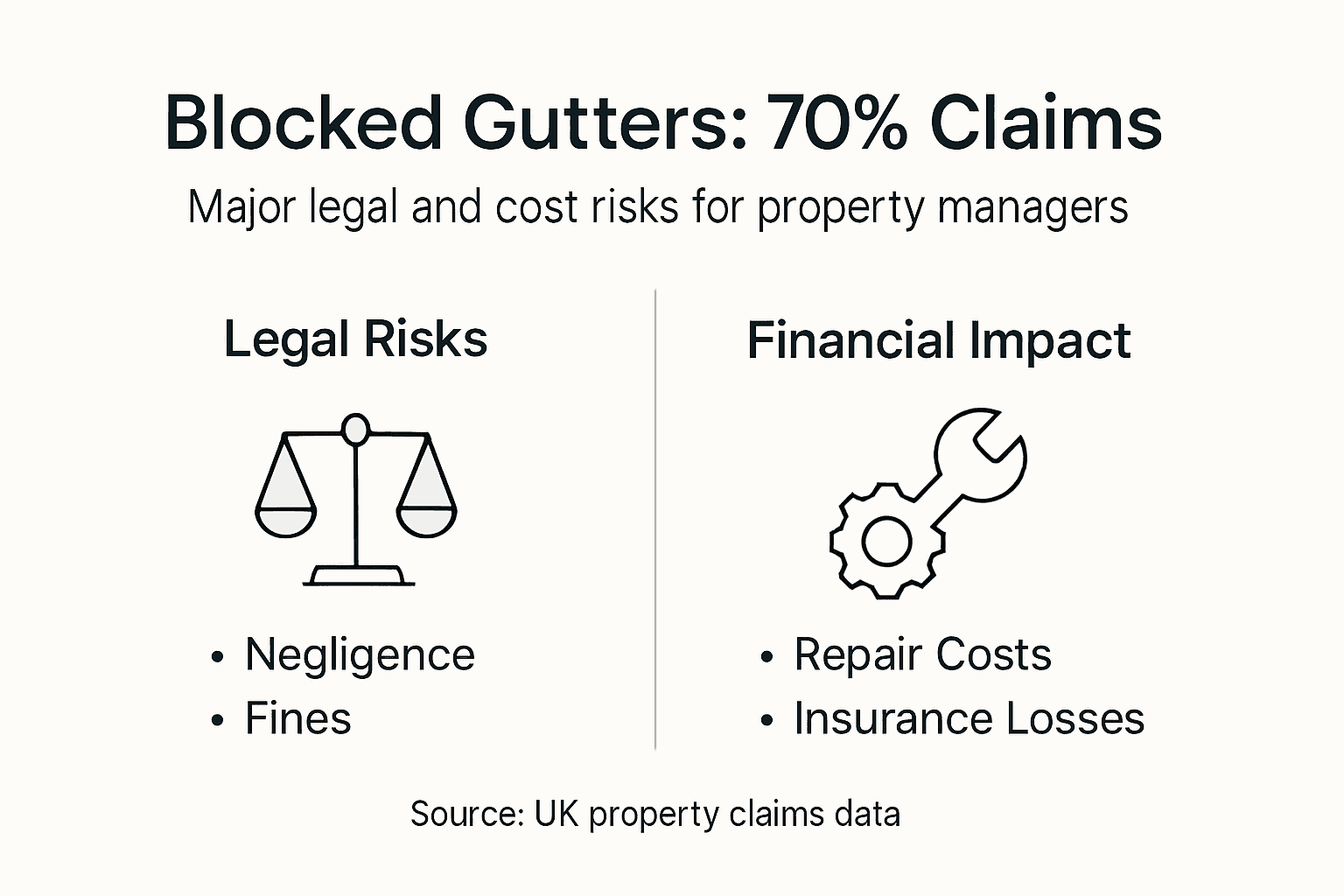
Blocked gutters account for approximately 70% of property damage claims in multi-occupancy buildings, yet many property managers underestimate this hidden risk. Water ingress from neglected gutters leads to structural damage, mould infestations, and tenant lawsuits that could have been prevented through routine maintenance. This guide explains your legal duties as a property manager or letting agency and provides actionable strategies to mitigate legal and financial exposure from blocked gutters.
Table of Contents
- Why Blocked Gutters Lead to Legal Risks
- Legal Responsibilities of Property Managers and Letting Agencies
- Common Misconceptions About Gutter Maintenance and Liability
- Regulatory Framework and Enforcement for Gutter Maintenance
- Proactive Gutter Maintenance: Strategies to Reduce Legal Risks
- Financial and Insurance Implications of Neglected Gutters
- Reactive vs Proactive Gutter Maintenance: A Comparative Overview
- Best Practices for Managing Blocked Gutter Risks in Multi-Unit Properties
- Protect Your Properties with Expert Gutter Cleaning Services
Key Takeaways
| Point | Details |
|---|---|
| Blocked gutters create significant legal exposure | Neglected gutters cause water damage, structural issues, and health hazards that trigger tenant lawsuits and regulatory penalties. |
| Property managers have clear legal maintenance duties | UK law requires property managers to maintain gutters as part of duty of care obligations to prevent foreseeable damage. |
| Proactive maintenance reduces liability dramatically | Regular inspections and documented cleaning schedules decrease damage incidents by up to 80% and strengthen legal defenses. |
| Insurance companies deny claims for neglect | Insurers frequently reject water damage claims when maintenance records show gutter neglect or irregular cleaning. |
| Tenant communication and documentation are essential | Clear reporting channels and detailed maintenance logs protect against legal claims and demonstrate compliance. |
Why Blocked Gutters Lead to Legal Risks
Blocked gutters create a cascade of problems that directly translate into legal liability. When gutters fill with leaves, debris, and silt, water overflows and penetrates building facades, damaging internal walls, ceilings, and foundations. This water ingress compromises structural integrity and ruins tenant belongings, creating grounds for compensation claims.
Moisture accumulation from overflowing gutters creates ideal conditions for mould growth and attracts pests like mosquitoes and rodents. These conditions violate health and safety standards, exposing property managers to regulatory action. Research shows that damp and mould complaints are among the top three housing health hazards reported to local authorities.
Your legal duty of care includes preventing these foreseeable hazards through proper maintenance. Courts consistently rule that property managers should have anticipated and prevented gutter related damage. Neglect opens you to multiple legal actions:
- Tenant lawsuits for property damage, health impacts, and diminished living conditions
- Local authority enforcement notices and penalty fines for housing health hazards
- Insurance claim rejections that leave you personally liable for repair costs
- Breach of tenancy agreement claims that can terminate leases and damage reputation
“Property managers who fail to maintain gutters demonstrate negligence that courts rarely excuse, particularly when damage was entirely preventable through routine cleaning.”
Understanding letting agencies gutter cleaning responsibilities helps you establish clear accountability frameworks. The distinction between reactive repairs after damage occurs and proactive maintenance to prevent problems is critical. Courts view documented prevention efforts far more favorably than emergency responses to preventable crises.
Legal Responsibilities of Property Managers and Letting Agencies
UK law places explicit maintenance duties on property managers and letting agencies for rental properties. The Landlord and Tenant Act 1985 requires you to keep the structure and exterior of buildings in repair, which includes guttering systems. The Defective Premises Act 1972 further establishes a duty of care to ensure properties remain safe and fit for habitation.
These legal duties for gutter maintenance mean you cannot delegate responsibility away through tenancy agreements. Even if lease terms suggest tenants should report issues, you remain ultimately liable for ensuring gutters function properly. Courts reject arguments that tenants should have flagged problems earlier when damage results from obvious neglect.
Regular inspections and timely maintenance are not optional extras but legal requirements. Failing to maintain gutters constitutes a breach of your statutory obligations, providing solid grounds for tenant claims. Consider these liability scenarios:
- Water damage to tenant possessions from overflowing gutters during storms
- Health impacts from mould growth caused by persistent damp from blocked gutters
- Injury from falling debris or ice dams formed by improper drainage
- Reduced property value and rental income from visible neglect and damage
Pro Tip: Establish a documented inspection schedule with photographic evidence. Digital timestamped records demonstrate compliance and provide robust defense against negligence claims. Many successful defenses hinge on proving regular maintenance attempts rather than reactive responses.
The letting agency legal responsibilities extend beyond individual properties to common areas in multi-unit buildings. You must maintain shared guttering systems serving multiple tenants, as failure affects entire buildings and multiplies potential claimants. Service charge disputes frequently arise when tenants question whether their fees cover adequate gutter maintenance.
Following the recommended gutter cleaning frequency reduces your risk exposure significantly. Most experts recommend biannual cleaning as a minimum, with quarterly inspections in high-risk areas near mature trees or industrial zones. Documentation of this schedule proves you took reasonable steps to prevent foreseeable damage.

Common Misconceptions About Gutter Maintenance and Liability
Many property managers minimize gutter maintenance importance based on dangerous misconceptions that increase their legal exposure. The first myth suggests gutters are purely aesthetic features with minimal functional impact. This fundamentally misunderstands how gutters protect building structure by controlling water flow away from foundations, walls, and roofs.
Another widespread belief claims tenants bear responsibility for reporting gutter problems, shifting liability away from property managers. Courts consistently reject this defense because professional managers should conduct regular inspections rather than relying on untrained tenants to identify maintenance needs. Your duty of care requires proactive oversight, not reactive responses to tenant complaints.
Some managers assume their insurance automatically covers all water damage regardless of maintenance history. Insurance policies typically include maintenance clauses requiring regular upkeep as a coverage condition. Adjusters examine maintenance records closely and frequently deny claims when neglect is evident, leaving managers personally liable for thousands in repair costs.
The most dangerous misconception treats gutter cleaning as an expense to minimize rather than essential risk management. Consider these realities:
- Professional cleaning costs £150-£400 per building but prevents damage claims averaging £8,000-£25,000
- Blocked gutters accelerate building deterioration, reducing property values by 5-15% over time
- Legal fees for defending negligence claims typically exceed £10,000 even when successful
- Reputation damage from tenant disputes affects future letting success and rental income
Addressing gutter maintenance misconceptions starts with understanding the true cost-benefit analysis. The modest investment in regular professional cleaning delivers substantial returns through prevented damage, maintained property values, and reduced legal exposure. Viewing maintenance as discretionary spending rather than essential protection creates liability that compounds over time.
Some managers believe DIY cleaning or assigning maintenance to untrained staff suffices for legal compliance. Professional services provide documented work with liability insurance, creating stronger legal protection than informal arrangements. When claims arise, courts scrutinize whether you engaged qualified contractors or relied on inadequate in-house efforts.
Regulatory Framework and Enforcement for Gutter Maintenance
Gutter maintenance sits within a comprehensive UK regulatory framework governing building safety and habitability. The Housing Health and Safety Rating System (HHSRS) treats damp and mould from water ingress as Category 1 hazards requiring immediate remediation. Local authorities can issue improvement notices, prohibition orders, and unlimited fines for violations.
The Building Act 1984 and associated Building Regulations require building elements including gutters to remain in good repair and perform their intended functions. While regulations primarily govern new construction, maintenance standards apply throughout a building’s lifecycle. Building regulations for gutter maintenance ensure drainage systems continue protecting structural integrity.
Enforcement has intensified following high-profile building safety failures. Local authority environmental health officers conduct proactive inspections and respond to tenant complaints more aggressively. Recent enforcement data shows a 35% increase in housing health hazard notices issued between 2019 and 2023, with dampness and water ingress among the top cited defects.
| Regulation | Key Requirement | Enforcement | Penalty Range |
|---|---|---|---|
| Housing Act 2004 (HHSRS) | Eliminate Category 1 hazards including severe damp | Improvement notices, prohibition orders | £5,000-£30,000 per violation |
| Landlord & Tenant Act 1985 | Maintain building structure and exterior | Civil claims, damages | Varies by damage extent |
| Defective Premises Act 1972 | Ensure fitness for habitation | Civil liability | Compensation plus legal costs |
| Building Act 1984 | Keep drainage systems functional | Local authority enforcement | Unlimited fines possible |
Health and Safety Executive guidelines emphasize preventing water ingress as fundamental to workplace safety in commercial buildings. Blocked gutters creating slip hazards from ice or water pooling expose property managers to additional liability under workplace safety legislation.
Pro Tip: Respond immediately to any local authority notice regarding property conditions. Quick remediation with documented professional repairs often reduces penalties significantly compared to delayed or inadequate responses. Keep all correspondence and completion certificates organized for potential legal proceedings.
The regulatory landscape continues tightening as government focuses on building safety following the Grenfell tragedy and subsequent reviews. Upcoming legislation will likely impose stricter documentation requirements and higher penalties for maintenance failures. Proactive compliance protects against both current risks and anticipated regulatory changes.
Proactive Gutter Maintenance: Strategies to Reduce Legal Risks
Implementing systematic gutter maintenance dramatically reduces your legal and financial exposure. Evidence shows properties with documented biannual cleaning schedules experience 80% fewer water damage incidents than those with reactive maintenance approaches. The key lies in establishing consistent procedures rather than addressing problems after they escalate.
Start by creating a comprehensive maintenance schedule aligned with seasonal risks. Spring cleaning removes winter debris and prepares systems for spring rains, while autumn cleaning clears fallen leaves before winter weather. Follow this proven framework:
- Schedule professional inspections and cleaning twice yearly minimum, with additional checks after severe storms
- Document every inspection with dated photographs, written reports, and contractor certificates
- Establish clear tenant reporting channels for gutter concerns with guaranteed response timeframes
- Maintain digital records accessible for insurance claims, legal defense, and regulatory inspections
- Review and update maintenance procedures annually based on damage incidents and building performance
- Budget adequately for preventive maintenance rather than treating it as discretionary spending
Pro Tip: Use cloud based property management software to automate maintenance scheduling and store documentation securely. Digital systems create reliable audit trails that courts and insurers find far more credible than paper records or verbal assurances.
The maintenance schedule guide helps you customize frequency based on your properties’ specific risk factors. Buildings near mature trees, in areas with heavy rainfall, or with flat roofs require more frequent attention than properties in low-risk environments. Adjust your schedule to match actual conditions rather than applying generic rules.
Develop a detailed gutter maintenance checklist covering inspection points, cleaning standards, and documentation requirements. Checklists ensure consistency across multiple properties and different contractors, while providing evidence of thorough maintenance procedures. Include verification steps confirming gutters drain properly after cleaning.
Engage professional services specializing in multi-unit residential and commercial properties rather than general handyman contractors. Specialists understand legal requirements, carry appropriate liability insurance, and provide detailed documentation meeting court and insurer standards. Their expertise often identifies developing problems before they cause damage.
Tenant education significantly enhances your maintenance program effectiveness. Clear communication about gutter importance, visible signs of problems, and reporting procedures empowers tenants to alert you to issues early. Simple guidance on what to watch for, such as water staining, overflowing during rain, or sagging gutters, creates an early warning system.
When planning routine gutter cleaning, coordinate with other building maintenance activities to maximize efficiency and minimize tenant disruption. Scheduling gutter work alongside roof inspections or external painting reduces access costs and provides comprehensive exterior building care.
Pro Tip: Photograph gutters before and after each cleaning, capturing angles showing cleared downpipes and proper water flow. Visual evidence proves work completion and provides baseline references for tracking system condition over time. These images become invaluable when defending against negligence allegations.
Financial and Insurance Implications of Neglected Gutters
Gutter neglect creates severe financial consequences extending far beyond immediate repair costs. Insurance companies increasingly scrutinize maintenance records when assessing water damage claims, with rejection rates for inadequately maintained properties reaching 40% according to industry reports. These denials leave property managers personally liable for damage that adequate maintenance would have prevented.
The true cost of neglect compounds through multiple channels. Direct repair expenses for water damage average £8,000-£25,000 per incident in multi-unit buildings, but associated costs multiply this figure. Legal fees defending negligence claims typically start at £10,000 regardless of outcome, while successful tenant claims add compensation awards averaging £15,000-£40,000 for serious cases.
Property values suffer measurable impacts from visible neglect and damage history. Valuation studies show poorly maintained buildings sell for 10-15% below comparable well-maintained properties. Rental income declines similarly as prospective tenants choose better maintained alternatives, creating ongoing financial losses beyond one-time repair costs.
| Cost Category | Neglected Maintenance | Proactive Maintenance | Savings |
|---|---|---|---|
| Annual cleaning/inspection | £0 (until crisis) | £300-£600 | Initial expense |
| Average damage repair | £15,000 | £0 (prevented) | £15,000 |
| Insurance premium impact | +25-40% after claims | Standard rates | £500-£1,500/year |
| Legal fees | £10,000-£30,000 | £0 | £10,000-£30,000 |
| Lost rental income | £2,000-£8,000 | Minimal | £2,000-£8,000 |
| Property value impact | 10-15% reduction | Maintained | £20,000-£50,000 |
Insurance policies contain explicit maintenance requirements as coverage conditions. Failing to demonstrate regular upkeep allows insurers to void coverage entirely, not merely deny individual claims. This leaves you exposed to catastrophic losses from major incidents like storm damage affecting multiple units simultaneously.
Understanding the insurance implications of gutter maintenance helps you structure coverage appropriately and maintain eligibility. Many insurers offer premium discounts for documented maintenance programs, offsetting cleaning costs through reduced insurance expenses. Requesting these discounts while providing maintenance records strengthens insurer relationships and demonstrates professional management.
Beyond direct costs, reputational damage from maintenance failures affects your business fundamentally. Online reviews mentioning water damage, mould, or unresponsive management deter prospective tenants and property owners. Rebuilding reputation after serious incidents takes years and costs far more than preventive maintenance investments.
Key insight: Every £1 invested in proactive gutter maintenance typically prevents £50-£100 in damage, legal, and insurance costs. This extraordinary return on investment makes maintenance one of the most financially sound decisions property managers can make, far beyond mere legal compliance.
Reactive vs Proactive Gutter Maintenance: A Comparative Overview
The choice between reactive and proactive gutter maintenance fundamentally shapes your legal exposure, costs, and tenant relationships. Reactive approaches wait for visible problems or tenant complaints before acting, while proactive strategies prevent issues through scheduled maintenance regardless of immediate symptoms. The performance differences are dramatic and well documented.
Reactive maintenance creates a crisis cycle where small blockages escalate into significant damage before detection. By the time tenants notice interior water stains or exterior overflow, structural damage has often progressed substantially. Emergency repairs cost approximately three times more than planned maintenance, while associated damage claims multiply total expenses exponentially.
Proactive maintenance breaks this cycle by identifying and resolving minor issues before they cause damage. Regular inspections catch developing blockages, deteriorating components, and drainage problems when fixes remain simple and inexpensive. The cost predictability enables better budgeting while dramatically reducing emergency call-outs and tenant disruption.
| Aspect | Reactive Approach | Proactive Approach | Impact |
|---|---|---|---|
| Cost per incident | £2,000-£15,000 | £300-£600 annually | Proactive saves 3-5x |
| Legal exposure | High (negligence evident) | Low (duty of care demonstrated) | Significantly reduced liability |
| Insurance claims | Frequently denied | Rarely needed, approved when filed | Better coverage, lower premiums |
| Tenant satisfaction | Poor (damage affects living conditions) | High (problems prevented) | Reduced turnover, better reviews |
| Property condition | Deteriorating | Well maintained | Higher values, lower vacancy |
| Management time | Crisis driven, unpredictable | Scheduled, efficient | Better resource allocation |
| Documentation quality | Weak (reactive records) | Strong (systematic logs) | Robust legal defense |
Tenant relationships suffer dramatically under reactive maintenance models. Residents experiencing water damage, mould, or delayed repairs lose trust and frequently withhold rent or pursue legal claims. The stress and disruption from preventable problems damages your reputation and increases turnover, creating vacancy costs and lost income.
Proactive maintenance demonstrates professionalism and care that tenants value highly. When residents see regular maintenance teams addressing potential issues before they impact daily life, satisfaction and retention improve markedly. This translates directly to financial performance through reduced turnover costs and sustained rental income.
Benefits of proactive gutter maintenance extend beyond individual properties to portfolio performance. Systematic maintenance programs scale efficiently across multiple buildings, with bulk scheduling reducing per-property costs. Consistent standards protect your entire portfolio rather than leaving some properties vulnerable while others receive attention.
From a legal perspective, proactive maintenance creates the documentation trail that defends against negligence claims effectively. Courts distinguish clearly between property managers who implemented reasonable preventive measures versus those who ignored obvious risks. Scheduled maintenance records with professional certification demonstrate the duty of care that reactive emergency responses cannot prove retroactively.
Best Practices for Managing Blocked Gutter Risks in Multi-Unit Properties
Establishing comprehensive gutter maintenance programs requires integrating multiple best practices into your standard operating procedures. These practices work synergistically to minimize legal risks while optimizing cost efficiency and tenant satisfaction. Start by building maintenance into your annual budget as a non-negotiable line item rather than discretionary spending.
Implement a biannual minimum cleaning and inspection schedule, with frequency adjusted for specific risk factors. Properties near deciduous trees, in high-rainfall areas, or with complex roof configurations need quarterly attention. Document the rationale behind your chosen frequency to demonstrate risk-appropriate decision making if questioned by insurers or courts.
Maintain meticulous records of all maintenance activities, tenant communications, and contractor reports. Digital systems with automatic backups provide the most reliable documentation, ensuring records survive even if physical offices face damage. Include these essential elements:
- Dated photographs showing gutter condition before and after each cleaning
- Detailed contractor reports noting work completed and any concerns identified
- Tenant complaint logs with response actions and resolution timeframes documented
- Cost records demonstrating consistent investment in preventive maintenance
- Annual review summaries assessing program effectiveness and identifying improvements
Pro Tip: Create a “gutter maintenance file” for each property containing all related documentation in chronological order. When claims or disputes arise, this organized record demonstrates your systematic approach and reasonable care far more effectively than scattered documents retrieved during crisis response.
Educate both tenants and on-site staff about gutter importance and problem recognition. Simple training enables early problem detection before damage occurs. Provide clear reporting channels with guaranteed response timeframes, then honor those commitments consistently. When tenants know their concerns receive prompt attention, they report issues earlier and disputes resolve more amicably.
Engage professional services familiar with multi-unit building requirements rather than general contractors. Specialists understand access challenges, safety requirements, and documentation standards specific to residential and commercial property management. Their expertise and insurance coverage provide additional liability protection while ensuring work quality meets legal and regulatory standards.
Regularly review your insurance policy maintenance requirements to ensure compliance. Policies evolve, and insurers may update coverage conditions without prominent notification. Annual policy reviews with your broker, specifically discussing maintenance obligations, prevent coverage gaps and identify opportunities for premium reductions through documented maintenance programs.
The gutter maintenance best practices you implement today protect against tomorrow’s risks. View maintenance as fundamental risk management rather than building upkeep, recognizing that small consistent investments prevent catastrophic losses. This perspective shift transforms maintenance from a cost center into a value protection strategy.
Pro Tip: Schedule maintenance during optimal weather windows when access is safe and work quality maximizes. Spring and autumn provide ideal conditions in most UK regions, with dry weather enabling thorough inspection and effective cleaning. Avoid winter scheduling when ice and reduced daylight compromise safety and work quality.
Protect Your Properties with Expert Gutter Cleaning Services
The legal risks and financial consequences outlined throughout this guide highlight why professional gutter maintenance is essential for multi-unit properties. Partnering with specialized gutter cleaning service for blocks of flats transforms abstract risk management principles into concrete protection for your properties and portfolio.
Professional services provide comprehensive solutions addressing every aspect of gutter risk mitigation discussed in this guide. From documented inspection schedules to fully insured cleaning teams, expert providers deliver the systematic maintenance and reliable documentation that protect against legal claims while satisfying insurance requirements.
Professional gutter cleaning for letting agencies understands the unique pressures you face managing multiple properties with varying risk profiles. Specialized providers tailor maintenance frequency, coordinate access efficiently, and maintain consistent standards across your entire portfolio. This consistency protects all your properties equally while streamlining administration and budgeting.
For commercial properties, commercial gutter cleaning service addresses the additional complexity and regulatory requirements of business premises. Professional teams work efficiently around tenant operations, minimize disruption, and provide the detailed documentation that commercial leases and insurance policies demand.
Frequently Asked Questions
Who is legally responsible for maintaining gutters in blocks of flats?
Property managers and letting agencies hold primary legal responsibility for gutter maintenance in common areas and external building elements. This duty stems from landlord obligations under the Landlord and Tenant Act 1985 and cannot be transferred to tenants through lease agreements. Even when service charges fund maintenance, you remain accountable for ensuring work occurs. Understanding legal responsibilities for gutter maintenance helps establish clear accountability frameworks that protect all parties.
How often should gutters be inspected and cleaned to avoid legal issues?
Gutters require inspection and cleaning at least twice annually, typically in spring and autumn. Properties in high-risk locations, such as those near mature trees or in areas with heavy rainfall, need quarterly maintenance. This frequency prevents blockages that cause damage and demonstrates the reasonable care standard that courts expect. Following the recommended gutter maintenance frequency tailored to your specific properties reduces legal exposure significantly while protecting building condition.
Can ignoring blocked gutters affect my insurance coverage?
Yes, insurance companies routinely deny water damage claims when maintenance records show gutter neglect or irregular cleaning. Most policies include maintenance clauses requiring regular upkeep as a coverage condition. Adjusters examine maintenance documentation closely and interpret neglect as policy violation justifying claim rejection. This leaves you personally liable for repair costs that insurance would otherwise cover. Maintaining detailed cleaning records protects coverage eligibility and strengthens claim approvals. Understanding insurance consequences of gutter neglect helps structure appropriate coverage and maintenance programs.
What documentation is needed to prove gutter maintenance compliance?
Comprehensive documentation includes dated inspection and cleaning logs, contractor reports with photographs, tenant complaint records with response actions, and cost receipts demonstrating consistent maintenance investment. Digital property management systems streamline this documentation while creating reliable audit trails. Professional contractors should provide certificates of completion with detailed work descriptions and identified concerns. This documentation package demonstrates duty of care and reasonable preventive measures that defend effectively against negligence claims. Review the gutter maintenance documentation tips for creating court-ready records that protect your legal position while satisfying insurance and regulatory requirements.