
Sudden leaks and pooling water can catch property managers off guard, often leading to costly repairs and unhappy tenants. Addressing gutter system issues is not just about keeping rain at bay—it is crucial for preserving your building’s structure, safety, and long-term value. A thorough evaluation covers everything from gutter channels to downspout sizing and secure attachments, helping you proactively identify problems and prioritise maintenance for lasting peace of mind. For multi-unit buildings and commercial sites, understanding each component’s condition makes all the difference in safeguarding your investment.
Table of Contents
- What Gutter System Evaluation Involves
- Common Types Of Gutter Systems
- How To Assess Gutter System Performance
- Key Risks Of Poor Gutter Maintenance
- Practical Steps For Property Managers
Key Takeaways
| Point | Details |
|---|---|
| Gutter System Evaluation | Regular evaluations of gutter systems prevent costly repairs by identifying potential issues early. Schedule assessments twice yearly for optimal maintenance. |
| Importance of Proper Slope | Ensuring gutters slope correctly directs water effectively away from the building, preventing pooling and related damages. |
| Material Selection | The choice of gutter materials impacts durability and maintenance; aluminium is popular for affordability, while copper and stainless steel offer higher longevity. |
| Documenting Inspections | Maintaining detailed records of gutter inspections and maintenance helps in tracking issues over time and supports insurance claims when necessary. |
What Gutter System Evaluation Involves
A gutter system evaluation examines every component working together to protect your property from water damage. For property managers overseeing multiple units, understanding what this evaluation covers helps you spot problems before they become costly repairs.
The evaluation starts with a visual inspection of the gutter channels and downspouts. Inspectors check for rust, holes, separations at joints, and signs of deterioration that compromise water flow. Proper gutter channel condition directly affects how well water moves away from your building.
Water flow capacity matters significantly. The assessment verifies that gutters slope correctly towards downspouts, typically at least one-eighth inch drop per 16 feet of run. If gutters are too flat or clogged, water pools and eventually damages fascia, soffits, and the building structure beneath.
Downspout placement and sizing receive careful attention. They must discharge water at least four to six feet away from the foundation. Undersized downspouts cannot handle heavy rainfall, causing overflow that saturates soil and creates foundation problems.
Key Components Evaluated
An effective evaluation examines:
- Gutter slope and alignment to ensure water flows towards downspouts without pooling
- Fastening systems (brackets, straps, hangers) to confirm gutters remain secure against wind and ice loads
- Joint integrity where gutter sections connect, checking for leaks or separation
- Downspout connections and whether they’re properly attached and directed away from the foundation
- Debris accumulation that restricts water flow and adds weight to gutters
- Structural resilience to withstand environmental loads like wind and snow loads according to design standards
For multi-unit buildings, evaluators assess whether the system capacity matches your property’s roof area and local rainfall intensity. A smaller building cannot use the same guttering as a larger structure, even if they’re the same building type.
Regular evaluations catch problems early, preventing water damage that can cost 10 times more to repair than preventative maintenance.
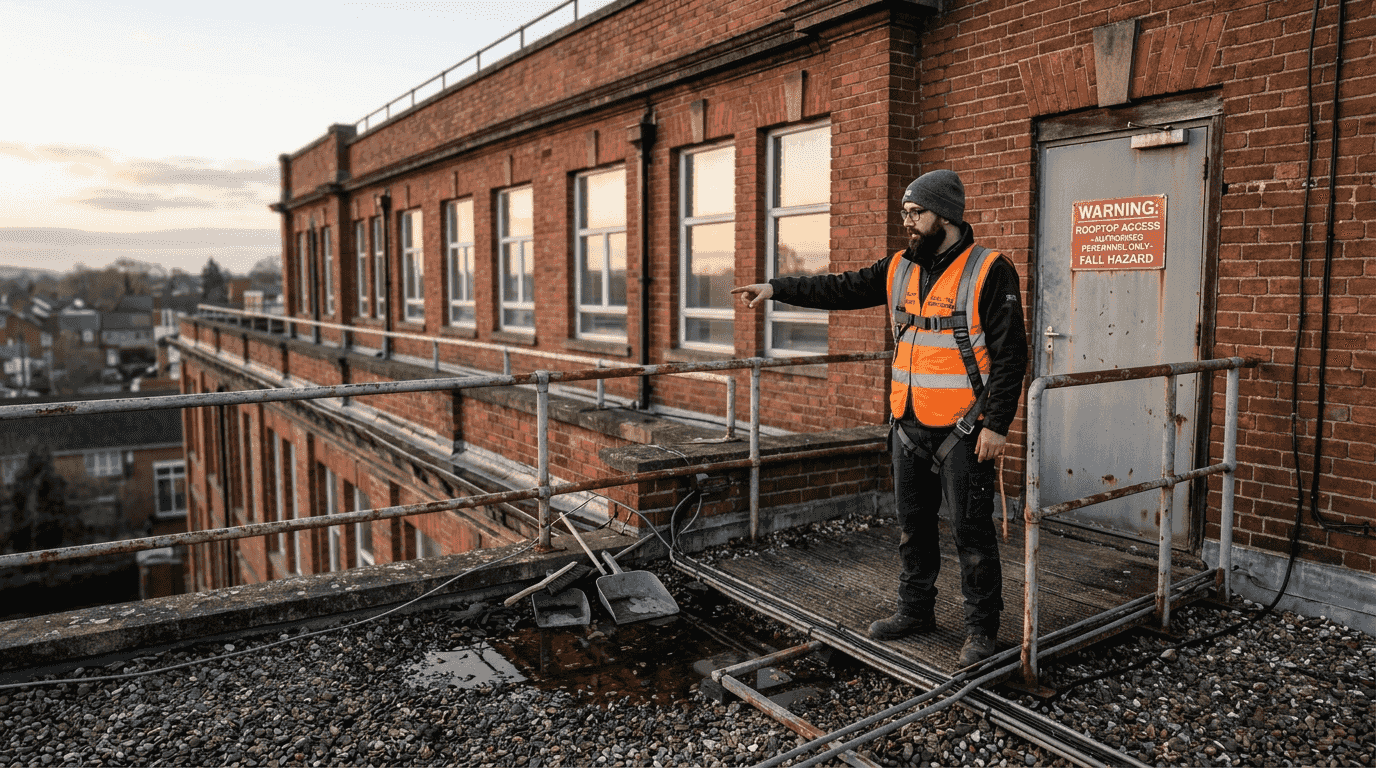
The evaluation also identifies safety concerns. Damaged gutters pose falling hazards, and improper water discharge can create ice dams or slip hazards on walkways. Property managers have a responsibility to maintain safe conditions.
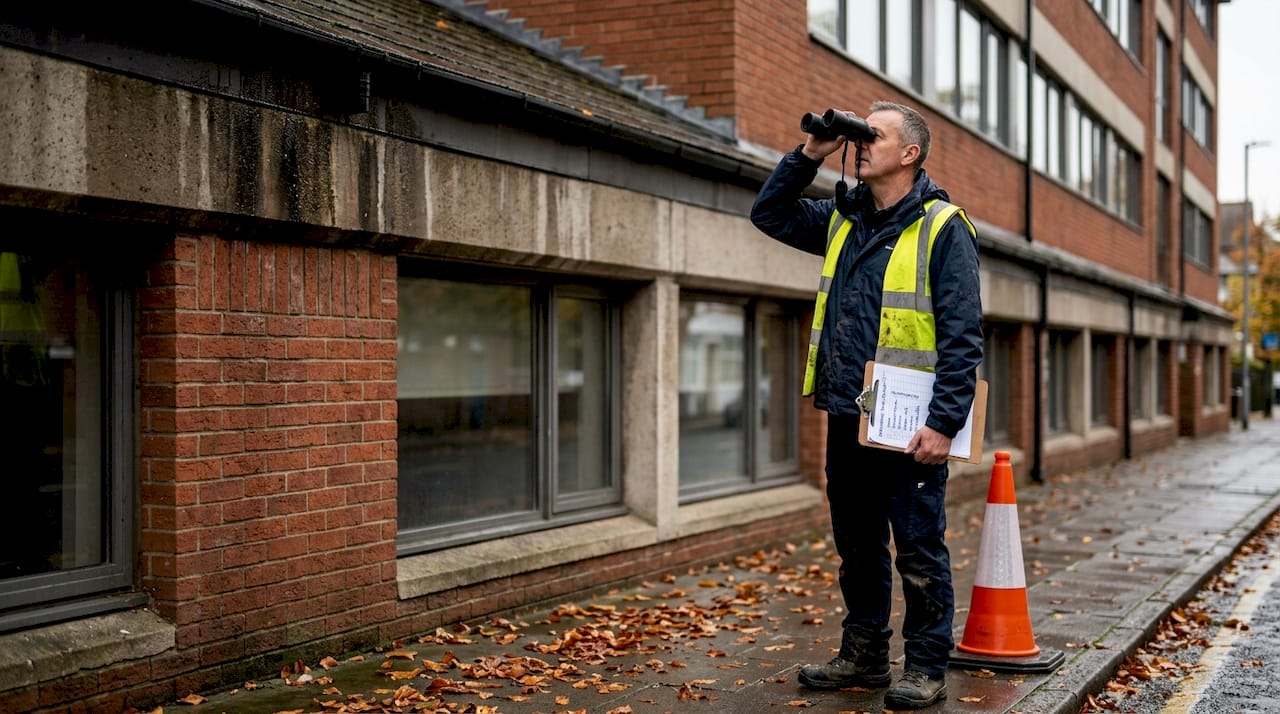
Professionals completing this work use ladders, binoculars, or sometimes cameras inserted into downspouts to check for blockages you cannot see from ground level. They document findings in writing so you have evidence for insurance claims or budget planning.
Pro tip: Schedule evaluations twice yearly—spring to remove winter debris and autumn before leaves clog your system. This simple routine prevents most water damage issues before they develop.
Common Types Of Gutter Systems
Gutter systems come in distinct styles and materials, each suited to different building types and budgets. Understanding your property’s current system helps you evaluate whether it performs adequately or needs replacement.
The two main shape classifications are K-style and U-style gutters. K-style gutters feature a flat bottom with an ogee profile on the front, resembling the letter K when viewed from the side. They blend well with residential architecture and offer aesthetic appeal alongside functional water management.
U-style gutters, also called half-round, feature a curved bottom that mimics a tube cut lengthwise. These gutters have been used for decades and work particularly well on historic or traditional properties. The shape differences between K-style and U-style gutter profiles are mainly aesthetic—both perform similarly in terms of water handling capacity.
Size variations matter significantly for water management. Standard gutters range from 4 to 6 inches wide, with larger gutters handling greater water volume. Your property’s roof area, rainfall intensity, and number of downspouts determine the appropriate size for preventing overflow.
Installation Types
Gutters are installed using different methods depending on your building structure:
- Hung gutters attach to fascia boards with brackets and straps, the most common residential approach
- Built-in gutters are integrated directly into the roofline, hidden from view but requiring specialist maintenance
- Box gutters sit along the eaves and collect water from larger roof areas, common on commercial properties
Material Choices
Your gutter material affects durability and maintenance requirements. Copper, stainless steel, and aluminium materials each offer different benefits for property managers.

Aluminium gutters are lightweight, affordable, and low-maintenance, making them popular for multi-unit buildings. Copper and stainless steel provide superior corrosion resistance and longevity, though at higher initial cost. For commercial properties exposed to harsh weather, premium materials justify the investment through reduced replacement cycles.
Here is a comparison of common gutter system materials and their suitability for different property types:
| Material | Durability Level | Maintenance Needs | Best For |
|---|---|---|---|
| Aluminium | Medium to high | Low | Multi-unit residential buildings |
| Copper | Very high | Very low | Heritage or premium properties |
| Stainless steel | Very high | Very low | Commercial and exposed buildings |
| uPVC | Moderate | Moderate | Small residential or budget builds |
Selecting the right gutter type for your property type and climate prevents water damage that undermines structural integrity and tenant satisfaction.
Internal gutters require particular attention during evaluations. These hidden systems sit above occupied spaces and connect to internal downspouts, creating maintenance challenges that warrant professional assessment.
Pro tip: Photograph your current gutter type and material before evaluation appointments, then compare recommendations against industry standards for your building age and climate zone.
How To Assess Gutter System Performance
Assessing gutter system performance means looking for real-world signs that your gutters are working or failing. Property managers need practical methods to spot problems before they escalate into costly water damage.
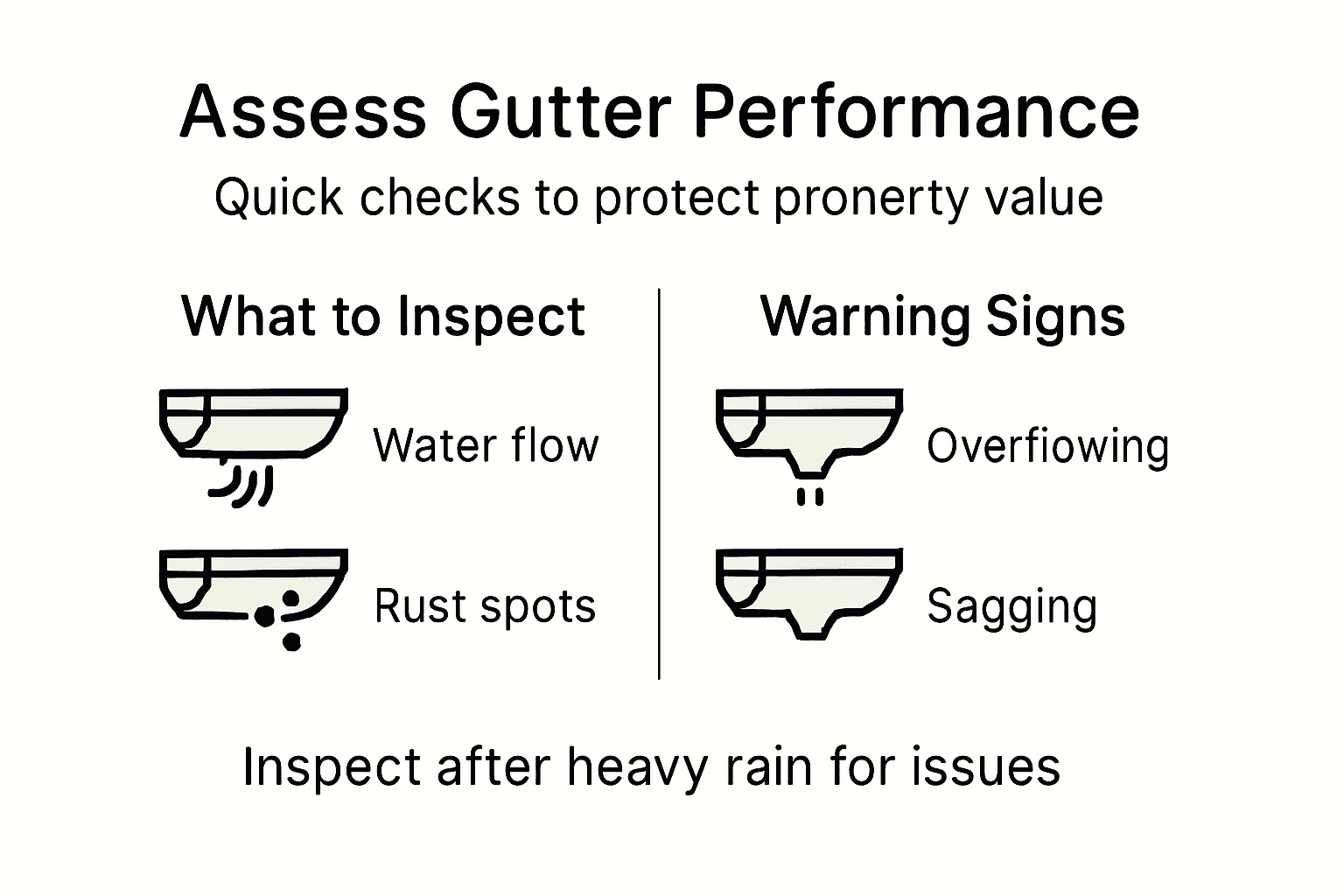
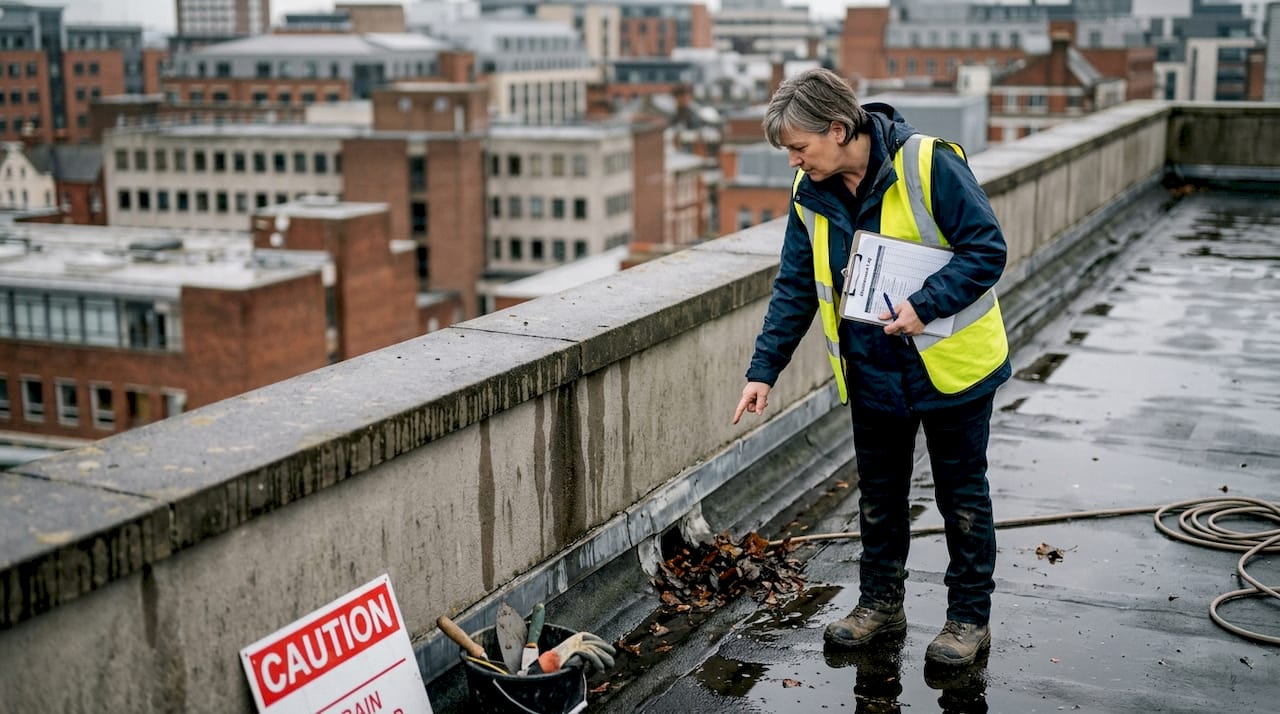
Start by observing water flow during rainfall. Watch where water travels when it rains—it should move smoothly towards downspouts without pooling or overflowing. Standing water in gutters indicates improper slope or blockages restricting flow.
Visual inspection reveals obvious problems quickly. Look for rust spots, holes, separations at joints, or cracks in both gutter channels and downspouts. These defects compromise the system’s ability to contain and direct water safely away from your building.
Performance Indicators
Key signs reveal whether your gutters perform adequately:
- Water overflow during moderate rainfall suggests undersized gutters or blocked downspouts
- Standing water remaining hours after rain indicates slope problems or debris accumulation
- Moisture marks near the building foundation show water isn’t being diverted far enough away
- Sagging sections mean fastening systems are failing under weight of water and debris
- Rust or corrosion indicates material deterioration reducing structural integrity
Downspout performance matters equally. Water must travel at least four to six feet from your building’s foundation. Check where downspout water actually lands—sometimes it puddles right at the base, defeating the system’s purpose.
Gutter slope verification requires checking that gutters pitch towards downspouts at approximately one-eighth inch per 16 feet of run. Flat gutters prevent proper drainage and encourage pooling.
The following table summarises key signs indicating gutter system failure and potential consequences:
| Visible Issue | Likely Cause | Potential Consequence |
|---|---|---|
| Water overflowing | Blocked or small gutters | Foundation or basement flooding |
| Standing water | Poor slope or debris | Timber rot and insect infestation |
| Sagging gutter lines | Loose fastenings | Gutter detachment, safety hazards |
| Wall moisture marks | Poor water diversion | Mould growth, structural damage |
Structural Assessment
Beyond water flow, evaluate the physical condition of fastening systems. Brackets and straps must remain secure to withstand wind loads and the weight of water, ice, and accumulated debris. Loose gutters pull away from fascia boards, creating gaps where water escapes behind them.
Performance assessment catches problems at early stages when repairs cost significantly less than water damage remediation.
For multi-unit buildings, check whether gutter sizing matches your roof area. A small gutter on a large roof creates bottlenecks during heavy rainfall. Professional evaluation determines whether your current system meets capacity requirements for your property’s climate and roof dimensions.
Document everything you observe. Photographs and notes create evidence for maintenance records, contractor communication, and insurance claims. This documentation also helps track whether problems worsen over time.
Pro tip: Schedule performance assessments immediately after heavy rainfall when gutter problems become obvious, then photograph wet conditions as evidence for professional evaluators.
Key Risks Of Poor Gutter Maintenance
Neglecting gutter maintenance creates a cascade of problems that damage your property’s structure, value, and safety. For property managers, understanding these risks explains why gutter care ranks among the most cost-effective preventative measures available.
Clogged gutters cause water overflow during rainfall, directing water where it shouldn’t go. Instead of flowing safely away from your building, water pools against foundations, seeps into basements, and damages structural integrity. This isn’t a minor inconvenience—it’s a foundation problem waiting to happen.
Structural Damage
Water infiltration creates multiple threats to building stability:
- Foundation damage from water pooling against or beneath concrete footings, causing cracking and settling
- Wood rot in fascia boards, soffits, and roof framing when water penetrates behind gutters
- Mould growth inside walls and attics from moisture accumulation, creating health hazards for tenants
- Basement flooding when water saturates soil and forces its way through foundation cracks
- Soil erosion around building perimeters as water cascades from overflowing gutters
Clogged gutters causing overflow damage extends beyond immediate water problems. Repeated water exposure weakens structural elements year after year, turning preventable maintenance into expensive emergency repairs.
Siding deterioration accelerates with poor drainage. Water running down exterior walls causes paint peeling, wood warping, and material degradation that diminishes your property’s curb appeal and market value.
Indoor Air Quality And Health
Moisture problems created by failing gutters encourage mould and mildew growth inside your building. Tenants breathe contaminated air, triggering allergies, respiratory issues, and complaints you must address. Mould remediation costs thousands and creates liability exposure.
Poor gutter maintenance transforms affordable prevention into catastrophic repair bills that damage property value permanently.
Landscaping around your building suffers equally. Water washing from failed gutters erodes soil, kills plants, and creates muddy, unsafe conditions near building entrances. This affects tenant satisfaction and your property’s overall appearance.
Insurance implications matter significantly. Many policies exclude water damage caused by negligent maintenance. If insurers determine your poor gutter upkeep caused flooding, you’re paying repair costs directly.
Pro tip: Calculate the cost difference between annual gutter cleaning (typically £100-300 per building) against water damage repairs (often £5,000-50,000), then budget accordingly for regular maintenance.
Practical Steps For Property Managers
Taking action to protect your property starts with a structured approach to gutter management. These practical steps transform gutter maintenance from an overwhelming task into a manageable routine that safeguards your investment.
Create A Maintenance Schedule
Consistent inspection and cleaning form the foundation of effective gutter management. Establish a year-round schedule aligned with your local climate and vegetation patterns.
Implement these timing basics:
- Spring cleaning after winter weather deposits debris and before heavy spring rainfall
- Summer inspections to check for damage from storms or wind
- Autumn clearing before leaves clog your system and add weight
- Post-storm checks within 48 hours of significant rainfall or high winds
Document all maintenance activities in writing. Keep records of cleaning dates, repairs completed, contractor names, and costs. This documentation proves diligent care for insurance purposes and helps you budget accurately.
Establish Regular Inspections
Regular gutter and downspout inspections catch small problems before they become expensive. During inspections, examine gutters for rust, holes, separations at joints, and proper slope towards downspouts.
Check downspout performance specifically. Water should travel at least four to six feet from your building’s foundation. If downspouts terminate near the foundation, water pools exactly where it causes the most damage.
Look for standing water remaining hours after rainfall—this indicates slope or drainage problems requiring correction. Photograph evidence for professional evaluators and insurance documentation.
Plan Professional Services
Not every gutter issue requires professional intervention, but some definitely do. Hire professionals to address complex repairs, assess system capacity, and verify compliance with building standards.
When selecting contractors, verify they understand gutter system standards and secure mounting requirements. Quality installation and maintenance extend gutter life significantly.
Structured maintenance prevents emergency repairs and keeps your property value protected year after year.
Budget conservatively for gutter work. Annual cleaning typically costs £100-300 per building, whilst repairs from water damage cost £5,000-50,000. The math clearly supports preventative spending.
Communicate findings to building occupants when relevant. Tenants should understand why maintenance occurs and what they can do to help, such as reporting obvious drainage problems promptly.
Pro tip: Create a simple spreadsheet tracking inspection dates, findings, and actions taken, then review it quarterly to identify patterns and adjust your maintenance schedule accordingly.
Protect Your Property with Expert Gutter System Evaluation and Cleaning
Managing gutter systems for blocks of flats and commercial buildings is a crucial task to prevent costly water damage and maintain property value. This article highlights critical concerns like gutter slope, downspout placement, and debris accumulation that can lead to structural damage and safety risks if neglected. At Local Gutter Cleaner, we specialise in comprehensive gutter cleaning services designed specifically for multi-unit and commercial properties, ensuring your gutters remain free of blockages and function at optimal capacity year-round.
Take control of your property’s safety today with our professional gutter cleaning and evaluation services. Don’t wait for costly repairs caused by overflowing or sagging gutters. Schedule your service now at Local Gutter Cleaner for peace of mind and effective water management. Learn more about our commitment to quality in our Gutter Cleaning Service for Blocks of Flats and Commercial Buildings. Protect your investment before small problems escalate into expensive emergencies.
Frequently Asked Questions
What does a gutter system evaluation involve?
A gutter system evaluation includes a visual inspection of gutter channels and downspouts, checking for issues like rust, holes, and proper slope. It assesses water flow capacity, downspout placement, and debris accumulation to ensure effective water management and prevent property damage.
How often should I schedule gutter system evaluations?
It is recommended to schedule gutter evaluations twice yearly—once in spring to clear winter debris and again in autumn before leaves start to clog the system. Regular evaluations help identify and resolve issues before they lead to costly repairs.
What are the signs of a failing gutter system?
Key signs include water overflowing during rain, standing water in gutters, moisture marks on walls, and sagging sections of the gutter. These issues can indicate inadequate drainage and require immediate attention to prevent further damage.
How can poor gutter maintenance affect my property?
Neglecting gutter maintenance can lead to structural damage, such as foundation problems, wood rot, and mould growth. These issues not only compromise property value but also pose health risks to occupants and can result in expensive repairs.


[…] Gutter System Evaluation: Safeguarding Property Value […]
[…] faster letting periods. For further guidance on maintaining optimal gutter performance, explore our gutter system evaluation services designed specifically for commercial […]