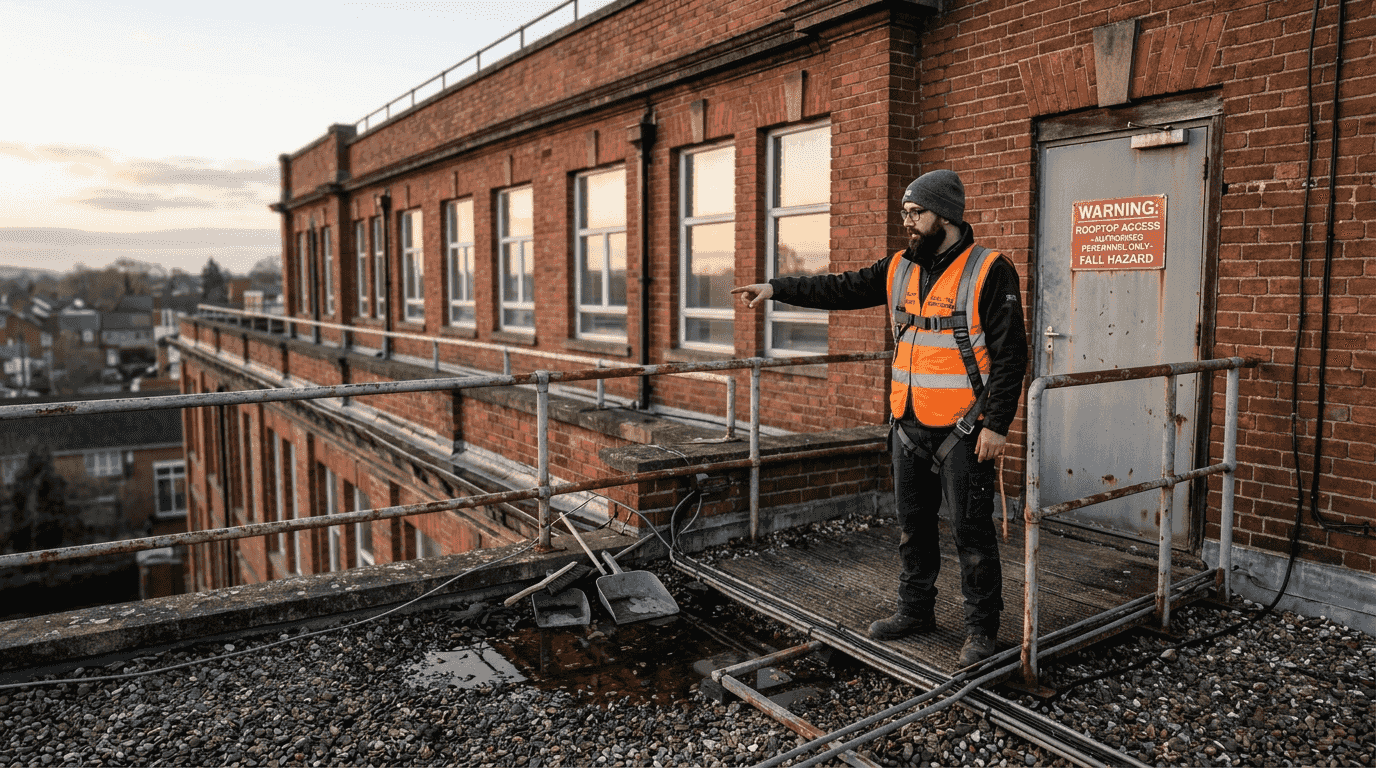
Blocked gutters can quickly turn a small maintenance oversight into costly repairs for property managers overseeing multi-unit buildings in cities from London to Sydney. The challenge is simple yet persistent—keeping water flowing freely to avoid damage, complaints, and rising expenses. Gutter guards are designed to keep debris out whilst allowing water to flow freely, but their value truly shows when tailored for urban multi-unit properties striving for constant reliability and lower maintenance demands.
Table of Contents
- What Are Gutter Guards? Core Principles
- Types of Gutter Guards for Large Buildings
- How Gutter Guards Function and Key Features
- Benefits and Limitations for Property Managers
- Costs, Risks, and Common Installation Mistakes
Key Takeaways
| Point | Details |
|---|---|
| Importance of Gutter Guards | Gutter guards prevent debris accumulation, reducing water damage risks in multi-unit properties. |
| Types of Gutter Guards | Select guards based on building needs, considering design, rainfall patterns, and local conditions. |
| Installation Quality | Professional installation is critical; poor fitting can lead to ineffective systems and increased liability. |
| Ongoing Maintenance | While guards lower maintenance frequency, they do not eliminate the need for regular inspections and cleaning. |
What Are Gutter Guards? Core Principles
Gutter guards are protective barriers installed over your gutters to prevent debris from accumulating whilst allowing rainwater to flow freely. For property managers overseeing multi-unit residential buildings, they function as a critical safeguard against the costly water damage that impacts both structure and tenant satisfaction.
How gutter guards work is straightforward in principle but powerful in practice. They sit atop your existing guttering system and filter out leaves, twigs, dirt, and other debris that would otherwise clog the channels. Water passes through the barrier and flows toward downpipes as designed, maintaining proper drainage during heavy rainfall.
The filtering mechanism varies by design type, but all share the same core objective: block solids, allow liquids. This distinction matters significantly for urban apartment buildings where rainfall intensity and debris volume change seasonally.
Gutter guards are designed to keep debris out whilst allowing water to flow freely, preventing blockages that cause water damage. Effectiveness varies by type and installation quality.
Why This Matters for Multi-Unit Properties
Water damage in residential blocks cascades quickly. A single blocked gutter on one unit can lead to:
- Overflowing water damaging fascia boards and soffits
- Moisture penetrating walls, causing internal dampness
- Foundation issues if water pools against building perimeter
- Tenant complaints and potential liability claims
- Costly emergency repairs that disrupt operations
Gutter guards reduce these risks by maintaining consistent water flow throughout the year. Properly installed guards mean fewer emergency call-outs and lower overall maintenance expenditure.
Core Operating Principles
Most gutter guard systems work on one of three principles:
- Surface tension designs allow water to flow downward whilst debris slides off sideways
- Mesh or screen barriers physically block large particles but allow water through
- Reverse curve systems direct water inward and downward whilst pushing debris outward
Each approach has strengths depending on your building’s roof pitch, tree coverage nearby, and local weather patterns. Whilst mesh designs suit areas with heavy leaf fall, surface tension suits high-rainfall regions where water volume matters more than occasional debris.
Proper installation remains critical. Even the best guard performs poorly if installed incorrectly or if downpipes sit misaligned. This is where professional installation makes the difference between effective protection and wasted investment.
Understanding why gutter maintenance matters for property managers helps you see how guards fit into your broader maintenance strategy.
Pro tip: Before committing to gutter guard installation across all units, trial them on two or three buildings first to assess performance during your region’s heaviest rainfall season.
Types of Gutter Guards for Large Buildings
Large residential buildings require gutter guard solutions engineered for scale and durability. Unlike single-family homes, multi-unit properties face continuous water flow from multiple roof sections, making standard guards insufficient. Commercial-grade options handle higher volumes and offer years of reliable protection.
The type you choose depends on roof design, rainfall patterns, and building age. Each option balances cost, maintenance demands, and long-term performance across dozens of units.
Heavy-Duty Metal Mesh Systems
Stainless steel and copper mesh forms the backbone of most commercial installations. These materials resist corrosion even in harsh urban environments where salt spray and pollution accelerate degradation.
Mesh guards work by physically blocking debris whilst allowing water through tiny apertures. They excel in buildings with significant tree coverage nearby, capturing leaves before they reach gutters.
Key advantages include:
- Long lifespan (15–25 years with proper care)
- Minimal clogging even during autumn leaf season
- Simple cleaning when blockages do occur
- Effective across varying rainfall intensities
The trade-off is visibility. Mesh sits visibly atop gutters, which matters if your building prioritises aesthetic appearance.
Solid Cover Systems
Solid covers are continuous barriers that completely shield gutters from debris. They suit buildings where leaf fall occurs seasonally or in concentrated bursts rather than year-round.
These systems direct water inward through a slotted opening whilst deflecting debris sideways and off the roof edge. Built-in gutter liners and box gutter designs often incorporate this approach for large-scale drainage needs.
Benefits include:
- Neater appearance than mesh
- No visible debris accumulation
- Superior performance in heavy rainfall
- Reduced maintenance frequency
Solid covers perform best when paired with adequate downspout sizing to handle peak water volumes.
To help property managers compare their options, here is a summary of key gutter guard types for large buildings:
| Guard Type | Best Suited For | Main Strength | Main Trade-off |
|---|---|---|---|
| Metal Mesh Systems | High leaf fall, urban blocks | Long lifespan, durable | Visible from ground |
| Solid Cover Systems | Heavy rain, neat appearance | Reduced maintenance | May limit water volume |
| Internal Gutter Systems | New builds, renovations | Invisible installation | Complex to retrofit |
Internal Gutter Systems
Concealed gutters hidden behind parapets eliminate visibility concerns entirely. Water drains through internal channels built into the building structure itself, with guards integrated during construction or major renovation.

These demand careful installation but offer maximum protection and aesthetic control. They require specialist knowledge for retrofit applications.
Specialist Features for Large Buildings
Heavy-duty metal meshes for commercial properties often include leaf strainers and heat trace options. Leaf strainers catch oversized debris before it enters downpipes. Heat trace prevents ice blockages in cold climates, maintaining drainage all winter.
Downspout sizing becomes critical on large buildings. Standard residential systems overflow under the volume a multi-storey block produces during intense rainfall. Professional assessment ensures your drainage capacity matches your roof area.
Pro tip: Request material samples and site-specific rainfall calculations before committing to any system; what works for a 12-unit block may fail on a 50-unit building with different roof geometry.
How Gutter Guards Function and Key Features
Gutter guards operate through a single principle: separate water from debris. Yet the mechanics behind this simple goal shape everything about performance, durability, and maintenance across your multi-unit buildings.
Understanding how they work helps you choose systems that actually protect your properties rather than create new problems. The right guard performs silently for years; the wrong one fails spectacularly during your heaviest rainfall.
The Basic Mechanics
Water wants to flow downward. Debris wants to stay put. Gutter guards exploit this difference by creating a barrier that directs one whilst blocking the other.
When rain hits your roof, it flows toward gutters carrying leaves, twigs, dirt, and sediment. Guards intercept this material before it enters the gutter channel. Water continues flowing, but solids get deflected sideways or off the roof edge entirely.
The effectiveness depends on guard angle and surface texture. A shallow-angled guard struggles during intense rainfall when water velocity increases. A well-designed slope works with gravity rather than against it.
Key Structural Features
Quality guards share critical design elements that separate reliable systems from inadequate ones:
- Secure fastening prevents movement during wind and prevents water pooling
- Seamless construction eliminates gaps where debris accumulates
- Corrosion-resistant materials withstand urban pollution and salt spray
- Proper bracket spacing distributes weight across the gutter
- Sized downspouts handle water volume your roof produces
Gutter systems tested for wind, water, ice, and snow load resistance maintain their integrity across diverse climate conditions. This matters on urban residential blocks exposed to harsh weather.
Performance in Different Conditions
Heavy rainfall puts maximum stress on guards. Volume matters more than debris; if water can’t flow fast enough, it pools and overflows regardless of guard design. This is why downspout sizing gets critical on large buildings.
Autumn leaf season tests filtering ability. Guards must block leaves without creating damming effects that redirect water sideways. Mesh systems excel here; solid covers sometimes struggle.
Freezing conditions create unique challenges. Ice accumulation on guards can block water flow entirely. Heat trace systems (heated wires running along gutters) prevent this in cold climates.
Wind loading stresses brackets and fasteners constantly. Undersized hardware fails prematurely; proper engineering prevents this costly problem.
The most effective guard system combines proper material selection, correct installation, and appropriately sized drainage components working as one integrated system.
Critical Installation Factors
Even premium guards fail if installation cuts corners. Sealing gaps around roof edges prevents water from bypassing the guard entirely. Bracket alignment ensures water flows toward downspouts rather than spreading sideways.
On multi-unit buildings, consistency matters enormously. When some units have properly installed guards whilst others have poor work, water damage patterns become unpredictable. This creates liability exposure and tenant complaints.
Pro tip: Insist on post-installation water testing before final payment; run a hose across the roof and inspect downspout flow from ground level to verify water actually reaches where it should.
Benefits and Limitations for Property Managers
Gutter guards promise reduced maintenance and water damage prevention. For property managers juggling dozens of units, this sounds ideal. But reality is more nuanced. Guards deliver genuine value when properly selected and installed, yet they introduce constraints you must understand before investing.
Balancing benefits against limitations determines whether guards become assets or expensive mistakes across your portfolio.
The Real Benefits
Gutter guards reduce emergency call-outs substantially. Fewer blocked gutters mean fewer tenant complaints about water pooling near walls or dripping into balconies. This alone justifies installation on many buildings.
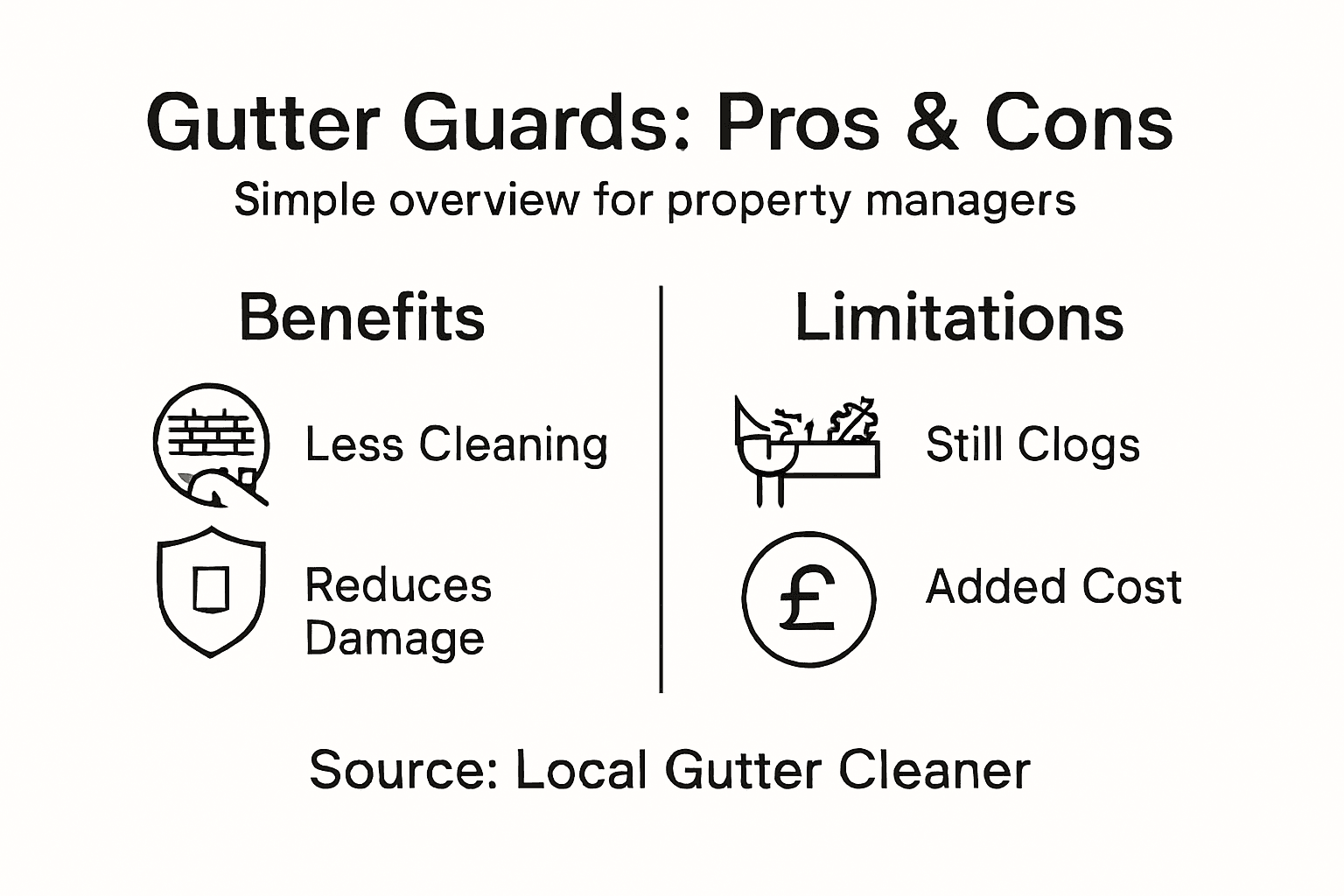
Water damage prevention ranks as the primary benefit. Standing water leads to foundation dampness, fascia rot, and internal wall moisture. Guards eliminate the debris accumulation that causes these blockages, protecting your asset value directly.
Key advantages include:
- Dramatically reduced emergency repairs during heavy rainfall
- Lower labour costs from fewer cleaning cycles annually
- Improved tenant satisfaction by preventing water complaints
- Extended gutter lifespan (fewer corrosive debris contacts)
- Simplified asset management planning
On 50-unit buildings, eliminating even two emergency cleanings per year recovers installation costs quickly. The financial case strengthens as building size increases.
The Honest Limitations
Gutter guard effectiveness varies, sometimes requiring supplemental cleaning even after installation. This matters enormously for property managers expecting zero maintenance.
Fine debris—pollen, shingle grit, fine soil—passes through many guard types. It accumulates in gutters over time, creating partial blockages that still require periodic cleaning. You don’t eliminate maintenance; you reduce frequency from quarterly to bi-annual perhaps.
Durability questions emerge in harsh climates. Mesh systems can degrade under intense UV exposure or repeated freeze-thaw cycles. Solid covers sometimes crack if oversized ice loads form. Guard material fails faster than gutters themselves, creating replacement expenses down the line.
Performance suffers under specific conditions:
- Heavy rain can overwhelm some designs, causing overflow
- Fine debris accumulation still requires occasional professional cleaning
- Initial costs ($800–$2,500 per building typically)
- Installation quality directly impacts performance
- Some types restrict roof access for repairs
The Installation Reality
Even premium guards fail if installation cuts corners or uses undersized downspouts. Poor sealing around edges creates water pathways guards were meant to prevent. Bracket failure under wind loading voids performance entirely.
You cannot simply install guards and forget about gutters. They reduce work but don’t eliminate it. Budget for professional inspections every 18 months to catch emerging problems before they cause damage.
Guards work best as part of a comprehensive maintenance strategy, not as a standalone water damage solution.
Making the Right Choice
Guards make financial sense for buildings with significant tree coverage or unreliable tenant reporting about water issues. They provide less value on newer buildings with excellent downspout systems or low-debris roofs.
Before committing across all units, trial guards on one or two buildings during a full seasonal cycle. Monitor actual maintenance needs and water performance. Then decide whether building-wide installation justifies the expense for your specific properties.
Pro tip: Include guard performance metrics in your quarterly maintenance reports; track actual cleaning frequency before and after installation to quantify real cost savings against initial investment.
Costs, Risks, and Common Installation Mistakes
Gutter guard expenses vary dramatically based on material quality, building size, and installation complexity. For property managers managing multiple units, understanding true costs separates smart investments from budget disasters.
Installation quality determines whether guards protect your buildings or create costly problems. The cheapest option often becomes the most expensive when failures emerge.
Understanding True Installation Costs
Gutter guard installation costs range from £200 for simple DIY plastic mesh kits to £2,000-£3,000 for professional installation with premium materials. On multi-unit buildings, per-unit costs drop significantly when installing across all properties simultaneously.
A 30-unit residential block with standard mesh guards typically costs £3,000-£5,000 total. Premium stainless steel systems reach £6,000-£8,000. These figures assume professional installation, which is non-negotiable on commercial-scale properties.
Breakdown for typical multi-unit buildings:
- Budget mesh systems: £75-£150 per unit
- Mid-range solid covers: £150-£250 per unit
- Premium stainless steel: £200-£300 per unit
- Labour and bracket work: £800-£1,200 per building
Don’t forget replacement costs. Guards typically last 10-15 years before degradation requires replacement. Budget replacement cycles into your long-term maintenance plans.
Critical Installation Mistakes
Poor securement ranks as the most common error. Undersized brackets, inadequate fastening, or gaps between guard and gutter allow water to bypass protection entirely. Guards literally fall off during wind events on some buildings.
Guards installed without proper bracket spacing fail under snow and ice load. A 30-unit block installed poorly creates liability exposure when someone gets hurt by falling materials.
Improper sizing causes devastating consequences. Guards installed with undersized downspouts still produce overflow during heavy rainfall. The guard itself becomes a dam, making water damage worse than having no guard at all.
Common mistakes that create problems:
The table below highlights the most common installation risks and their consequences:
| Installation Mistake | Common Cause | Likely Problem | Risk Level |
|---|---|---|---|
| Undersized brackets | Cost-cutting, inexperience | Guard detachment, leaks | High (structural) |
| Wrong material choice | Poor specification | Corrosion, rapid failure | Moderate (costly) |
| Inadequate slope | Incorrect fitting technique | Standing water, overflow | High (damage) |
| Poor gap sealing | Rushed or imprecise work | Water bypass, damp issues | High (liability) |
- Installing without slope adjustment (water pools instead of flowing)
- Using incompatible materials (aluminium guards corroding copper gutters)
- Sealing gaps incorrectly, trapping moisture behind guards
- Failing to inspect underneath during installation
- Choosing guards unsuitable for local rainfall intensity
Risk Management Considerations
Installation liability matters enormously. If guards are installed incorrectly and water damage follows, you’re liable for repairs. Professional installation comes with guarantees protecting your building. DIY or bargain contractors rarely offer recourse when failures occur.
Under-specification creates ongoing risks. A guard system chosen for a 12-unit building performs inadequately on a 50-unit block with twice the roof area. Water management requirements scale non-linearly with building size.
Cheap installation costs money twice: once on the initial work, again when failures require replacement and water damage repairs.
Protecting Your Investment
Require written performance guarantees from installers. Guarantee should cover bracket failure, water leakage, and workmanship defects for at least 5 years. Reputable installers provide these readily; those refusing them signal problems.
Inspect installations immediately upon completion. Walk roofs with the installer, verify bracket placement, check downspout alignment, and confirm water flows correctly during testing. Document everything photographically.
Schedule follow-up inspections 6 months and 18 months post-installation. These catch bracket loosening, bracket corrosion, and debris accumulation patterns before they cause damage.
Pro tip: Request three installation quotes with detailed material specifications and labour breakdowns; the lowest quote often cuts corners on bracket spacing or uses incompatible materials that fail prematurely.
Protect Your Multi-Unit Buildings with Expert Gutter Guard Solutions
Blocked gutters and water damage create costly headaches for property managers of blocks of flats and commercial buildings. The article highlights the real risks of ineffective gutter guard installation such as overflow, foundation dampness, and emergency repairs that disrupt tenants and drain budgets. Understanding the nuances of different gutter guard types and the critical importance of professional installation will help you avoid common pitfalls and safeguard your properties.
Trust Local Gutter Cleaner to deliver tailored gutter guard services engineered for multi-unit residences. We combine durable materials, expert fitting, and thorough post-installation testing to ensure your gutters remain clear and water flows properly year-round. Our service reduces maintenance call-outs and protects your investment from expensive water damage.
Explore our Gutter Cleaning Service for blocks of flats and commercial buildings, where precision meets reliability.
Act now to prevent costly water damage and tenant complaints. Contact us today to schedule a consultation and see how professional gutter guard installation can support your property management goals. Don’t wait for the next heavy rainfall to expose weaknesses in your drainage system. Discover peace of mind at Local Gutter Cleaner.
Frequently Asked Questions
What are gutter guards and how do they work?
Gutter guards are protective barriers installed over gutters to prevent debris accumulation while allowing rainwater to flow through. They block leaves, twigs, and dirt, ensuring effective drainage even during heavy rainfall.
What are the main types of gutter guards available for multi-unit properties?
The main types of gutter guards for large buildings include heavy-duty metal mesh systems, solid cover systems, and internal gutter systems. Each type offers distinct benefits depending on the building’s design, roofing conditions, and rainfall patterns.
How do gutter guards reduce maintenance and water damage?
Gutter guards help reduce emergency call-outs and prevent water damage by keeping gutters clear of debris, which leads to fewer blockages. This means less standing water, reduced risk of foundation problems, and improved tenant satisfaction.
What are the common mistakes to avoid during gutter guard installation?
Common installation mistakes include using undersized brackets, improper sealing around gaps, and failing to adjust the slope correctly. These can lead to guard detachment, water bypass, and water damage, making professional installation critical.
Recommended
- Why Hire Gutter Professionals for Property Value
- Gutter Repairs Versus Cleaning: Cost, Risk, and Value
- Why Gutter Maintenance Matters for Property Managers
- Gutter System Evaluation: Safeguarding Property Value
- Top Signs Your Roof Needs Repairs Before It’s Too Late | Buffalo Roofing & Exteriors | San Antonio to Corpus Christi, TX