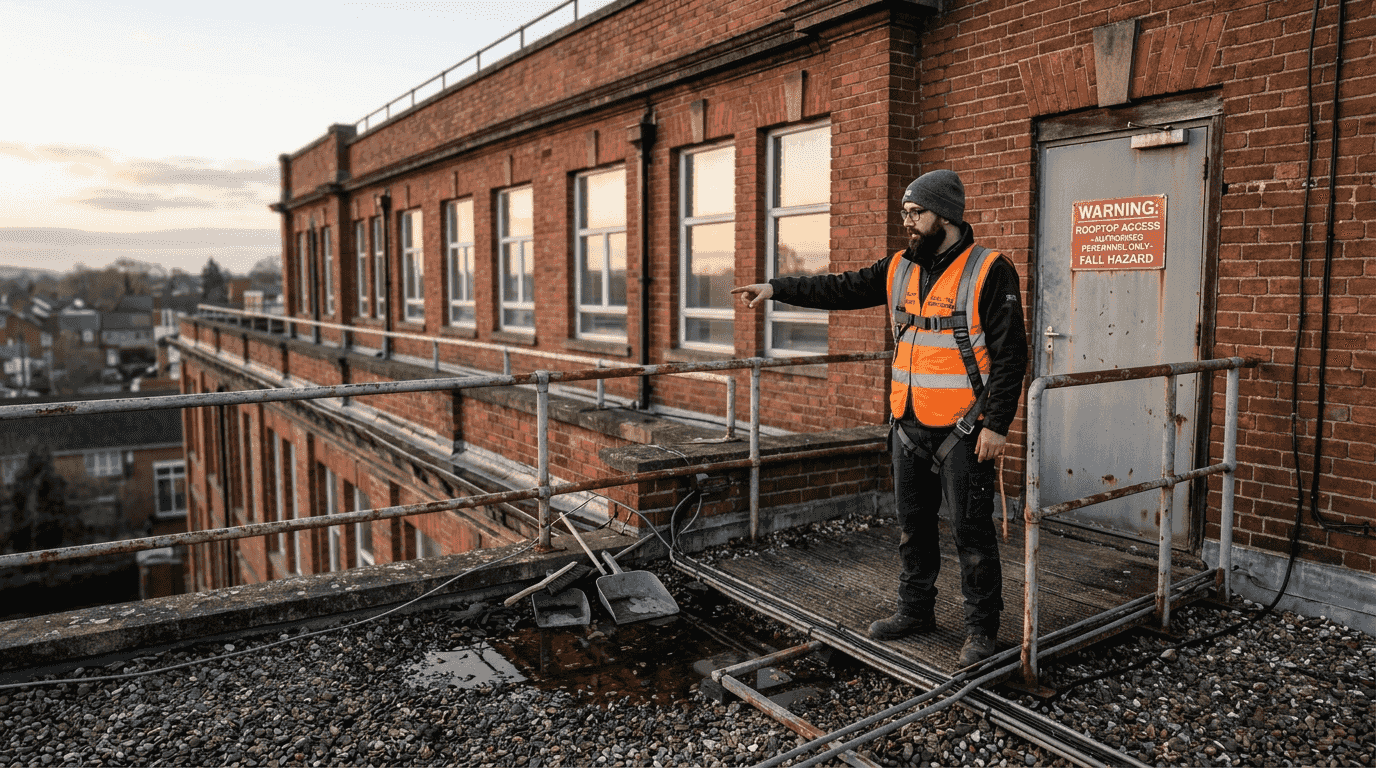
Maintaining safe and effective gutter systems in commercial and multi-family residential buildings requires property managers to navigate complex safety regulations, correct sizing requirements, and ongoing maintenance demands. Selecting appropriate fall protection measures and ensuring gutters handle rainfall efficiently protects both workers and building integrity. This guide outlines proven best practices for evaluating gutter safety requirements, choosing effective equipment, and implementing maintenance schedules that meet regulatory standards whilst safeguarding your property investment in 2026.
Table of Contents
- How To Evaluate Gutter Safety Requirements For Commercial Properties
- Effective Gutter Safety Measures And Equipment For Property Managers
- Comparison Of Gutter Safety Practices And Recommendations For Commercial Settings
- Enhance Gutter Safety With Professional Cleaning And Maintenance Services
- Frequently Asked Questions
Key takeaways
| Point | Details |
|---|---|
| Regulatory compliance | Fall protection at heights over 6 feet is mandatory for gutter work in construction settings. |
| Proper sizing matters | Commercial buildings require 6 to 8 inch gutters with downspouts spaced according to roof area and local rainfall data. |
| Passive systems preferred | Guardrails provide safer fall protection than personal fall arrest systems, especially on steep roofs. |
| Scheduled maintenance | Regular inspection and cleaning reduce risks, prevent water damage, and extend gutter lifespan significantly. |
How to evaluate gutter safety requirements for commercial properties
Property managers must first understand the height-based regulations that apply to their buildings. OSHA mandates fall protection for work over 6 feet in construction and 4 feet in general industry, requiring guardrails, safety nets, or personal fall arrest systems with anchor points supporting 5,000 lbs. These thresholds determine which safety measures you need during gutter maintenance.
Roof characteristics heavily influence your safety approach. Steep pitches above 7:12 or frequent maintenance access points favour permanent guardrail installations. Flatter roofs with occasional access may accommodate temporary systems or personal fall arrest equipment. Traffic patterns matter too: high-traffic roofs benefit from passive barriers that protect workers without requiring individual equipment setup.
Gutter sizing evaluation requires examining local rainfall intensity and your building’s roof area. Commercial properties typically need 6 inch gutters for standard buildings and 7 to 8 inch systems for larger structures. International Plumbing Code tables provide precise sizing based on roof square footage and regional precipitation rates. Undersized gutters overflow during heavy rain, causing fascia damage and foundation problems.
Key evaluation criteria include:
- Building height and applicable fall protection thresholds for your jurisdiction
- Roof pitch angle and frequency of required maintenance access
- Total roof area and local rainfall intensity for accurate gutter capacity planning
- Existing anchorage points or structural capacity for installing new fall protection equipment
- Budget allocation for initial installation versus ongoing maintenance costs
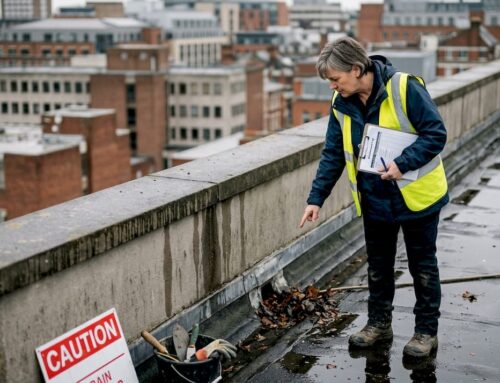
Consult a gutter cleaning safety checklist commercial properties 2026 to systematically assess your property’s specific requirements. This evaluation framework helps prioritise safety investments whilst ensuring regulatory compliance. Document your findings to create a baseline for future inspections and to demonstrate due diligence during safety audits.
Effective gutter safety measures and equipment for property managers
Guardrail systems represent the gold standard for passive fall protection. These permanent or temporary barriers create a physical boundary at roof edges, eliminating fall risks without requiring workers to don harnesses or connect to anchor points. Passive fall protection like guardrails is preferred over active systems, particularly for roofs with pitches exceeding 7:12 or 4:12 depending on access frequency. Installation costs are higher initially, but guardrails reduce ongoing training requirements and equipment inspections.
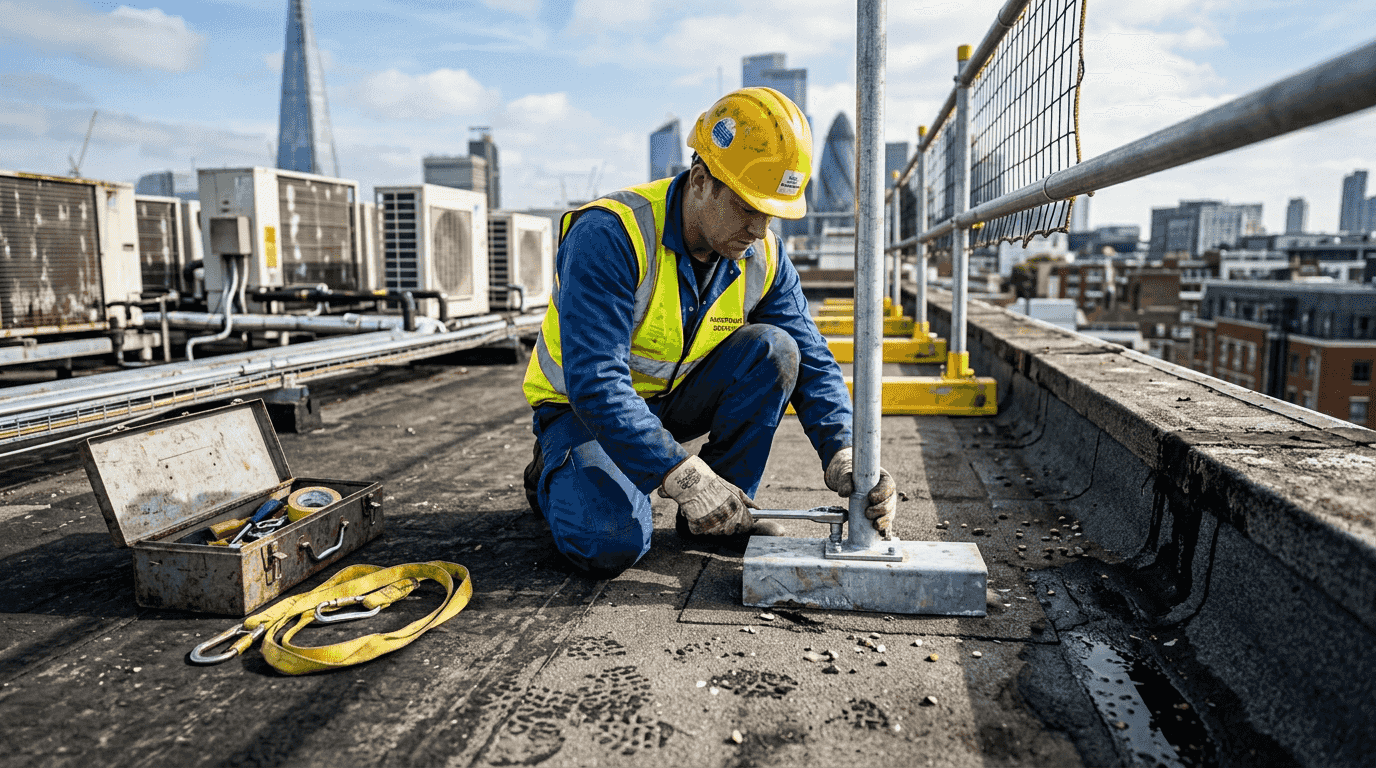
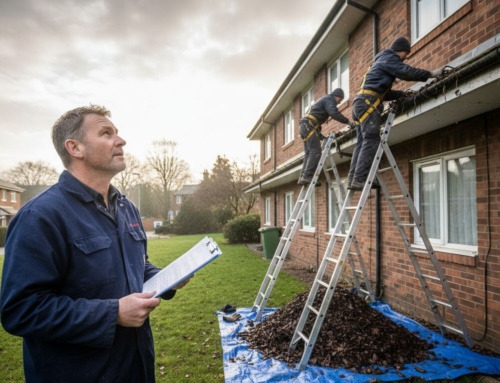
Personal fall arrest systems offer flexibility for properties where permanent guardrails prove impractical. These active systems include full-body harnesses, shock-absorbing lanyards, and certified anchor points. Each component requires regular inspection and workers need specialised training to use equipment correctly. Anchor points must support 5,000 lbs per attached worker, demanding structural engineering assessment before installation. PFAS systems work well for occasional roof access but become cumbersome for frequent maintenance schedules.
Proper gutter sizing prevents the overflow problems that necessitate emergency repairs and additional roof access. Commercial gutters require 6 inch sizing for most businesses and 7 to 8 inch for larger buildings, with downspouts positioned every 40 feet or calculated per roof area according to IPC guidelines. Undersized systems create standing water that damages roofing materials and increases maintenance frequency, paradoxically creating more fall risk exposure.
Implementing effective safety measures follows these steps:
- Conduct a professional roof assessment to identify optimal guardrail locations or anchor point positions
- Select equipment meeting current British and European safety standards for your building height and configuration
- Install systems according to manufacturer specifications with certified installers
- Establish inspection schedules for all fall protection equipment and gutter components
- Train maintenance staff and contractors on proper equipment use and emergency procedures
- Document all installations, inspections, and training sessions for compliance records
Pro Tip: Combine passive guardrails at high-traffic roof access points with PFAS anchor points in remote areas to optimise safety coverage whilst controlling costs.
Review your master gutter safety best practices annually to incorporate new regulations and equipment innovations. Technology advances continually improve safety options, making periodic reassessment valuable for long-term risk management.
Comparison of gutter safety practices and recommendations for commercial settings
Different property types and maintenance patterns demand tailored safety approaches. Multi-family residential buildings with monthly roof inspections benefit most from permanent guardrail installations that eliminate setup time and reduce cumulative fall risk exposure. Commercial properties with quarterly gutter cleaning schedules may find PFAS systems adequate if properly maintained and staff receive thorough training.
The following table compares primary safety approaches:
| Safety Method | Best Application | Key Advantage | Primary Limitation |
| — | — | — |
| Permanent Guardrails | Frequent access, steep pitches | Passive protection requires no setup | Higher initial installation cost |
| Temporary Guardrails | Seasonal maintenance, flat roofs | Portable between properties | Setup time increases fall risk during installation |
| PFAS with Anchors | Occasional access, complex roof shapes | Flexible positioning | Requires ongoing training and equipment inspection |
| Safety Nets | Construction or major renovations | Catches falls over large areas | Impractical for routine maintenance |
Gutter sizing must align with building dimensions and regional weather patterns. A 10,000 square foot roof in a high-rainfall area requires larger gutters and more frequent downspouts than the same roof in drier climates. OSHA specifies fall protection starting at 6 feet in construction, establishing minimum safety thresholds that shape equipment selection. Compliance failures expose property managers to liability and potential regulatory penalties.
Proper gutter sizing per IPC tables and local rainfall data optimises drainage capacity to prevent overflow damage. Undersized systems fail during peak rainfall, sending water cascading down building facades and eroding foundations. This creates expensive repairs and potentially unsafe conditions for tenants and visitors.
Practical recommendations for commercial settings include:
- Install permanent guardrails on buildings requiring monthly or more frequent roof access
- Use PFAS systems with certified annual inspections for properties with quarterly maintenance schedules
- Size gutters according to roof area calculations and verified local rainfall intensity data
- Position downspouts every 40 feet maximum, adjusting for roof valleys and drainage patterns
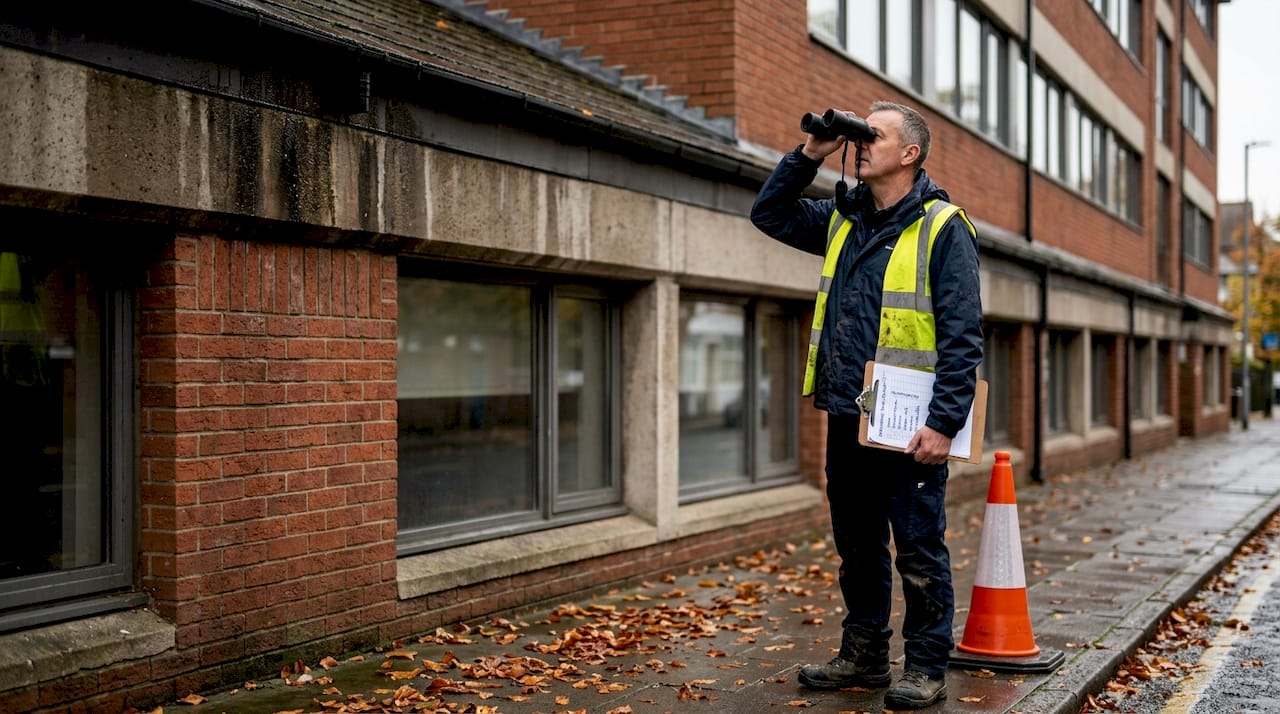
- Schedule professional inspections twice yearly before and after peak rainfall seasons
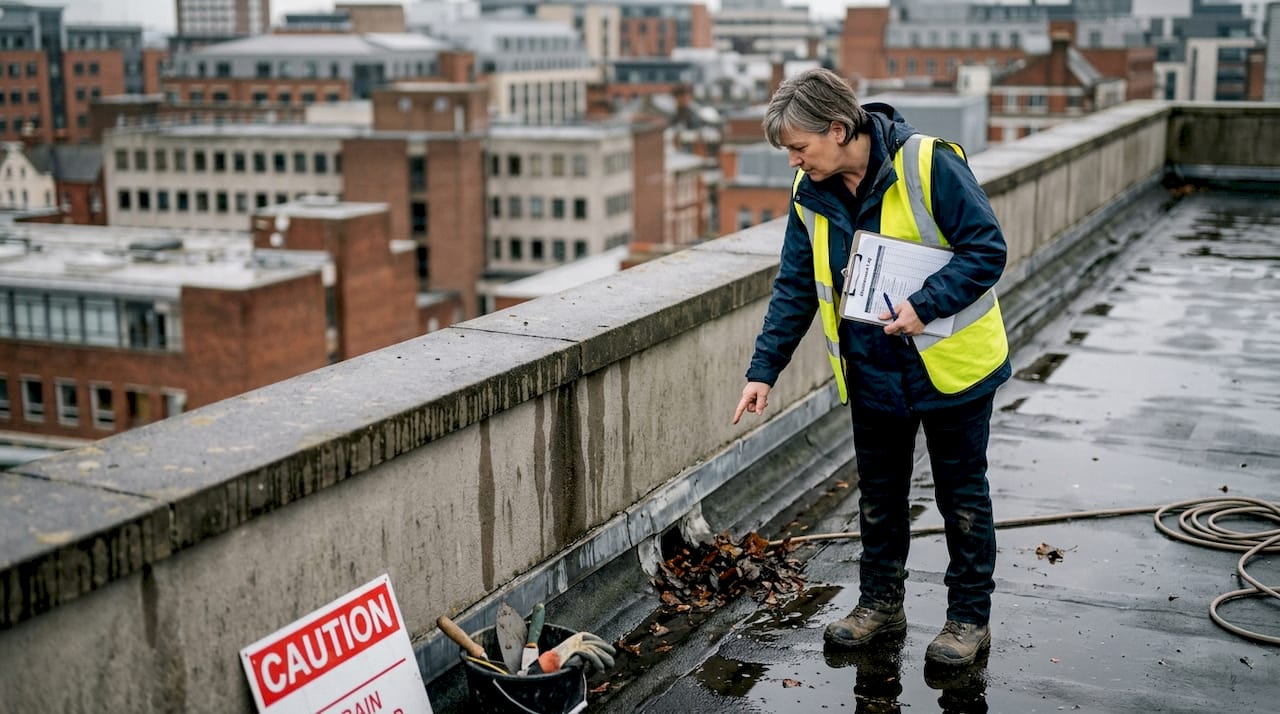
Pro Tip: Photograph all safety equipment and gutter conditions during inspections to create a visual compliance record that simplifies audits and insurance reviews.
Address gutter cleaning challenges urban properties face by coordinating maintenance schedules with adjacent buildings to share equipment costs and minimise disruption. Urban environments often present access difficulties that favour lightweight, portable safety systems over permanent installations.
Enhance gutter safety with professional cleaning and maintenance services
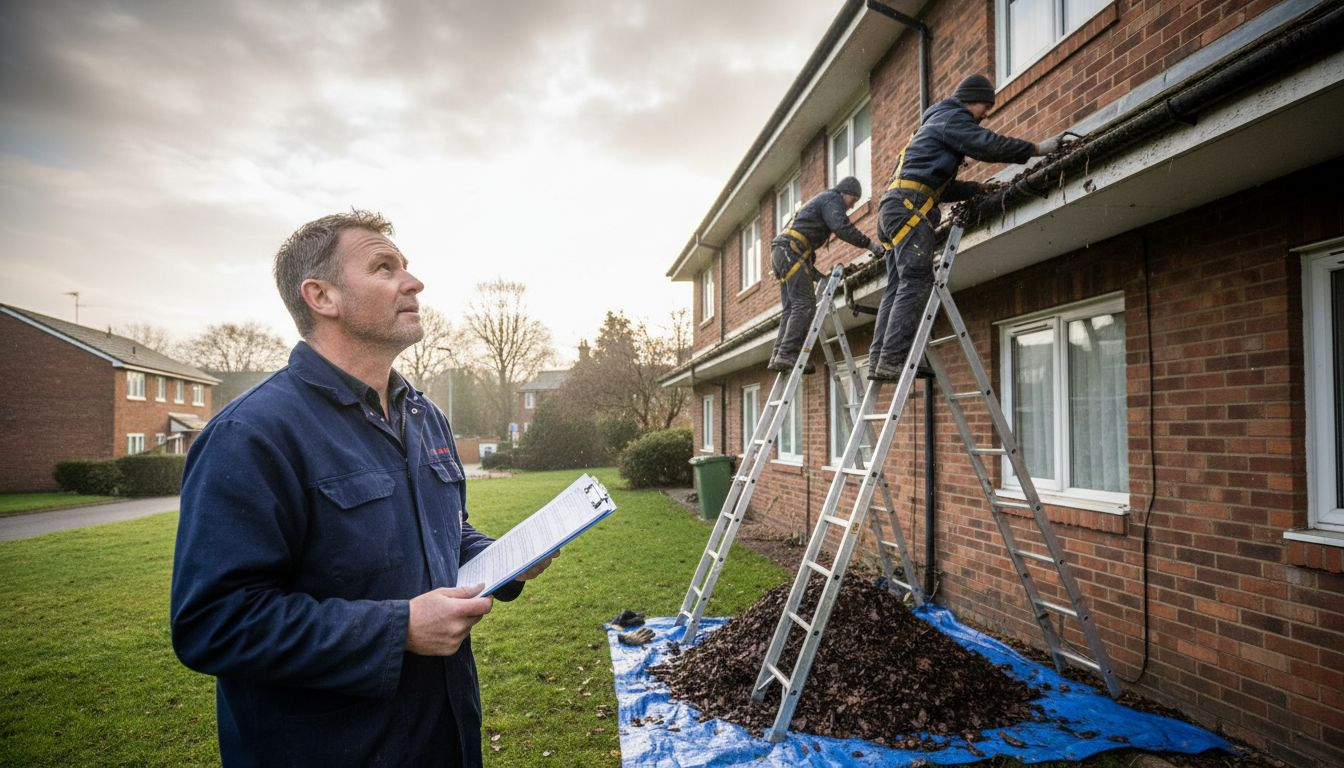
Professional gutter cleaning services provide property managers with expert maintenance that meets regulatory safety standards whilst protecting building assets. Experienced teams arrive with modern fall protection equipment, eliminating the need for property owners to invest in specialised gear or provide extensive staff training. Regular scheduled cleaning through a local commercial gutter cleaning service maintains optimal water flow and prevents the overflow damage that leads to costly structural repairs.
Professional maintenance programmes include systematic inspections that identify developing problems before they require emergency intervention. Following a gutter cleaning frequency guide tailored to your property type and location ensures gutters receive attention at optimal intervals. This proactive approach extends system lifespan and reduces overall maintenance costs. Understanding commercial property cleaning importance helps property managers allocate budgets effectively for long-term building protection.
Frequently asked questions
What are the legal fall protection requirements for gutter maintenance at height?
OSHA requires fall protection for work at heights over 6 feet in construction and 4 feet in general industry settings. Property managers must provide guardrails, safety nets, or personal fall arrest systems with anchor points supporting 5,000 lbs per worker. Compliance documentation and worker training records are mandatory.
How often should commercial gutters be inspected and cleaned for safety?
Most commercial properties require gutter inspection and cleaning at least twice yearly, typically in spring and autumn. High-traffic urban locations or properties near trees may need quarterly service. Regular maintenance prevents blockages that cause overflow damage and reduces emergency roof access that increases fall risk exposure. Consult why gutter cleaning matters for detailed scheduling guidance.
What are the benefits of passive fall protection versus active systems?
Passive systems like guardrails protect workers automatically without requiring individual equipment setup or specialised training. Active systems such as personal fall arrest equipment offer positioning flexibility but demand ongoing inspections, training, and proper use discipline. Passive protection reduces human error risks and proves more cost effective for properties requiring frequent roof access.
How can property managers ensure compliance with both sizing and safety regulations?
Conduct professional assessments that evaluate roof dimensions, local rainfall data, and applicable safety thresholds simultaneously. Document all equipment installations, inspection schedules, and maintenance activities. Use a comprehensive gutter cleaning safety checklist commercial properties 2026 to verify ongoing compliance and identify gaps before they become violations.
Are professional gutter cleaning services necessary for large multi-family buildings?
Professional services provide specialised equipment, trained personnel, and liability coverage that make them highly valuable for large properties. They eliminate the need for property managers to maintain fall protection gear, train staff, and manage safety compliance documentation. Regular professional maintenance typically costs less than addressing emergency repairs from neglected gutters whilst significantly reducing liability exposure.
Leave A Comment