
Many property managers assume gutter warranties cover all damage, yet most standard policies exclude weather-related harm and require strict maintenance compliance. Understanding warranty specifics is crucial for effective budget management and maintenance planning in commercial buildings. This guide clarifies warranty terms, types, exclusions, and practical steps to help you maximise warranty benefits whilst avoiding costly claim rejections.
Table of Contents
- Introduction To Gutter Warranties
- Types And Coverage Of Gutter Warranties
- Common Misconceptions About Gutter Warranties
- Critical Conditions And Exclusions Affecting Warranty Validity
- Comparison Of Warranty Types And Their Practical Implications
- Benefits Of Adhering To Gutter Warranty Terms For Property Management
- Practical Considerations For Property Managers In Managing Gutter Warranties
- Summary And Next Steps For Effective Gutter Warranty Utilisation
- Protect Your Commercial Gutters With Expert Cleaning Services
- Frequently Asked Questions
Key takeaways
| Point | Details |
|---|---|
| Coverage duration | Gutter warranties typically cover manufacturing defects from 10 to 25 years depending on material quality. |
| Maintenance compliance | Biannual professional cleaning and inspections are mandatory to keep warranties valid. |
| Weather exclusions | Standard warranties exclude weather damage unless premium add-ons are purchased. |
| Transfer limitations | About 70% of warranties are non-transferable, requiring new coverage after property sales. |
| Documentation needs | Detailed service records and receipts are essential for successful warranty claims. |
Introduction to gutter warranties
A gutter warranty is a manufacturer or installer promise covering specific defects or failures within defined terms. Understanding these protections helps you budget accurately and plan maintenance schedules for commercial properties. Most commercial gutter warranties typically cover manufacturing defects for 10 to 25 years, depending on the material used.
Product warranties focus on material defects like premature corrosion or structural failure. Installation warranties, also called workmanship warranties, address fitting errors, improper sealing, or leaks caused by poor installation. These typically run shorter, from one to five years.
Commercial applications require understanding both warranty types together. A gutter system might have excellent material coverage but limited installation protection, leaving gaps in your risk management. Regular inspections help identify issues before they compromise warranty validity.
Key distinctions include:
- Product warranties cover manufacturing defects in gutter materials themselves
- Workmanship warranties address installation faults like improper fitting or leaks
- Duration varies significantly, with product warranties offering longer protection
- Commercial properties benefit from combining both warranty types for comprehensive coverage
- Understanding these differences prevents surprise costs when defects emerge
Types and coverage of gutter warranties
Product warranties protect against manufacturing defects affecting gutter materials. These cover issues like material degradation, faulty welds, or coating failures that occur despite proper maintenance. Workmanship warranties address installation problems such as incorrect slope, loose brackets, or poor sealing at joints.

Manufacturing defect coverage and workmanship warranties have distinct scopes and conditions. Product warranties demand strict maintenance compliance, whilst workmanship warranties focus on installation quality verification within shorter timeframes. Both require documentation to validate claims.
Common exclusions significantly limit coverage:
- Weather damage from storms, hail, or extreme temperatures
- Corrosion caused by chemical exposure or salt spray
- Physical abuse including impact damage or vandalism
- Modifications or repairs performed by uncertified contractors
- Damage from inadequate maintenance or cleaning
Maintenance requirements often specify biannual professional cleaning to uphold warranty validity. Missing even one scheduled service can void coverage entirely. Some warranties include compliance clauses detailing required documentation frequency, inspection protocols, and approved maintenance procedures.
Property managers must review warranty certificates carefully. Terms vary between manufacturers, with some offering extended coverage for premium materials whilst others impose stricter maintenance schedules. Understanding these nuances protects your investment and prevents claim rejections.
Common misconceptions about gutter warranties
Many property managers believe weather damage falls under standard warranty coverage. This assumption leads to disappointment when storm damage claims are rejected. Most warranties exclude weather-related harm unless you purchase premium add-ons specifically covering environmental factors.
Another widespread misconception involves warranty transferability. About 70% of commercial gutter warranties are non-transferable, yet many assume coverage automatically continues when properties change hands. This oversight leaves new owners unprotected and facing unexpected repair costs.
Maintenance obligations are frequently underestimated. Some managers assume occasional cleaning suffices, but most warranties require biannual professional servicing with documented proof. Skipping appointments or using uncertified cleaners can invalidate coverage entirely, exposing you to costly defect repairs.
Misunderstanding these terms creates financial risk:
- Denied claims due to missed maintenance documentation
- Surprise costs when assumed coverage doesn’t exist
- Warranty voidance from unauthorised repairs or modifications
- Lost protection after property transfers without proper planning
- Liability exposure from preventable gutter failures
Pro Tip: Request warranty certificates in writing during gutter installation and review exclusions carefully. Schedule maintenance appointments immediately to establish compliance patterns that support future claims.
Critical conditions and exclusions affecting warranty validity
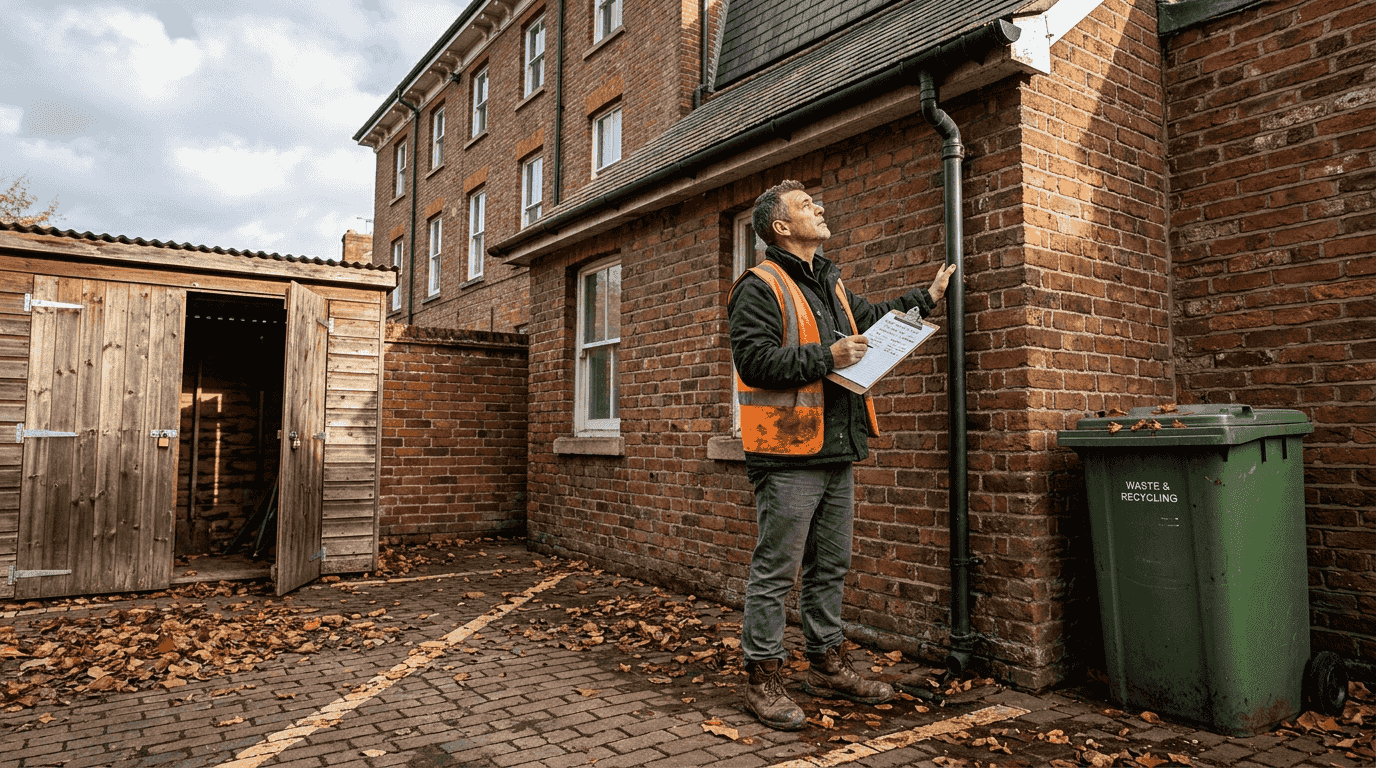
Mandatory biannual professional cleaning and inspections form the backbone of warranty compliance. Missing even one scheduled service provides grounds for manufacturers to reject claims. You must engage certified providers who document every visit with detailed service reports.
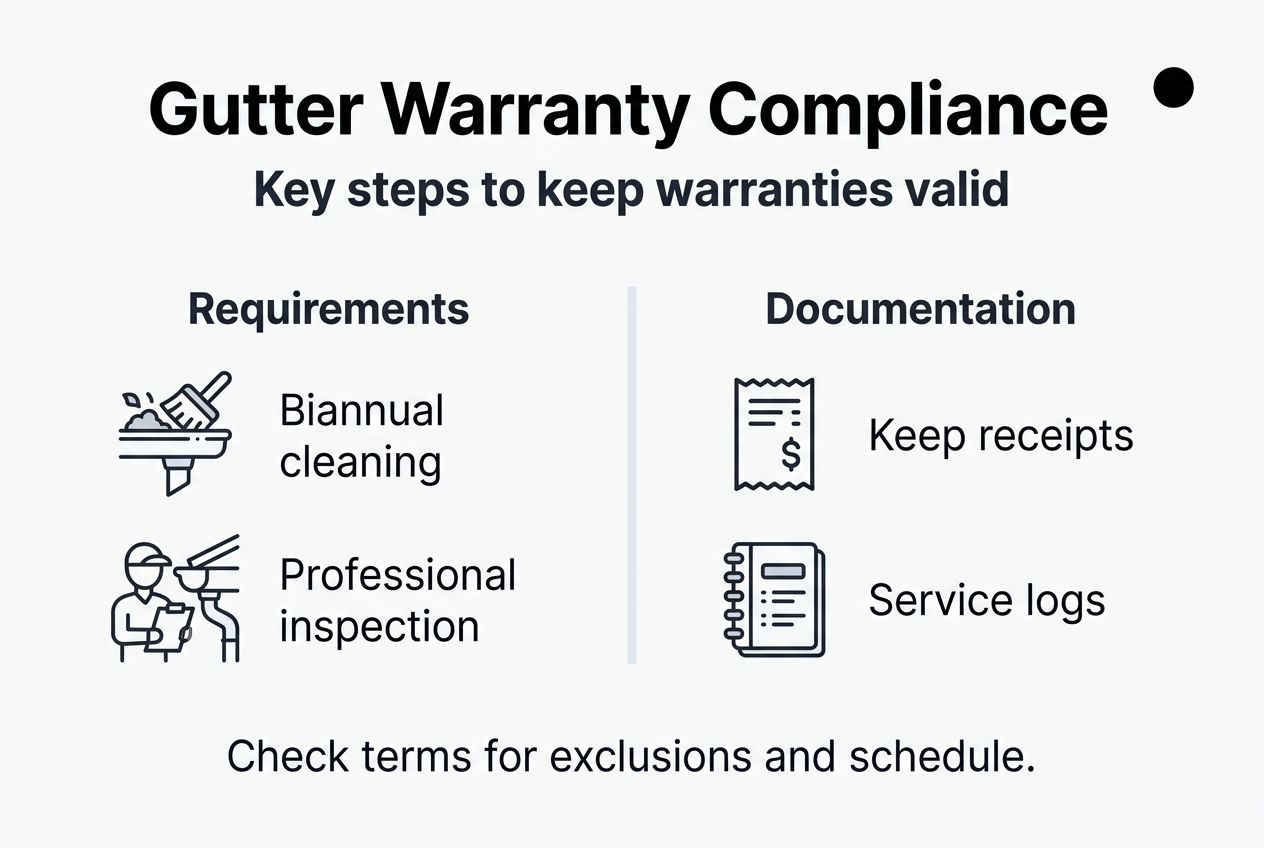
Warranty validity depends on meticulous documentation. Keep receipts, inspection logs, and service certificates organised and accessible. When submitting claims, manufacturers scrutinise these records to verify compliance. Gaps in documentation often result in automatic rejections regardless of defect legitimacy.
Non-transferability clauses require proactive planning when properties change ownership. You cannot assume warranties continue after sales complete. Instead, coordinate with buyers to arrange new warranty agreements or negotiate coverage continuation as part of sale terms.
Common exclusions that void warranties include:
- Weather damage from storms, snow accumulation, or temperature extremes
- Impact damage from falling objects, vehicle collisions, or vandalism
- Inadequate maintenance including missed cleaning appointments
- Improper repairs performed without manufacturer authorisation
- Chemical exposure or environmental contamination
“Ignoring maintenance schedules frequently causes claim rejections and significant financial risk, particularly when high-impact damage combines with warranty voidance.”
Understanding common gutter defects helps you identify issues early, before they escalate into warranty-voiding situations. Prevention through compliance protects both coverage and property value.
Comparison of warranty types and their practical implications
Product warranties typically extend up to 25 years but demand strict compliance with maintenance schedules. Installation warranties offer shorter terms, usually one to five years, focusing on workmanship quality with often simpler claim processes.
| Warranty Type | Duration | Coverage Focus | Maintenance Requirements | Claim Complexity |
|---|---|---|---|---|
| Product | 10-25 years | Manufacturing defects, material failures | Biannual professional cleaning, detailed documentation | Higher, strict compliance verification |
| Installation | 1-5 years | Workmanship errors, fitting issues | Regular inspections, defect reporting | Lower, shorter verification period |
| Combined | Varies | Comprehensive protection | Both product and workmanship standards | Moderate, dual compliance tracking |
Maintenance requirements under product warranties are notably stricter to prevent voidance. You must follow manufacturer specifications precisely, using approved cleaning methods and certified contractors. Installation warranties focus more on identifying workmanship defects early, requiring prompt reporting of leaks or fitting problems.
Choosing between warranties depends on property ownership stability and management capacity. Long-term holdings benefit from extended product warranties, whilst properties with planned sales may prioritise shorter, transferable options. Your compliance capacity also matters, as strict product warranties demand significant administrative effort to maintain documentation.
Pro Tip: Review your maintenance schedule capacity before selecting warranty types. Extended coverage means nothing if you cannot meet compliance requirements consistently.
Compliance with warranty conditions directly impacts cost savings and claim success. Properties maintaining perfect documentation achieve claim acceptance rates exceeding 85%, whilst those with gaps face rejection rates above 60%.
Benefits of adhering to gutter warranty terms for property management
Following manufacturer maintenance schedules can reduce repair costs by up to 40% over five years. This saving stems from early defect detection and warranty-covered repairs that would otherwise require full payment. Proper documentation leads to higher claim acceptance and faster resolutions, minimising downtime.
Reduced emergency interventions protect tenant satisfaction and preserve building operations. When warranties remain valid, you handle defects through scheduled maintenance rather than disruptive emergency repairs. This predictability supports better budget planning and resource allocation.
Warranty compliance integrates naturally with broader asset management strategies to preserve building value:
- Systematic maintenance documentation supports property valuations during sales
- Reduced liability risks associated with gutter failure and water damage
- Enhanced tenant retention through proactive building care
- Lower insurance premiums when comprehensive maintenance records exist
- Improved competitive positioning for commercial leasing
Proactive management through warranty adherence demonstrates professional stewardship. It signals to tenants, investors, and insurers that you prioritise building integrity. This reputation advantage translates into tangible benefits like easier tenant negotiations and favourable insurance terms.
Understanding cleaning frequency requirements helps you maintain compliance whilst optimising service costs. The investment in regular maintenance pays dividends through warranty protection and reduced emergency expenditure. Properties with documented maintenance programmes also navigate building approvals more smoothly, as authorities recognise systematic care protocols.
Practical considerations for property managers in managing gutter warranties
Identifying warranty types before procurement ensures coverage matches your compliance capacity. Review manufacturer certificates carefully, comparing maintenance requirements against your available resources. This upfront diligence prevents selecting warranties you cannot realistically maintain.
Integrating warranty terms explicitly into maintenance contracts and service level agreements creates accountability. Your cleaning contractors must understand documentation requirements and compliance standards. Specify in contracts that all service reports must meet warranty documentation criteria.
Scheduling biannual professional inspections and cleaning with comprehensive documentation supports warranty claims:
- Book services at consistent intervals matching warranty requirements exactly
- Confirm contractors provide detailed written reports after each visit
- Store all receipts, certificates, and inspection logs in organised digital files
- Review documentation quarterly to identify any gaps requiring immediate attention
- Coordinate inspection timing with optimal cleaning frequencies for your building type
Clarifying warranty transferability before property sales protects transaction value. If warranties are non-transferable, plan for coverage renewal or negotiate replacement costs into sale prices. Buyers appreciate transparency about warranty status, which can differentiate your property in competitive markets.
Maintaining detailed records of all maintenance activities forms your primary defence during claims. Digital systems with cloud backup ensure records remain accessible even years later when claims arise. Include photographs, contractor certifications, and timestamped service completion confirmations.
Pro Tip: Create a maintenance schedule template aligned with your warranty terms. Set automated reminders three weeks before each required service to ensure you never miss compliance deadlines.
Summary and next steps for effective gutter warranty utilisation
Understanding distinctions between product and workmanship warranties empowers informed procurement decisions. Product warranties offer extended coverage with strict maintenance demands, whilst workmanship warranties provide shorter, simpler protection focused on installation quality.
Maintaining compliance with biannual inspections and professional cleaning preserves warranty validity and prevents costly claim rejections. This discipline integrates naturally with broader property management responsibilities, supporting asset value preservation and tenant satisfaction.
Strategic next steps for effective warranty management:
- Document all maintenance activities thoroughly with receipts and detailed reports
- Confirm warranty transfer status during property changes and plan accordingly
- Incorporate warranty terms explicitly into procurement and maintenance planning
- Schedule services consistently to establish compliance patterns supporting claims
- Review warranty certificates annually to verify continued compliance and coverage status
Effective gutter warranty utilisation requires proactive management rather than reactive responses. By understanding coverage limitations, maintaining compliance documentation, and integrating warranty requirements into operational workflows, you protect commercial properties whilst optimising maintenance investments.
Protect your commercial gutters with expert cleaning services
Maintaining gutter warranty compliance demands professional cleaning services that meet manufacturer specifications precisely. Expert teams understand documentation requirements and provide the detailed reports needed for successful warranty claims.
Our commercial gutter cleaning service ensures biannual maintenance that satisfies warranty conditions across blocks of flats and commercial buildings. We reduce risk of common defects through systematic cleaning protocols and thorough inspections. Property managers across Greenwich and surrounding areas trust our expertise to preserve warranty validity whilst protecting building value. Align your maintenance with warranty requirements using our comprehensive schedule guidance to reduce repair costs and minimise operational downtime.
Frequently asked questions
What common issues invalidate a gutter warranty?
Missed biannual cleaning appointments, physical damage from impacts, undocumented repairs by uncertified contractors, and weather damage not covered by standard warranties typically invalidate coverage. Maintaining strict compliance with manufacturer maintenance schedules prevents most invalidation issues.
Can gutter warranties be transferred when a property changes ownership?
Most commercial gutter warranties are non-transferable, requiring new warranty arrangements or negotiations post-sale to maintain protection. About 70% include non-transferability clauses that void coverage upon ownership changes unless specifically addressed during transactions.
How often should gutters be cleaned to keep warranties valid?
Biannual professional inspections and cleaning are generally required to comply with most gutter warranty terms. Missing even one scheduled service can void coverage, so consistent cleaning frequency with documented proof is essential.
What should property managers document to support warranty claims?
Detailed service reports from certified providers, receipts showing payment for professional cleaning, inspection logs with timestamps, and photographic evidence should be kept to validate maintenance compliance. Digital storage with cloud backup ensures records remain accessible when claims arise years later.





Leave A Comment