
Most property managers underestimate how quickly gutter blockages transform from a minor maintenance issue into a catastrophic structural problem. Within weeks, blocked gutters can cause damp penetration, mould growth, and foundation damage that cost thousands to repair. This guide clarifies what gutter blockage truly is, identifies early warning signs, and equips you with practical prevention strategies to protect your buildings and keep tenants safe.
Table of Contents
- What Is Gutter Blockage And Why It Matters
- Common Causes And Signs Of Gutter Blockage
- How To Prevent And Maintain Gutters To Avoid Blockages
- Professional Gutter Cleaning Techniques And Equipment
- Gutter Cleaning Services Tailored For Property Managers
- Frequently Asked Questions
Key takeaways
| Point | Details |
|---|---|
| Water damage risk | Gutter blockage leads to water damage, including damp patches, mould growth, and potential structural issues. |
| Prevention schedule | Regular cleaning twice yearly (autumn and spring) prevents debris buildup and costly repairs. |
| Professional advantage | Specialised equipment like gutter vacuums with HD cameras ensures thorough cleaning and detailed condition reports. |
| Gutter guard limitations | Guards reduce debris but still require periodic maintenance to clear fine particles and organic matter. |
| Cost of neglect | Blocked gutters and downpipes lead to structural issues, flooding, and costly repairs that affect tenant satisfaction. |
What is gutter blockage and why it matters
Gutter blockage occurs when debris obstructs water flow through gutters and downpipes, preventing rainwater from draining properly away from your building. This seemingly simple problem creates a cascade of issues that directly impact your property’s structural integrity and operational costs.
When gutters become blocked, rainwater overflows and seeps into walls, foundations, and roof spaces. Gutter blockage leads to water damage, including damp patches, mould growth, and potential structural issues. The moisture penetrates building materials, compromising their strength and creating health hazards for tenants.
Common blockage materials include:
- Leaves and organic debris that accumulate during autumn
- Moss and lichen growth that thrives in damp gutter environments
- Bird nests and animal debris that create complete obstructions
- Silt and sludge formed from decomposed organic matter
- Roof tile granules and construction debris
Blocks of flats present unique maintenance challenges compared to single dwellings. Multiple storeys mean greater surface area collecting debris, whilst shared drainage systems amplify the impact of blockages. One blocked section can affect water flow for entire building sides, increasing damage risk exponentially.
Understanding why gutter health matters helps property managers prioritise maintenance budgets and protect their investments from preventable deterioration.
The financial implications extend beyond repair costs. Water damage reduces property values, increases insurance premiums, and creates tenant complaints that damage your reputation. Preventative maintenance costs substantially less than emergency repairs, making gutter care a strategic investment rather than an optional expense.
For commercial buildings, blocked gutters pose additional liability risks. Water pooling near entrances creates slip hazards, whilst visible neglect undermines professional image. Regular gutter maintenance demonstrates duty of care and protects against negligence claims.
Common causes and signs of gutter blockage
Recognising what causes blockages and spotting early warning signs enables you to intervene before expensive damage occurs. Different debris types require varying removal approaches, making identification crucial for effective maintenance planning.
Falling leaves pile up and wash into downpipes, causing clogs that worsen with each rainfall. Autumn presents the highest risk period, particularly for properties surrounded by deciduous trees. Leaves decompose into sludge that hardens over winter, creating stubborn obstructions.
Moss compacts over time, creating stubborn blocked gutter downpipes that resist simple flushing methods. Moss growth indicates standing water and poor drainage, suggesting existing partial blockages. This organic material absorbs water like a sponge, adding weight that stresses gutter brackets.
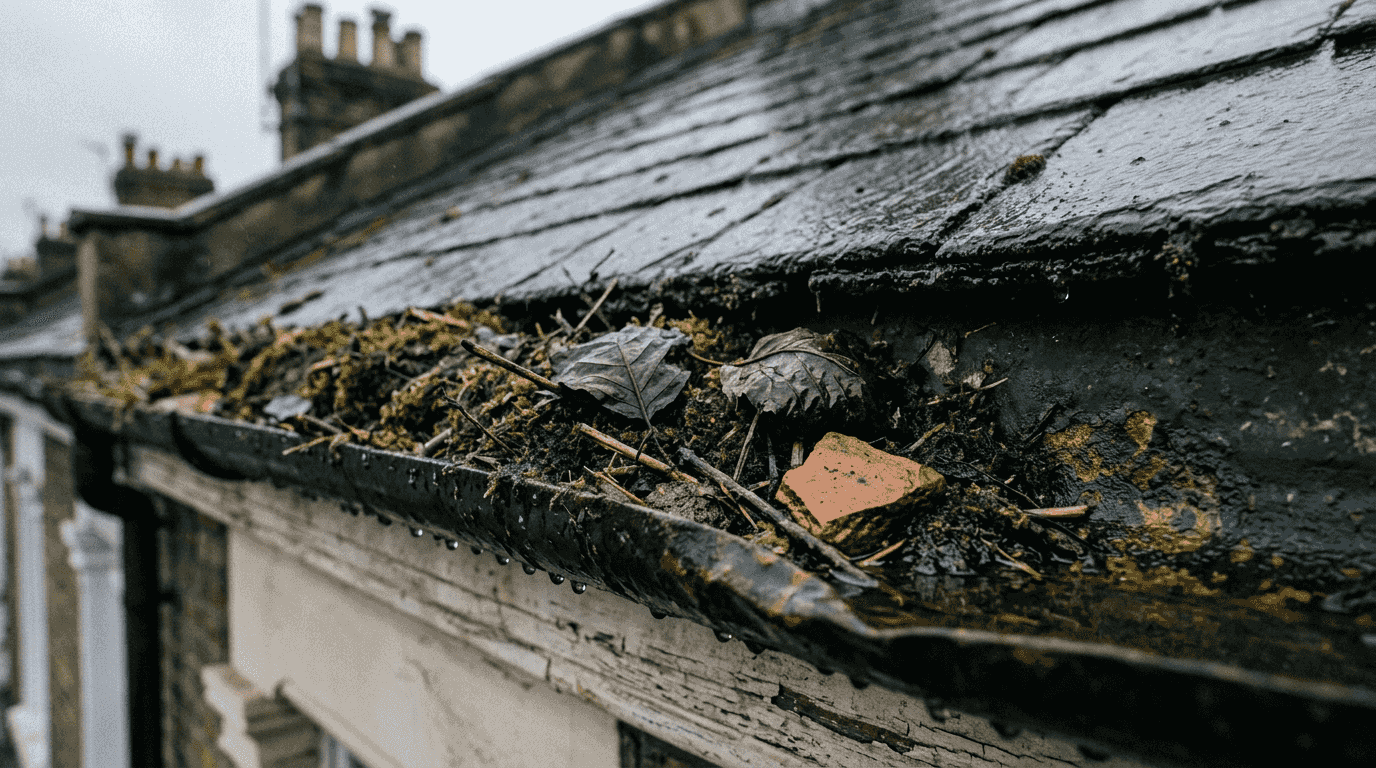
Bird nests and animal debris can block water flow entirely, creating immediate overflow problems. Pigeons and other urban birds favour protected gutter spaces for nesting, particularly in spring. These obstructions often contain twigs, feathers, and nesting materials that form dense blockages.
Visible warning signs include:
- Water overflowing from gutter edges during rainfall
- Damp patches appearing on external walls below gutters
- Staining or discolouration on fascia boards and soffits
- Sagging gutters indicating weight from accumulated debris and water
- Plants or vegetation growing from gutter channels
- No water discharge from downpipes during heavy rain
Pro Tip: Observe your gutters during moderate rainfall to spot blockages before they cause damage. Working gutters discharge steady water streams from downpipes, whilst blocked systems overflow or show no discharge despite full gutters.
Early detection through regular gutter maintenance checklist property managers protocols prevents minor blockages escalating into major problems. Schedule visual inspections quarterly, with detailed assessments before and after autumn leaf fall.
How to prevent and maintain gutters to avoid blockages
Proactive maintenance eliminates most gutter blockage problems whilst costing significantly less than reactive repairs. Establishing a systematic approach ensures consistent care across your property portfolio.
Regular gutter cleaning, ideally once or twice a year (autumn and spring), is crucial to prevent blockages. This frequency addresses seasonal debris accumulation whilst catching problems before they cause damage. Properties near trees may require additional cleanings.
Implement these maintenance priorities:
- Clear all leaves, twigs, and organic debris from gutter channels
- Remove compacted moss and sludge using appropriate tools
- Flush downpipes thoroughly to confirm unrestricted water flow
- Inspect gutter joints and seals for deterioration or leaks
- Check bracket stability and adjust sagging sections promptly
- Document findings and maintenance actions for accountability
Regular gutter cleaning is key to prevent blockages caused by leaves and debris accumulation that compounds over time. Develop a formal schedule using a gutter maintenance schedule guide property managers framework tailored to your properties’ specific needs.
Gutter guards reduce but do not eliminate maintenance requirements. These protective systems filter large debris whilst allowing water through, decreasing cleaning frequency but not eliminating it entirely. Fine particles, roof granules, and organic matter still accumulate, requiring periodic attention.
Pro Tip: Engage professional services with specialised equipment for difficult-to-access gutters on tall buildings. This ensures thorough cleaning whilst eliminating safety risks associated with height work. Professional teams complete tasks faster and identify potential problems your staff might miss.
Maintain detailed records documenting each cleaning, noting blockage severity, materials removed, and any damage observed. This information guides future maintenance planning and provides evidence of diligent property care should disputes arise. Records also help identify properties requiring more frequent attention.
Schedule maintenance strategically using plan routine gutter cleaning principles that align with seasonal patterns and weather forecasts. Autumn cleaning should occur after leaf fall completes, whilst spring maintenance addresses winter debris and prepares systems for summer storms.
Professional gutter cleaning techniques and equipment
Modern professional cleaning employs sophisticated equipment that surpasses traditional manual methods in effectiveness, safety, and efficiency. Understanding these techniques helps you evaluate service providers and justify maintenance investments.
Professional gutter cleaning services utilise specialised equipment like gutter vacuums with HD cameras for efficient debris removal. These industrial vacuum systems reach heights up to 12 metres from ground level, eliminating ladder work and associated risks. Integrated cameras provide real-time footage showing blockage extent and cleaning progress.
Key professional advantages include:
- Complete debris removal including compacted sludge and moss
- Minimal disruption to building operations and tenant activities
- Comprehensive condition reports with photographic evidence
- Access to difficult areas without scaffolding or cherry pickers
- Immediate identification of damage requiring repair
| Aspect | DIY Approach | Professional Service |
|---|---|---|
| Cost | Lower initial outlay | Higher per-visit cost, lower long-term expense |
| Safety | Significant height and ladder risks | Minimal risk with ground-based equipment |
| Effectiveness | Variable, depends on access and tools | Thorough removal with verification |
| Time required | Several hours per building | 1-2 hours for most properties |
| Documentation | Limited unless manually recorded | Detailed reports with photo evidence |
Professional cleaning reduces risk of missed blockages that cause subsequent damage. Technicians identify early-stage problems like loose brackets, deteriorating seals, or developing cracks that property managers might overlook. Early intervention prevents these minor issues escalating into expensive repairs.
Consider professional services for:
- Buildings exceeding two storeys where access presents challenges
- Complex gutter systems with multiple levels or unusual configurations
- Properties with limited safe access points for maintenance staff
- Buildings requiring documented maintenance for insurance or compliance
- Portfolios where coordinating multiple properties demands efficiency
Professional commercial gutter cleaning service providers preserve building value whilst reducing your long-term maintenance costs through thorough, consistent care. Blocked gutters and downpipes lead to structural issues, flooding, and costly repairs that professional maintenance prevents effectively.
Gutter cleaning services tailored for property managers
Maintaining gutters across multiple properties demands reliable expertise and efficient scheduling. Specialised services understand the unique pressures property managers face, offering flexible maintenance programmes that protect your buildings whilst simplifying oversight.
Professional Greenwich gutter cleaning service providers focus specifically on blocks of flats and commercial buildings, bringing experience with complex drainage systems and multi-storey access challenges. Their tailored approach addresses your operational needs, from scheduling around tenant activities to providing documentation for compliance requirements.
Comprehensive gutter maintenance property managers programmes align maintenance schedules with your portfolio’s needs, ensuring consistent care without overwhelming your budget. Flexible contracts accommodate seasonal demands whilst providing predictable costs for financial planning.
Discover why letting agencies need gutter cleaning services that understand tenant satisfaction, property preservation, and the commercial realities of property management. Contact specialists who combine technical expertise with practical understanding of your operational challenges.
Frequently asked questions
What causes gutter blockage?
Gutter blockages result primarily from leaves, moss, bird nests, silt and debris buildup, plus hardened sludge formed from dirt and decomposed organic material. Tree proximity, building height, and seasonal weather patterns influence blockage severity. Regular inspections help identify these causes before severe obstruction occurs, enabling timely intervention that prevents damage.
How often should gutters be cleaned to prevent blockages?
Experts recommend cleaning gutters twice yearly, typically in autumn after leaf fall and spring before heavy rainfall seasons. Properties surrounded by trees or in high-debris areas may require quarterly cleaning. Establishing a consistent schedule based on your building’s specific conditions provides the most effective protection against blockages and associated damage.
Do gutter guards eliminate the need for gutter cleaning?
Gutter guards still require regular cleaning due to debris accumulation despite being marketed as maintenance-free solutions. All guard types allow fine particles, roof granules, and organic matter to pass through and accumulate. Guards reduce cleaning frequency but do not eliminate maintenance needs entirely. Property managers should plan consistent maintenance schedules even with protective systems installed.
When should I call a professional for gutter cleaning?
Engage professionals for buildings exceeding two storeys, properties with complex gutter configurations, or situations where safe access proves difficult. Professional equipment ensures thorough cleaning whilst eliminating injury risks associated with height work. Routine professional cleanings prove particularly beneficial for preserving building condition, providing documented maintenance records, and managing multiple properties efficiently across your portfolio.






Leave A Comment