
Over 40% of damp-related insurance claims involve guttering as a known or suspected factor, yet many property managers face claim rejections due to maintenance neglect. Understanding landlord legal duties and implementing proactive gutter care prevents costly disputes and protects your portfolio. This guide clarifies UK compliance requirements and provides actionable strategies to avoid insurance pitfalls in 2026.
Table of Contents
- Legal Responsibilities For Landlords And Tenants Regarding Gutter Maintenance
- How Gutter Damage Causes Insurance Claims And Why Many Are Rejected
- Common Pitfalls And Expert Tips To Prevent Costly Gutter Insurance Issues
- Applying Best Practices: Planning Gutter Maintenance And Managing Insurance Claims
- Professional Gutter Cleaning Services To Protect Your Property In 2026
- FAQ
Key takeaways
| Point | Details |
|---|---|
| Landlord legal duty | Landlords must maintain gutters throughout tenancies to comply with UK law and avoid claim rejections. |
| Tenant reporting obligation | Tenants must promptly notify landlords of gutter damage to trigger Section 11 repair duties. |
| Insurance claim failures | Neglected gutter maintenance typically leads to insurers excluding damage as wear and tear. |
| Early fault detection | Regular professional inspections identify minor gutter problems before they escalate into major damp issues. |
| Proactive maintenance value | Structured gutter care schedules protect property value, tenant satisfaction, and insurance validity. |
Legal responsibilities for landlords and tenants regarding gutter maintenance
Understanding who bears responsibility for gutter upkeep prevents disputes and ensures compliance. Landlords in the UK are legally responsible for maintaining gutters and the property structure throughout the tenancy period. This obligation extends beyond initial installation to ongoing inspections, cleaning, and repairs.
Tenants play a complementary role by monitoring gutter condition and reporting visible damage. Prompt tenant notification triggers the landlord’s duty to act. Without timely reporting, Section 11 protections may not apply, leaving both parties vulnerable to insurance complications.
Section 11 makes landlords responsible for repairing defects causing damp or mould in England and Wales, provided three conditions are met. The tenancy must fall under Section 11 coverage, specific disrepair must exist, and the landlord must receive proper notice. Clear tenancy agreements should explicitly state gutter care expectations to avoid ambiguity.
Key landlord obligations include:
- Ensuring gutters are clean and fully functional at tenancy commencement
- Conducting regular maintenance inspections throughout the tenancy period
- Responding promptly to tenant reports of gutter damage or blockages
- Arranging professional repairs when gutters fail or leak
- Maintaining detailed records of all maintenance activities and communications
Property managers should integrate gutter safety best practices into standard operating procedures. Non-compliance risks insurance claim rejection, potential legal action from tenants, and deterioration of property condition. Establishing clear communication channels ensures tenants understand their reporting duties whilst landlords maintain oversight of structural elements.
How gutter damage causes insurance claims and why many are rejected
Blocked or damaged gutters create a cascade of problems that frequently trigger insurance claims. Water overflow damages fascia boards, penetrates walls, and saturates internal plasterwork. These hidden gutter leaks escalate into rising repair costs affecting entire building structures.

Insurers scrutinise maintenance records when evaluating claims. Insurance policies usually exclude damage caused by natural ageing or lack of maintenance such as blocked gutters, making rejection common when evidence shows neglect. Policies typically cover sudden, unforeseen events rather than gradual deterioration from poor upkeep.
Understanding common rejection scenarios helps property managers protect their interests:
- Blocked gutters causing water ingress rejected as preventable maintenance failure
- Rust or corrosion damage excluded as gradual wear and tear
- Overflowing gutters damaging fascia boards denied due to lack of routine cleaning
- Damp problems traced to gutter defects rejected when inspection records are absent
- Storm damage claims refused when pre-existing gutter faults contributed to severity
“Insurers expect landlords to demonstrate reasonable care. Without evidence of regular maintenance, claims become vulnerable to rejection regardless of damage severity.”
Timing plays a critical role in claim outcomes. Small gutter faults ignored for months multiply into extensive damp problems costing thousands to remediate. Prompt reporting preserves insurance validity by demonstrating responsible property management. Delayed action signals neglect, strengthening insurer arguments for exclusion.
Property managers should implement gutter cleaning frequency schedules aligned with building characteristics and local conditions. Documented maintenance creates an audit trail proving due diligence. This evidence becomes invaluable when disputes arise, protecting both insurance coverage and professional reputation.
Common pitfalls and expert tips to prevent costly gutter insurance issues
Many insurance complications stem from avoidable errors during installation and maintenance phases. 40% of gutter-related claims originate from incorrect installation or unsuitable materials, highlighting the importance of qualified professional involvement. Using inappropriate guttering for building height or rainfall patterns creates inherent vulnerabilities.
Delayed repairs represent another critical failure point. Delaying maintenance can increase repair costs by up to 300% as minor faults compound into structural damage. What begins as a small leak rapidly escalates into extensive damp remediation, electrical repairs, and interior redecoration.
Expert strategies to minimise gutter insurance risks include:
- Conduct professional gutter surveys annually, documenting condition with photographs and detailed reports
- Schedule pre-winter inspections to clear debris before heavy rainfall seasons
- Establish tenant communication protocols ensuring prompt damage reporting without barriers
- Maintain comprehensive maintenance logs with dates, actions taken, and contractor details
- Review insurance policy terms annually to understand current exclusions and requirements
- Budget for preventative maintenance rather than reactive emergency repairs
Pro Tip: Install gutter guards in high-debris areas to reduce blockage frequency whilst maintaining regular professional inspections. Guards complement but never replace proper maintenance schedules.
Qualified professionals identify subtle issues invisible to untrained observers. Hairline cracks, loose brackets, and inadequate fall angles require specialist knowledge to detect. Early intervention prevents these minor faults from developing into insurance-triggering failures.
Property managers should prioritise gutter maintenance for property managers as a core risk management activity. Proactive care protects property values, maintains tenant satisfaction, and ensures insurance coverage remains valid when genuine accidents occur. The modest investment in routine maintenance delivers substantial returns through avoided claims and preserved asset condition.
Applying best practices: planning gutter maintenance and managing insurance claims
Implementing structured maintenance frameworks transforms gutter care from reactive firefighting into strategic asset protection. A robust plan combines regular inspections, clear documentation, and established protocols for addressing issues promptly.
A three-step test helps landlords decide repair obligations under Section 11. First, confirm the tenancy falls under Section 11 coverage. Second, identify specific disrepair causing the problem. Third, verify the landlord received proper notice. This framework clarifies when legal duties trigger and supports decision-making.
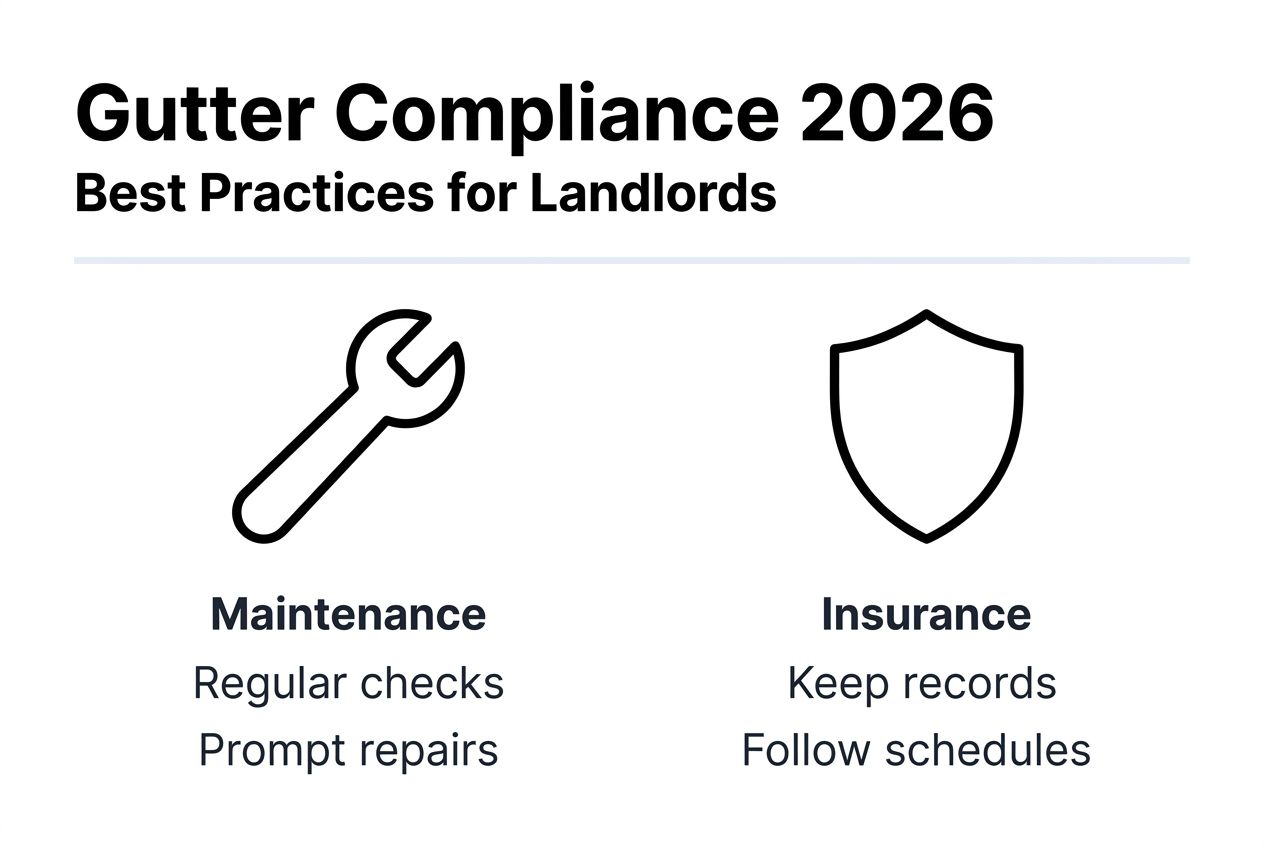
Developing comprehensive maintenance schedules requires balancing building characteristics with local environmental factors. The following comparison illustrates appropriate inspection frequencies:
| Building Type | Surrounding Environment | Minimum Inspection Frequency | Additional Considerations |
|---|---|---|---|
| Low-rise flats | Urban with moderate tree cover | Twice yearly (spring and autumn) | Increase to quarterly if heavy pollution or leaf fall |
| Commercial buildings | Industrial or coastal areas | Quarterly inspections | Monthly checks during storm seasons |
| High-rise blocks | Open locations with minimal debris | Twice yearly | Post-storm inspections after severe weather events |
| Heritage properties | Rural with heavy tree coverage | Quarterly inspections | Specialist assessment for period guttering systems |
Pro Tip: Schedule gutter inspections immediately after autumn leaf fall and again before spring rainfall peaks. These strategic timings catch blockages before weather conditions amplify damage risks.
Effective maintenance documentation should include:
- Dated inspection reports with photographic evidence of gutter condition
- Records of all cleaning and repair work completed with contractor details
- Tenant communication logs showing damage reports and landlord responses
- Insurance policy summaries highlighting relevant exclusions and requirements
- Maintenance expenditure tracking for budget planning and tax purposes
Property managers benefit from consulting gutter maintenance schedule guides tailored to UK building regulations and insurance standards. These resources provide templates and checklists ensuring no critical steps are overlooked.
When insurance claims become necessary, comprehensive maintenance records strengthen your position significantly. Insurers view documented care as evidence of responsible management, making coverage more likely. Conversely, gaps in records suggest neglect, providing grounds for rejection.
Establish tenant reporting channels that are accessible and encourage prompt communication. Regular property newsletters can remind tenants of their obligation to report gutter issues whilst reinforcing that maintenance is the landlord’s responsibility. This proactive communication prevents the misunderstandings that delay critical repairs.
Integrating routine gutter cleaning planning into annual property management cycles ensures consistency. Automated reminders and contractor relationships eliminate the risk of overlooked maintenance periods. This systematic approach protects both individual properties and entire portfolios from preventable insurance complications.
Professional gutter cleaning services to protect your property in 2026
Navigating landlord compliance whilst managing multiple properties demands reliable specialist support. Professional gutter cleaning services understand UK legal requirements and deliver the consistent maintenance that protects insurance validity. Expert contractors provide documented inspections, prompt repairs, and preventative care aligned with Section 11 obligations.
Property managers in London benefit from Greenwich gutter cleaning services experienced with blocks of flats and commercial buildings. These specialists handle the unique challenges of multi-occupancy properties whilst maintaining detailed records supporting insurance claims. Regular professional service demonstrates the due diligence insurers expect when evaluating coverage.
Letting agencies requiring gutter cleaning services gain peace of mind through partnerships with qualified contractors. Established relationships ensure priority scheduling, consistent quality, and comprehensive documentation protecting your portfolio. Professional services transform gutter maintenance from an administrative burden into a streamlined asset protection strategy.
Implementing step-by-step gutter maintenance for blocks becomes straightforward with expert guidance. Specialists provide customised maintenance schedules, emergency response capabilities, and technical expertise that typical property management teams lack internally. This professional support ensures compliance whilst freeing resources for core business activities.
FAQ
What are gutter-related insurance issues?
Gutter-related insurance issues arise when blocked or damaged gutters cause water ingress, damp problems, and structural damage to properties. Insurers often reject these claims if damage results from maintenance neglect rather than sudden unforeseen events. Property managers must demonstrate regular upkeep to maintain coverage validity and avoid costly claim rejections.
Who is responsible for gutter maintenance during a tenancy?
Landlords bear legal responsibility for maintaining gutters throughout tenancies under UK law, including routine cleaning and necessary repairs. Tenants must promptly report visible gutter damage or blockages to trigger the landlord’s Section 11 repair obligations. Clear tenancy agreements should specify these responsibilities to prevent disputes and ensure compliance with statutory duties.
Why do insurers reject gutter-related claims?
Insurers reject claims when damage stems from neglect, wear and tear, or inadequate maintenance rather than sudden covered events. Policies typically exclude gradual deterioration from blocked gutters or corroded components. Without documented evidence of regular professional maintenance, insurers classify damage as preventable, strengthening rejection arguments and leaving landlords liable for repair costs.
How can property managers reduce the risk of gutter-related insurance issues?
Establish routine professional inspections at least twice yearly, with additional checks after severe weather events. Implement clear tenant reporting protocols ensuring prompt damage notification without barriers. Maintain comprehensive records of all maintenance activities, including dated reports, photographs, and contractor details. Schedule preventative cleaning before peak rainfall seasons and budget for proactive care rather than reactive emergency repairs.






Leave A Comment