
Gutter maintenance activities remain one of the most hazardous tasks in building management, with falls accounting for the leading cause of death in construction. For property managers overseeing commercial buildings, the stakes are twofold: protecting tenants from fall injuries and preventing costly structural damage caused by water infiltration. This guide explores the critical risks, technical requirements, and misconceptions surrounding gutter safety, offering practical strategies to safeguard both people and property.
Table of Contents
- Understanding The Risks: Water Damage And Tenant Safety Hazards
- Technical Foundations: Gutter System Design And Maintenance Essentials
- Common Misconceptions About Gutter Safety And Maintenance
- Practical Guidelines: Safe Gutter Maintenance And Inspection
- Integrating Gutter Safety Into Property Management Strategy
- Protect Your Commercial Property With Expert Gutter Cleaning
Key Takeaways
| Point | Details |
|---|---|
| Gutter neglect creates dual risks | Water damage to building structure and serious fall hazards during maintenance activities. |
| Proper design and access are essential | Correct sizing, slope, and compliant access systems reduce hazards and meet regulations. |
| Common misconceptions increase danger | Myths about cleaning frequency and ladder use lead to preventable accidents and damage. |
| Preventive measures cut costs | Gutter guards and regular inspections lower maintenance needs and liability exposure. |
| Proactive management protects investments | Strategic gutter safety extends building lifespan and ensures tenant wellbeing. |
Introduction: Why Gutter Safety Matters in Commercial Buildings
Gutters serve as the primary defence system against water damage in commercial buildings, channelling rainwater away from foundations, walls, and structural elements. When these systems fail or are poorly maintained, the consequences extend far beyond aesthetic concerns. Property managers face increased liability from tenant injuries during maintenance work and accelerated building deterioration from water infiltration.
The safety and health risks associated with neglected gutter maintenance manifest in several critical ways:
- Blocked gutters cause water overflow that penetrates foundations and interior spaces
- Standing water creates breeding grounds for mold and accelerates structural rot
- Improper maintenance access exposes workers to fatal fall risks
- Leaking systems compromise tenant spaces and trigger costly emergency repairs
For property managers and letting agents, responsibility extends beyond reactive repairs. You must implement systematic maintenance protocols that address both immediate hazards and long-term structural integrity. Understanding gutter defects and their risks enables proactive intervention before minor issues escalate into major liabilities. The importance of regular gutter cleaning cannot be overstated when balancing tenant safety, building preservation, and regulatory compliance.
Effective gutter management requires coordinating multiple stakeholders including maintenance staff, contractors, and building occupants. Your oversight ensures that safety protocols are followed, inspections occur on schedule, and repairs are completed promptly to prevent cascading failures.
Understanding the Risks: Water Damage and Tenant Safety Hazards
Clogged gutters create a chain reaction of problems that threaten both building integrity and human safety. When debris blocks water flow, overflow saturates soil around foundations, leading to settlement cracks and basement flooding. Improper gutter maintenance causes water penetration that triggers mold growth, wood rot, and interior water damage.
The financial impact of water damage extends beyond immediate repairs. Mold remediation requires specialized contractors, often costing thousands of pounds per affected area. Structural repairs to compromised foundations or rotted framing can escalate into tens of thousands. Insurance claims rise, premiums increase, and tenant satisfaction plummets when living spaces become uninhabitable.
Maintenance activities introduce severe fall hazards that property managers cannot ignore. Falls accounted for 421 fatal injuries out of 1,075 construction deaths in 2023, with gutter work representing a significant portion of these incidents. Without proper safety equipment and access systems, maintenance workers face life-threatening risks every time they clean gutters on multi-storey buildings.
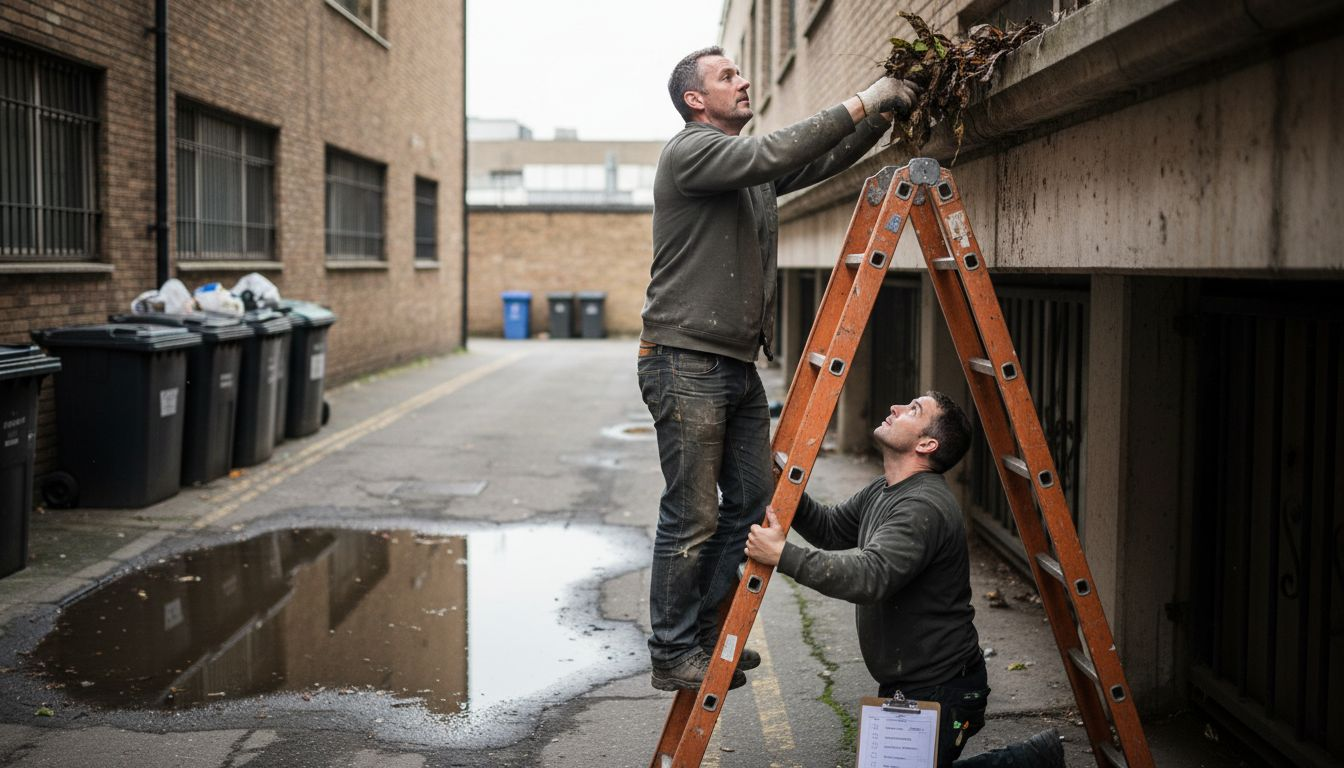
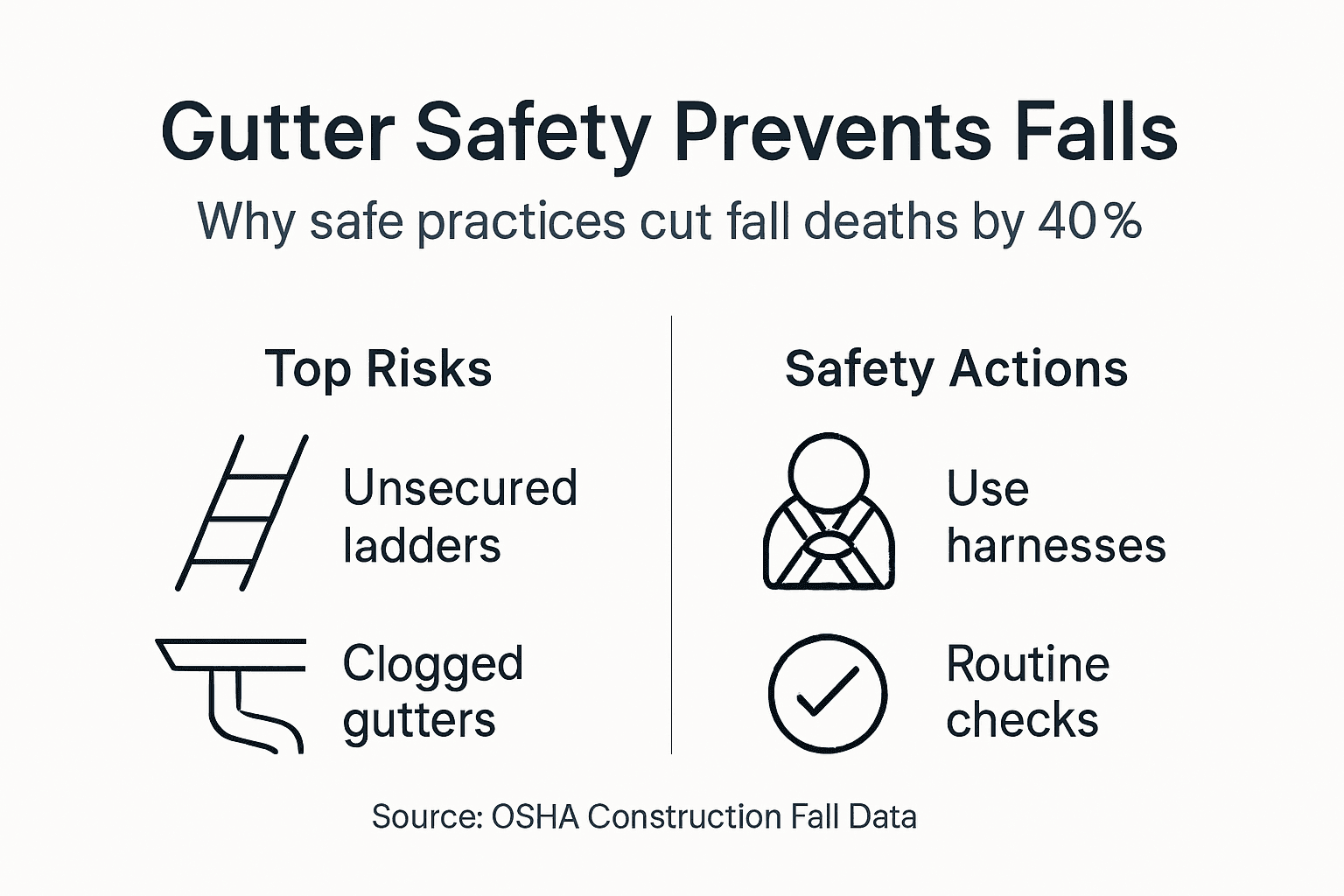
Critical Statistics: Falls remain the number one cause of construction fatalities, with over 39% of deaths resulting from inadequate fall protection during routine maintenance tasks.
Tenant injury liability creates additional exposure for property managers. If a tenant attempts DIY gutter cleaning due to neglected maintenance schedules, resulting injuries may generate legal claims against building owners. Similarly, water damage that creates slip hazards or structural failures can trigger premises liability suits.
Regular monitoring and safe gutter cleaning practices reduce these interconnected risks. Documented inspection schedules demonstrate due diligence in court, while proactive maintenance prevents the emergency situations that lead to hasty, unsafe work practices. The key is recognizing that gutter safety encompasses both the physical system and the human processes surrounding its maintenance.
Technical Foundations: Gutter System Design and Maintenance Essentials
Proper gutter performance starts with correct initial design and installation. Gutter sizing must account for roof area, slope, and local rainfall intensity to prevent overflow during peak storm events. Undersized gutters cannot handle water volume, leading to overflow damage even when clean.
The standard gutter slope of approximately 1/16 inch per foot ensures consistent drainage toward downspouts without creating standing water pockets. Too little slope allows debris accumulation and mosquito breeding. Excessive slope may appear functional but can create turbulent flow that splashes over gutter edges during heavy rain.
Structural integrity depends on proper anchoring and material strength. ANSI/SPRI GT-1 standards require gutters to withstand loads from wind pressure, accumulated water weight, ice formation, and snow buildup. Hangers must be spaced correctly and secured to structural members, not just fascia boards that may rot or pull away.
| Design Element | Standard Requirement | Consequence of Failure |
|---|---|---|
| Gutter Size | Based on roof area and rainfall rate | Overflow and water damage |
| Slope | ~1/16 inch per foot | Standing water and debris buildup |
| Hanger Spacing | Maximum 24 inches | Sagging and separation |
| Downspout Ratio | 1 per 40 feet of gutter | Inadequate drainage capacity |
Safe access represents a non-negotiable regulatory requirement. For gutter work above 16 feet, building codes such as IMC and OSHA mandate permanent fixed ladders or equivalent access systems. Portable ladders are insufficient and illegal for routine maintenance at these elevations. This requirement protects workers while ensuring property managers can maintain compliance during inspections.
Pro Tip: When evaluating gutter system technical performance, document installation dates, materials used, and any modifications. This information proves invaluable during insurance claims and helps predict replacement cycles.
Regular inspection of installation integrity prevents catastrophic failures. Check hanger attachment points for rust, corrosion, or loosening. Examine seams and joints for separation or leaking. Verify that downspouts remain securely fastened and direct water at least four feet away from foundations. These simple checks catch problems before they require emergency interventions.
Common Misconceptions About Gutter Safety and Maintenance
Many property managers operate under dangerous assumptions that increase both safety risks and maintenance costs. Cleaning frequency should adapt to local environmental factors like tree coverage, roof design, and seasonal weather patterns, not follow a rigid annual schedule. Buildings surrounded by deciduous trees may need quarterly cleanings, while structures in open areas might manage with semi-annual service.
The three most prevalent misconceptions include:
-
Any ladder provides adequate access for gutter work. Permanent fixed ladders are legally required for routine maintenance above 16 feet. Portable ladders create fall hazards and violate building codes for regular service access.
-
Standard-sized gutters work for all buildings. Gutter capacity must match roof size and local rainfall intensity. Small gutters on large roofs guarantee overflow during storms, regardless of how clean they are kept.
-
Gutter guards eliminate maintenance needs entirely. While guards significantly reduce debris accumulation, they still require periodic inspection and cleaning. Guards can trap smaller particles and develop their own maintenance requirements.
These misunderstandings lead property managers to underfund maintenance budgets, expose workers to unnecessary hazards, and react to failures rather than preventing them. For instance, assuming annual cleaning suffices may work in low-risk environments but proves disastrous for buildings near forests or in high-rainfall regions.
The gap between perception and reality creates liability exposure. When maintenance is deferred based on incorrect assumptions, resulting damage or injuries become difficult to defend in legal proceedings. Insurance adjusters scrutinize maintenance records, and gaps based on misconceptions rather than professional guidance undermine claims.
Education transforms these weaknesses into strengths. Property managers who understand appropriate gutter cleaning frequency for their specific buildings can budget accurately and schedule services proactively. Recognizing the need for compliant access systems prevents citations during inspections and protects workers from preventable injuries.
Practical Guidelines: Safe Gutter Maintenance and Inspection
Implementing effective gutter safety requires systematic approaches that address both technical performance and worker protection. Start with proper access infrastructure. Install fixed ladders, permanent platforms, or other approved access systems for gutters above 16 feet. Fixed ladders are mandated under IMC and OSHA regulations for routine maintenance work at elevation.
Gutter guard installation provides multiple benefits. Continuous gutter guards and beehive strainer guards minimize debris accumulation, reduce cleaning frequency, and lower fall risk exposure by decreasing the number of times workers must access gutters. While not maintenance-free, guarded systems require significantly less intervention.
| Guard Type | Debris Blocked | Maintenance Reduction | Cost Factor |
|---|---|---|---|
| Screen Guards | Leaves, large debris | 50-60% | Low |
| Reverse Curve | Most debris | 70-80% | Medium |
| Micro-Mesh | Nearly all debris | 80-90% | High |
| Beehive Strainers | Downspout blockages | Downspout specific | Low |
Inspection frequency must reflect building-specific risk factors. Properties with significant tree coverage need quarterly inspections during fall and spring. Buildings in high-rainfall areas benefit from pre-storm season checks. Industrial areas with airborne particulates may require monthly visual inspections.
Pro Tip: Coordinate routine gutter cleaning planning with other building maintenance activities. Scheduling gutter service alongside roof inspections or HVAC maintenance reduces mobilization costs and ensures comprehensive building envelope care.
Proper water management extends beyond the gutter itself. Downspouts must direct water at least four to six feet away from foundations using splash blocks, extensions, or underground drainage systems. Verify that discharge points slope away from buildings and do not create pooling that can refreeze or saturate soil.
Key maintenance actions include:
- Remove all debris from gutter channels and downspouts quarterly or as needed
- Flush systems with water to verify proper flow and identify leaks
- Tighten loose hangers and fasteners before they cause section failures
- Seal minor leaks immediately to prevent expansion during freeze/thaw cycles
- Document all inspections with photos and written reports for liability protection
Professional service partnerships ensure expert care and regulatory compliance. The commercial property gutter cleaning process used by qualified contractors includes safety equipment, proper disposal, and detailed reporting that satisfies insurance and legal requirements. Certified teams understand building codes and can identify emerging problems before they become emergencies.
Maintaining detailed logs creates a defensible maintenance history. Record inspection dates, findings, actions taken, and service provider information. These logs demonstrate due diligence during insurance claims and legal proceedings while helping predict when major repairs or replacements will be needed.
Integrating Gutter Safety into Property Management Strategy
Gutter safety transcends routine maintenance to become a strategic component of comprehensive property management. Consistent attention to gutter systems reduces tenant injury exposure while preventing the compounding damage that turns minor issues into major capital expenses.
The long-term benefits of proactive gutter management include:
- Extended building lifespan through prevention of water damage and structural deterioration
- Reduced liability exposure from fall incidents and premises-related injuries
- Lower insurance premiums resulting from documented safety protocols and maintenance records
- Enhanced tenant satisfaction and retention due to well-maintained, safe properties
- Predictable maintenance budgets that avoid emergency repair costs
Investing in proper safety infrastructure and regular professional maintenance pays dividends across multiple financial and operational dimensions. The cost of installing compliant access systems and scheduling routine cleanings pales compared to foundation repairs, mold remediation, or legal settlements from preventable injuries.
Partnering with professional gutter cleaning services in Greenwich and surrounding areas ensures expert care delivered by trained teams who understand regulatory requirements and safety protocols. These partnerships free property managers to focus on broader strategic priorities while trusting that critical building systems receive appropriate attention.
Successful integration requires viewing gutter safety as infrastructure investment rather than discretionary spending. Buildings with robust gutter maintenance programs experience fewer tenant complaints, maintain higher property values, and demonstrate the professional management that attracts quality tenants and satisfies building owners.
Protect Your Commercial Property with Expert Gutter Cleaning
Safeguarding your commercial building requires professional expertise that combines technical knowledge with safety compliance. Certified gutter cleaning services in Greenwich deliver thorough maintenance while adhering to OSHA and IMC guidelines that protect workers and limit your liability.
Experienced teams assess your specific building conditions, recommend optimal maintenance schedules, and provide detailed documentation that satisfies insurance requirements. Whether your property is located in Deptford or Erith, professional services adapt to local environmental factors and building designs to deliver customized care.
Frequently Asked Questions
How often should commercial gutters be inspected?
Inspection frequency depends on environmental factors including tree coverage, local rainfall patterns, and building use. Most commercial properties benefit from quarterly inspections, with additional checks before and after storm seasons to ensure systems remain clear and functional.
What are the legal requirements for gutter maintenance access?
Building codes mandate permanent fixed ladders or equivalent access systems for routine gutter work above 16 feet. Portable ladders do not meet IMC or OSHA requirements for regular maintenance activities at these elevations.
Can gutter guards eliminate the need for maintenance?
Gutter guards significantly reduce debris accumulation and cleaning frequency but do not eliminate maintenance entirely. Guards require periodic inspection and occasional cleaning to remove fine particles and verify proper water flow through the system.
What risks arise from improper gutter slope?
Insufficient slope creates standing water that promotes debris accumulation, mosquito breeding, and accelerated corrosion. Excessive slope can cause turbulent water flow that splashes over gutter edges during heavy rainfall, defeating the system’s purpose.
How does proper gutter safety reduce liability?
Systematic gutter maintenance prevents tenant injuries from falls and water damage, reducing premises liability claims. Documented inspection records demonstrate due diligence that strengthens legal defences and may reduce insurance premiums through proven risk management.



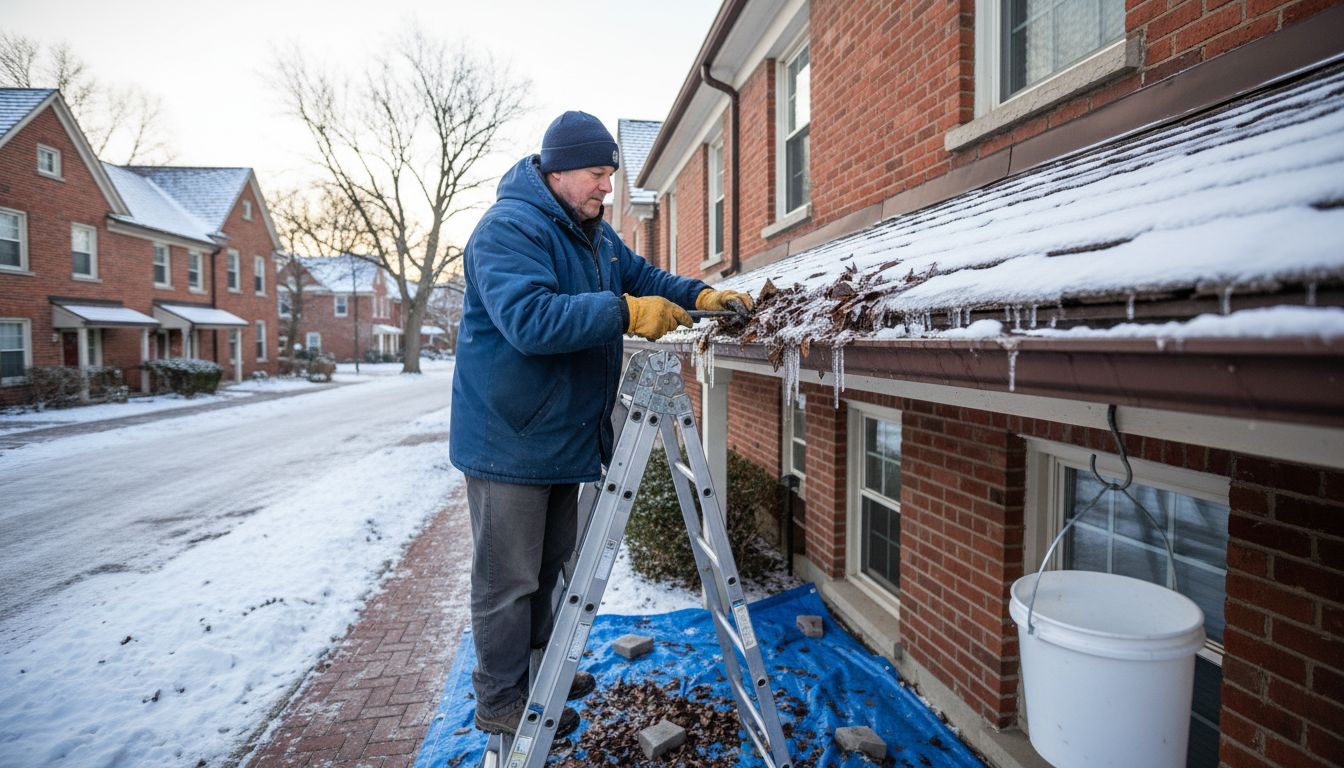


Leave A Comment